Showing posts with label racism. Show all posts

Wednesday, July 8, 2020

The Hate U Give by Angie Thomas

Source of book: Audiobook from the library

I had this book on our list, but wasn’t sure exactly when all the kids would be old enough for it. In light of the recent protests around the world over the murder of George Floyd, and the ubiquitous videos of police assaulting peaceful protesters, using chemical weapons, and recreating the knee on the neck, I figured it was time. 

Just a caution: this is a really sweary book. It is intended for young adults, not children, for a number of reasons. It isn’t just the language, but the somewhat graphic (and realistic) descriptions of police violence, gun violence, drug dealing, and poverty. Personally, I believe the language is appropriate and accurate. I grew up in a mostly minority, working class neighborhood, with plenty of gang activity. It wasn’t the ghetto, but it was kind of the old suburban version of the ‘hood, if that makes any sense. So I can attest to the accuracy of the language. In general, I heard plenty of cussing as a kid, and don’t consider that to be a big deal. More concerning is the central incident, which is the murder of a black teenager by a cop. It is meant to be disturbing and is. Some kids might have nightmares. For my kids, I decided it was more important that they understand the world they live in. 

The Hate U Give draws its title form Tupac, who explained that “Thug Life” was a backronym for this statement:


The Hate U Give Little Infants Fucks Everyone. 

The idea is that the hate - personal and institutional - that our society gives African Americans blows up and causes damage throughout society. And that is one damn freaking true statement. Pretty much every counterproductive and harmful political policy in our country can be traced back to racism - an attempt to keep black and brown skinned people in their place at the bottom of society. 

The story is quite timely: Starr Carter, a 16 year old girl, attends a party in the ‘hood she lives in (the fictional Garden Heights, located in essentially Everycity, USA), and meets a childhood friend she hasn’t seen in a while, Khalil. The two rival gangs crash the party, shots ring out, and Starr and Khalil flee in his car. Well, they drive away, and are stopped by a cop, allegedly for a broken taillight. After dragging Khalil out of the car, the cop sees Khalil’s hairbrush, thinks it is a gun, and shoots and kills Khalil. 

The aftermath of this is the subject of most of the book. 

Starr has a complicated life. Her dad spent time in prison taking the rap for a local gang lord. He has since left the gang and runs a store. Her mom works as a nurse. Before her parents married, her dad had a fling with the now-girlfriend of the gang lord, and her half-brother Seven was born as a result. Khalil’s grandmother watched Starr and Seven when their dad was in prison, so Starr’s mom could finish college. As a result of their now middle-class(ish) status, the siblings go to a private school in the white area of town, even though the family continues to live in Garden Heights. 

Because of the different worlds she lives in, Starr has to “code switch,” speaking and acting differently around different people. The book portrays this brilliantly. Starr has her private school friends, and her “ghetto” friends and family. She has her white boyfriend (who her dad doesn’t know about, because he is suspicious of interracial relationships), her Chinese-american friend with the doctor parents, her step-sister Kenya who accuses her of selling out, and Khalil, and...well, it gets complicated. 

The book is full of wonderfully complex and human characters. Starr’s parents are flawed but thoroughly decent people. Her brothers are believable for their combination of love and rivalry. Uncle Carlos, who is a cop wrestling with the conflicting demands of his job and his family, is also wonderfully nuanced. I loved the delightfully profane Nana as well. 

While a bit uncomfortable for a white guy to hear, I appreciated the spot-on deconstruction of a number of “types” in the book, from the female District Attorney with an agenda, to the insincere do-gooders. (Also, the question of why white folks always seem to want to “split up” when in danger, which was a humorous moment in an otherwise tense scene.) Thomas most definitely is not painting white folks as all bad, by any stretch. Many of those that get a bit of skewering are actually trying to do the right thing, but have massive blind spots. And that is both true of most of us and important to call out. We have the privilege of being blind to the meaning of race, while those who lack that privilege are unable to escape that meaning. 

Starr’s classmates offer an interesting contrast in responses to white discomfort. First, there is Starr’s friend Hailey, who is a very familiar type. Used to being the ringleader and getting her way, she is able to turn any argument around on her. So when she cracks a “fried chicken” joke at Starr, she whines that it isn’t fair she is told she said something racist. Kind of like the “cat for thanksgiving” joke she used on Maya Yang. Hailey goes way too far, however, when she calls Khalil a drug dealer and says that maybe the cop did everyone a favor by killing him. 

Honestly, there are days when I feel like a lot of my extended family are a bunch of Haileys. (The Trump Era has been really hard on family relationships, and forget about talking politics anymore…) I blogged about one incident a couple of years ago. I got unfriended over calling out a family member on a pretty nasty racist statement. And I have walked out on a number of discussions after making it clear that such shit was unacceptable. And, of course, it was always turned around on me: it was MY fault for not being nicer, for not giving them the benefit of the doubt, etc. It is never the racist’s fault, naturally. 

In contrast to Hailey is Chris, Starr’s boyfriend. We don’t get a very good introduction to him. Starr is pissed at him for ignoring her expressed desire to postpone sex, and showed her a condom as his request to do it. He is also annoyingly rich, like most of the other kids at the school. But Chris isn’t a bad guy, just a bit clueless and clumsy in navigating both relationships and racial issues. After Starr tells him off, he backs down, and apologizes - he is not even close to a rapist or entitled prick. In fact, in one of the truly great scenes in the book, near the end, his actions and words demonstrate that he has a pretty deep understanding of consent. Basically, after the Grand Jury refuses to indict the cop, Starr is a mess. Over at Chris’ house, she first tells him they can’t be together because they are too different, then outright propositions him. Chris responds that even though he really badly wants to have sex with her, he doesn’t want it to happen that way, when she is not in a good place emotionally. Instead, he holds her and lets her cry. I was worried earlier in the book that he would turn out to be disappointing, but at that moment it was clear that he really was sincere in his desire to understand her - all of her. Chris is someone all us white guys should aspire to be. 

There is so much more in this book too. Thomas takes a hard look at the way drugs are a tool of the wealthy to destroy low income neighborhoods. (Seriously, look at the history of the War on Drugs. Also related is James McBride’s book, Deacon King Kong.) At the lower levels, it is the young and black that tend to pay the price, while the kingpins remain safely out of sight and danger of prosecution. The book also examines the reality of policing in minority neighborhoods. Khalil’s death wasn’t just the result of a single decision to pull the trigger. It started with the widespread harassment of young minority men by the cops. It is never really in doubt that Khalil and Starr did nothing wrong, and the taillight may well have been a pretence. (See below for my own story…) In our discussion of our broken policing, this has to be the starting point. “Stop and Frisk” laws are aimed at harassment of minorities. (And, as it turns out, while they were stopped far more frequently, minorities were less likely to have contraband than whites.) From there, we have to talk about the differences in treatment, often stemming from implicit bias that assumes black people are more of a threat than white people. By the way, this is well documented - it’s not even close to made up. At the anecdotal level, once I started looking closely at my own reactions, I found that I do indeed make snap judgments that show bias. I hate that about myself, but now that I am aware of it, I can fight against that weakness: I can consciously choose to override my bias and work with the rational part of my brain.

The book also is nuanced and poignant when it comes to trauma. Starr has a double trauma: when she was ten, her best friend was killed in a drive-by shooting right in front of her. So she has watched two friends bleed out and die. In neither case was justice done. Natasha’s killer was never identified or found, and the cop who murders Khalil never faces consequences. So yeah, Starr has a lot of trauma, and the white counsellor at her school doesn’t really know how to actually help. 

I feel like there are a lot of other things I wanted to say about this book, but since we listened while I was driving, I didn’t get to take notes. It’s not a short book, although it isn’t that long either, and it is packed with so many well written scenes and insightful lines. 

I really wish that I could make everyone in my parents’ generation listen to this. If I could, I would wish that they could take a step outside the ideological bubbles so many of them have, and actually listen with empathy and try to understand the reality that other people live. It is particularly hard in this case because I have so many cops in my extended family. They are generally “good,” in the one sense, but the system (and particularly the “no snitching” culture that perfectly mirrors street gang culture) has deep problems that they are unable or unwilling to see. That’s how one of them could say with a straight face that Black Lives Matter was just a media creation. Sigh. Of course, the other problem is that they would hear the first “fuck” and get their panties in a wad over that. As Starr often says, “That’s bullshit!”

Oh, one more before I forget. The best line in the book comes during Starr's television interview, where she decides to go rogue a bit at hit back. Asked what she would say to the cop who murdered her friend if she could meet him, she responds:

    "I would ask him if he wishes he had shot me too."

Damn. Mike drop.

Whatever else I failed to mention about this book, I really want to say that it is stunning, a profoundly moving book. It will devastate you, make you angry, and, if you have been actually paying attention lately, it will read as fictional only in the details. This is the lived reality of racialized police brutality which is increasingly being recorded on our handheld computerphones. It isn’t new, but it is finally being brought into the light. (Starting with the Rodney King beating, which occurred a few miles from my house…see the footnote to this post for more about that...) 

It is unsurprising that the book has been “challenged” quite a bit. After all, “fuck” is abundant. But it is interesting that it has drawn the wrath of police groups. One complained about its use at a high school, saying it is "almost indoctrination of distrust of police" and asserted that "we've got to put a stop to that." 

Subsequent events have...not been kind to this interpretation. The biggest and best argument for defunding the police has come, not from books like this, but from the actions and words of the police themselves, as they continue to brutalize protesters (even when they know the cameras are on them), threaten to resign when even the most out of line among them is held accountable, and refuse to ask why a majority of the American public believes they have a serious problem. Probably the epiphany will not come until we actually do start the process of defunding, which is long overdue. (Police budgets increasingly dominate municipal budgets, mass incarceration has exploded, and police appear to feel entitled to be immune from budget cuts - a local prosecutor literally said every library should be shuttered before she lost a dollar from her budget…) 

The times are a-changin’ though. Public opinion is shifting. (Probably in part because Trump has revealed just how racist the American Right actually is.) I have hope that things can in fact change for the better. 

In any case, I am glad I had my kids listen to this book. My goal for them is that they grow up informed, with a range of skills, and with a sense of empathy and an ethical way of thinking. Books like these (just like books like Roll of Thunder, Hear My Cry my mom read to me as a kid) are a huge part of that process. By entering the worlds of others, we learn to see other perspectives. 

***

Note on the audiobook:

First, my complaint. The tracks on the book are inconsistent in how they split. Worst was when a track ended in mid-sentence - and then you had to change disks. That’s stupid and avoidable. I am used to better from Harper Audio. 

That complaint aside, the narration by Bahni Turpin is a work of art. I have listened to a number of outstanding audiobook narrators, and she belongs in the pantheon. As I have noted before, a truly great narrator can change voices so that you never wonder who is speaking. Turpin starts with Starr, who is vulnerable and strong, introspective and forceful, and so very human. That performance alone was amazing. But all the other characters are unique and distinctive, each with their own voice, and recognizable for race, gender, and class. Turpin “code switches” perfectly too, and not just with Starr. Maya too is different with her family. As is Carlos in his “family” voice versus his “cop” voice. Turpin creates an entire world with her performance, and I got the the end of the book amazed by how she carried it. 

***

My experience: 

I’m a pretty straight-up guy. In fact, even my violin teacher called me a square. Despite living in a neighborhood with drugs and gangs, I wasn’t offered any until my mid-30s, and that was by a white hippie friend. I’m not making that up. 

Anyway, here is my little story about a run-in with the cops. When I was 19 or 20, I had an ‘84 Camaro. Eventually, I got it repainted, so it looked pretty good. (Loved that car, kind of regret selling it, but car seats didn’t work with it…) But at the time, it was still a charcoal grey and peeling. My brother had a chess tournament up in Modesto, and I drove him up. I didn’t really want to sit around in the lobby, so I parked my car in the structure, and studied while he played. The female security guard drove around several times, and apparently decided I was some sort of a threat. Rather than, I don’t know, check me out, she called the cops on me. 

They come to my door looking ready to rumble. Fortunately for me, I am white and, well, freaking square. They relaxed a bit, looked at my ID, and saw my schoolbooks, and left. (And shot the guard a bit of a stink eye.) 

I recognized even then, however, that things could have gone down differently, particularly if I hadn’t been white. 


Thursday, May 28, 2020

Deacon King Kong by James McBride

Source of book: I own this.

 This was this month’s selection for our “Literary Lush” book club. One of the things I enjoy about this club is that I end up reading interesting books that I never would have discovered on my own. I hadn’t heard of either this book (which just came out) and wasn’t familiar with James McBride, although a few of his other books sound familiar. However, I rather enjoyed it, as did other members of our club, making it one of the most universally loved selections since I joined the club. 

 James McBride has apparently written a number of other books, often with historical settings, and was awarded a National Humanities medal by President Obama. I dare say I will be putting his other books on my reading list.

 I’m not even sure what to call Deacon King Kong. It is literary fiction, in my opinion. But it is such a weird blend of pathos and humor that it defies categorization. It is a thoughtful book, but with elements of slapstick and magical realism. It makes a pair of suicides seem like a sacrament - a baptism. It makes a potential affair seem good for the characters. It has killer red ants, killer hooch, and mysterious cheese. And, more than anything, it has a bunch of memorable characters, any of which could be the center of their own story. 

 Set in the Brooklyn projects in 1969, the book starts and centers around a bizarre incident. “Sportcoat,” an old man who lost his wife a few years back and has spiraled into alcoholism, shoots the ear off the local drug dealer, a young man named Deems, who was once Sportcoat’s protege in the local baseball team. From there, the past and present swirl around the fallout from that incident, drawing in gangsters, cops, smugglers, an ancient artifact, and a few old secrets. Sportcoat is the deacon of the title - a deacon of Five Ends Baptist Church who prefers the illicit hooch King Kong to any commercial preparation. 

 As it turns out, there are connections to The Elephant, the last in a line of Italian smugglers. Why did his dad fund the construction of the church, including an epic mural of Christ on the side? Deems, in turn, is the pivot point of a drug war. And why did Sportcoat’s wife Hettie end up floating in the harbor? And what happened to the Christmas Fund money she kept but never told anyone where? 

 McBride brings in an honest Irish cop trying to make it alive to retirement, a dying gangster whose daughter runs a bagel shop, the delightful maintenance man for the building, Hot Sausage, and so many more. 

 I hesitate to describe the book more than that, because the plot is fun and full of surprises (although I figured out a few things ahead of time.) I recommend reading it for yourself. 

 McBride’s writing is outstanding - one of the comments in our club meeting was that from the first few pages, you really feel like you are there. The sights and sounds and smells and social dynamics really come alive. One person who had lived in New York City concurred with the reality of the area described - McBride grew up there, the son of an African American preacher and a Jewish-Polish mother - the daughter of a rabbi. The thing is, McBride doesn’t actually spend a whole lot of words on descriptions: he manages to create the picture without obviously doing so. Also a feature of his style is that he can take shootings and drugs and booze and gangsters and add the humor and slapstick without it feeling like a parody. It’s as much a part of the world he creates as the ghost of Hettie. 

 There are lots of good lines, a few of which I jotted down. 

 The first is an incident that is pretty hilarious, but has almost nothing to do with the rest of the plot: an explanation of how the red ants came to Brooklyn. Hector, the Colombian immigrant, gets too big for his britches, and dumps his wife and kids back home. She tearfully agrees to a divorce, and packs him lunch. When he opens it back in Brooklyn, he finds it full of the red ants, and a note saying “Adios motherfucker...we know you ain’t sending no pesos!” The ants establish themselves, and become part of the yearly life of the projects. This leads into a fantastic sentence in which the ants become


...a sole phenomenon in the Republic of Brooklyn, where cats hollered like people, dogs eat their own feces, aunties chain-smoked and died at age 102, a kid named Spike Lee saw God, the ghosts of the departed Dodgers soaked up all possibility of new hope, and penniless desperation ruled the lives of the suckers too black or too poor to leave, while in Manhattan the buses ran on time, the lights never went out, the death of a single white child in a traffic accident was a page one story, while phony versions of black and Latino life ruled the Broadway roost, making white writers rich — West Side Story, Porgy & Bess, Purlie Victorious — and on it went, the whole business of the white man's reality lumping together like a giant, lopsided snowball, the Great American Myth, the Big Apple, the Big Kahuna, the City That Never Sleeps, while the blacks and Latinos who cleaned the apartments and dragged out the trash and made the music and filled the jails with sorrows slept the sleep of the invisible and functioned as local color.


I’m not the only reviewer to have noticed that line. It’s arguably the most memorable line in the book.

 The missing Christmas Fund money is not only a big motivation for Sportcoat, it puzzles everyone in the church. Hettie never did disclose its location, and it never does appear. (Sorry about the spoiler.) Did she simply pocket the money herself? It seems possible. Is it hiding somewhere in the church? Also possible. What isn’t a mystery is why she kept it herself. 


“She ain’t supposed to walk around with the Christmas box.”

“She had to hide it someplace after she collected for it. Normally she hid it at church. But she didn’t always have time to wait for church to empty out. Sometimes folks would linger eating fish dinners or the pastor would preach overtime or some such thing and she had to go home, so she brung it home with her.”

“Why didn’t she lock it in the pastor’s office?”

“What fool would keep money ‘round a pastor?” Rufus asked. 

Sportcoat nodded knowingly.  


I have been a part of a number of churches in my lifetime, and one thing I can say is that I agree with Rufus. And, interestingly, one of the best ways to tell if a pastor is honorable about money is how careful he is to distance himself from the money. The honorable ones keep as far away as possible from it, delegating the financial stuff to someone independent. (Or at least as independent as possible in a small church.) It makes a difference. 

 Another interesting observation comes from the old, retired gangster, the Governor, talking about his deceased brother. (Who was also an artifact smuggler - he found a cave of stolen Nazi treasures including, in a fictional incident, the Venus of Willendorf. This artifact is in the book, although clearly the whole episode is fiction, not fact.) 


“He had an apartment in the Village the size of a rugby field. Full of fancy things. I never asked. He had no kids, so I figured it wasn’t anything. My poppa couldn’t stand Macy. He used to say, ‘Macy likes boys.’ I told Poppa, ‘There was a priest at Saint Andrews who’s said to like boys.’ But he didn’t want to hear it. I was a young man back then, fast on my feet and a bit of a wanker, but even then I knew the difference between a sick man who likes children and a man sweet on men.” 


This is a distinction lost on a lot of people in my Fundie former tribe, alas. 

 Another perceptive passage concerning sex is between the Irish cop and the wife of the pastor of Five Ends Baptist. She is in a loveless marriage, to an older man who she married before she understood what she was doing. As a divorce attorney, this rings true. 


She had been seventeen when she wed a man twelve years older than her. He had seemed to have purpose but turned out to have none, other than an affinity for football games and the ability to pretend to be what he was not, to pretend to feel things he did not feel, to make jokes out of things that did not work for him, and like too many men she knew, daydream about meeting some lovely young thing from the choir, preferably at three a.m., in the choir pew. She didn’t hate her husband. She just didn’t know him.


This one too was fascinating. Sister Gee (the pastor’s wife) is pressed for information by Potts, the Irish cop, after an incident in which the hapless Earl tries to put a hit on Sportcoat, but ends up bonked by a wayward bottle, then set on the subway back home by Sister Gee and a young gentle giant from the church. 


“You should have called us.”

“Why we got to have the police around every time we has a simple party? Y’all don’t watch out for us. Y’all watch over us. I don’t see y’all out there standing over the white folks in Park Slope when they has their block parties.” 


In recent years, as cell phone video has made it increasingly obvious even to this sheltered white guy that our experience with the police is vastly different from the experience of non-whites, McBride calls it straight. “To Protect and Serve,” as the LAPD motto goes, is directed at whites. The police protect “us” from “them.” And serve “us” at the expense of “them.” It’s a heartbreaking state of affairs. 


In a conversation later in the book, Potts can’t quite understand why the Five Ends folks are so obsessed with that Christmas Club money. 


“You were talking about the church money. It’s got nothing to do with this trouble.”

“It’s got everything to do with it. That Christmas Club money is all we can control. We can’t stop these drug dealers from selling poison in front of our houses. Or make the city stop sending our kids to lousy schools. We can’t stop folks from blaming us for everything gone wrong in New York, or stop the army from calling our suns to Vietnam after them Vietcong done cut the white soldiers’ toenails too short to walk. But the little nickels and dimes we saved up so we can give our kids ten minutes of love at Christmastime, that’s ours to control. What’s wrong with that?”


Although Potts isn’t quite getting it, he is falling in love with Sister Gee, and he flounders trying to express his concern for the danger she is in. After all, the drug bigwig wants to put the hit on Sportcoat; and, since the hapless Earl failed, is sending in his big gun: Harold Dean. 


He wanted to say, “He’s a killer and I don’t want him near you.” But he had no idea what her reaction would be. He didn’t even know what Harold Dean looked like. He had no information other than an FBI report with no photo, only the vaguest description that he was a negro who was “armed and extremely dangerous.” 


Dang, that’s some good satire. And it particularly hits home because “Harold Dean” is actually Haroldeen, a young woman. The whole “hey, he looked like the suspect” is problematic for the reason above. It seems the “all black people look alike” trope is alive and well in law enforcement, alas.

 [Side note: years ago, when I saw the Harlem Globetrotters, one of the jokes was that the big “clown prince” guy borrowed a purse from an older woman in the front row. When the referee told him to give it back, he said he couldn’t, because he wasn’t sure who he took it from. It was some woman. What woman? A white woman. Which one? He didn’t know, because they all looked alike…]

 Anyway, Potts keeps harping on “he’s dangerous.” Sister Gee is ready with a great response:


“Nothing in this world is dangerous unless white folks says it is,” she said flatly. “Danger here. Danger there. We don’t need you to tell us about danger in these projects. We don’t need you to say what the world is to us.”


Preach it. And Potts really is trying to get it, which makes him better than a whole lot of people in our country. 

 I have to end with a humorous bit. It would take too long to explain the characters and the situation, but suffice it to say that rumor has it that Hot Sausage was killed in a gun battle. (He was only injured, don’t worry.) 


Joaquin, several spots behind them, looked strangely sad. “I borrowed twelve dollars from Sausage,” he said. “I’m glad I didn’t pay it back.”

“God, you are cheap,” Miss Izi said. She was standing a good five people ahead of her ex-husband and stepped out of line to address him. “You’re so tight with money your ass squeaks when you walk.” 


This book was a lot of fun, thoughtful and perceptive, and packed with great characters. I’m definitely planning to add some more James McBride books to my list. 


***


Just for fun, here is the list of books that our book club has read. At least the ones I have read too. Most of these were read for the club, but a few were ones I read previously - those posts pre-date the club discussion - and some I read afterward, because I missed the discussion. 


Space Opera by Catherynne M. Valente

Bad News by Edward St. Aubyn

Circe by Madeline Miller

Daisy Jones and the Six by Taylor Jenkins Reid

Calypso by David Sedaris

The Air You Breathe by Frances de Pontes Peebles

The Penelopiad by Margaret Atwood

The Boy Who Harnessed the Wind by William Kamkwamba and Bryan Mealer

The Haunting of Hill House by Shirley Jackson

There There by Tommy Orange

Little Fires Everywhere by Celeste Ng

Be Frank With Me by Julia Claiborne Johnson

The Song of Achilles by Madeline Miller

Educated by Tara Westover

Stiff by Mary Roach

A Gentleman in Moscow by Amor Towles

Ready Player One by Ernest Cline

The Marsh King’s Daughter by Karen Dionne

Rosemary’s Baby by Ira Levin

Never Mind by Edward St. Aubyn

All the Birds in the Sky by Charlie Jane Anders

Artemis by Andy Weir

Annihilation by Jeff Vandermeer

The Goldfinch by Donna Tartt

The Island of Doctor Moreau by H. G. Wells

The Master and Margarita by Mikhail Bulgakov 

The Radium Girls by Kate Moore


Friday, May 22, 2020

Poems by Ralph Waldo Emerson


Source of book: I own this.

I am not entirely sure what percentage of Emerson’s poems are in this volume - it is one of those Black’s Readers Service Company hardbacks with selected works, in any case. 

Emerson is better known for his prose these days, particularly essays like “Self Reliance,” which most American kids read in 11th grade. I figured I would read the poetry, and get an idea about what it was like. 

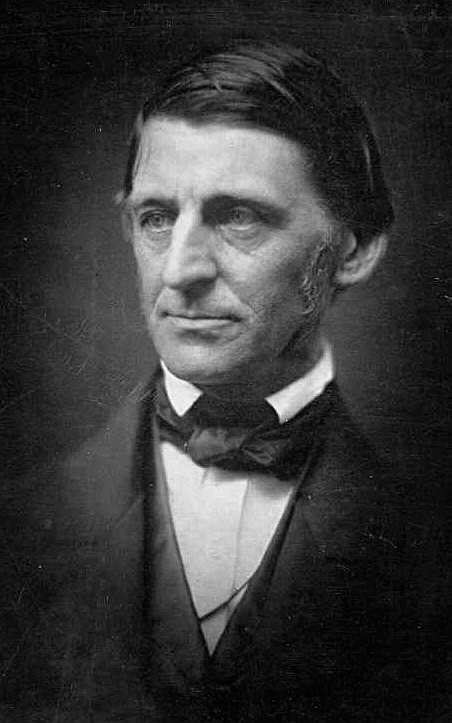
 Emerson in 1857

I would say that my impression, like that of Emerson in general, is mixed. There are a few gems in the collection, but also too many long poems in iambic tetrameter with rhymed couplets, that seem to go on and on without going much of anywhere. I was not expecting to miss blank verse that much - when he finally did write one in that format, it just felt like it flowed so much better. 

Also an issue in the poetry, like his prose, are Emerson’s really dated views on race. On the one hand, he was an abolitionist from the 1840s on (although he didn’t want that to be the only thing people associated him with), and had - for his time - a progressive vision of integration and intermarriage. But he also was a Saxon chauvinist, like many other Americans of British descent, who considered the “Anglo-Saxon race” to be superior to all others. Not merely in the sense of whiteness: Saxons were superior to the French, to the Irish, to the Italians, and every other immigrant group of the time. This led to a number of really wince-worthy lines in otherwise inspiring poems. 

I do want to be fair to Emerson on this, though. His views were common enough, although that is not a defense. Where I think it is easy to condemn him unfairly is to miss what his actual proposals meant. Whatever his beliefs about superiority, he advocated for true equality and, shockingly for his time, true integration. He may have believed the Irish and African Americans were inferior races, but he also believed they should live side by side with everyone, have the same opportunities, freedoms, and rights, and believed that inevitably, they would all intermarry and create a truly superior race: the American. Even today, there is something futuristic about the idea of intermarriage to the degree. For White Nationalists, this is horrifying. For a lot of us in California, we already see it - interracial marriage here is the norm, not an exception. 

So, I guess those are the two downsides: dated views, and dated poetic forms. But there is good too. Emerson may never reach the heights of the best nature poets (Wordsworth and Frost particularly), but one can see his influence on 20th Century American poetry. His writing on nature seems more about being inspired by nature than closely observing it. You won’t find the close lens turned on the details, just the grand vistas. There is also plenty of transcendental philosophy in the poems too. At this point in history and in my own journey, transcendentalism seems like part of normal culture, at least among conservationists. It isn’t nearly the shocking departure from orthodox religion it seemed at the time - it’s nowhere near New Age or other 20th Century movements. In some ways, it feels more like just another step in the long chain of mystics who find God in nature, not just in a church. 

Speaking of that, I liked this poem, one of his earliest, from 1838:

The Problem

I LIKE a church; I like a cowl; 
I love a prophet of the soul; 
And on my heart monastic aisles 
Fall like sweet strains, or pensive smiles; 
Yet not for all his faith can see        
Would I that cowlèd churchman be.   

Why should the vest on him allure, 
Which I could not on me endure?   

Not from a vain or shallow thought 
His awful Jove young Phidias brought; 
Never from lips of cunning fell 
The thrilling Delphic oracle; 
Out from the heart of nature rolled 
The burdens of the Bible old; 
The litanies of nations came,       
Like the volcano’s tongue of flame, 
Up from the burning core below,— 
The canticles of love and woe: 
The hand that rounded Peter’s dome 
And groined the aisles of Christian Rome 
Wrought in a sad sincerity; 
Himself from God he could not free; 
He builded better than he knew;— 
The conscious stone to beauty grew. 
Know’st thou what wove yon woodbird’s nest     
Of leaves, and feathers from her breast? 
Or how the fish outbuilt her shell, 
Painting with morn each annual cell? 
Or how the sacred pine-tree adds 
To her old leaves new myriads?      

Such and so grew these holy piles, 
Whilst love and terror laid the tiles. 
Earth proudly wears the Parthenon,
As the best gem upon her zone, 
And Morning opes with haste her lids    
To gaze upon the Pyramids; 
O’er England’s abbeys bends the sky, 
As on its friends, with kindred eye; 
For out of Thought’s interior sphere 
These wonders rose to upper air;  
And Nature gladly gave them place, 
Adopted them into her race, 
And granted them an equal date 
With Andes and with Ararat.   

These temples grew as grows the grass;    
Art might obey, but not surpass. 
The passive Master lent his hand 
To the vast soul that o’er him planned; 
And the same power that reared the shrine 
Bestrode the tribes that knelt within.      
Ever the fiery Pentecost 
Girds with one flame the countless host, 
Trances the heart through chanting choirs, 
And through the priest the mind inspires. 

The word unto the prophet spoken     
Was writ on tables yet unbroken; 
The word by seers or sibyls told, 
In groves of oak, or fanes of gold, 
Still floats upon the morning wind, 
Still whispers to the willing mind.    
One accent of the Holy Ghost 
The heedless world hath never lost. 
I know what say the fathers wise,— 
The Book itself before me lies, 
Old Chrysostom, best Augustine, 
And he who blent both in his line, 
The younger Golden Lips or mines, 
Taylor, the Shakespeare of divines. 
His words are music in my ear. I see his cowlèd portrait dear;      
And yet, for all his faith could see, 
I would not the good bishop be.

Another one I loved was this one. Nobody knows who “J. W.” was, although there are several possibilities. Of all the carpe diem poems I have read, this one is definitely a favorite. 

To J. W. 


Set not thy foot on graves;
Hear what wine and roses say;
The mountain chase, the summer waves,
The crowded town, thy feet may well delay.

Set not thy foot on graves;
Nor seek to unwind the shroud
Which charitable time
And nature have allowed
To wrap the errors of a sage sublime.

Set not thy foot on graves;
Care not to strip the dead
Of his sad ornament;
His myrrh, and wine, and rings,
His sheet of lead,
And trophies buried;
Go get them where he earned them when alive,
As resolutely dig or dive.

Life is too short to waste
The critic bite or cynic bark,
Quarrel, or reprimand;
'Twill soon be dark;
Up! mind thine own aim, and
God speed the mark.
   
Another one that struck me was this thoughtful short poem. Although not unique to America, we seem to worship riches - and the wealthy. The glamorous and the beautiful. Meanwhile, this wealth and beauty dulls their consciences. Emerson seems, to me, caught between his own sense of inferiority and a weird wonder at these bright creatures. 

The Park

THE PROSPEROUS and beautiful   
To me seem not to wear 
The yoke of conscience masterful,   
Which galls me everywhere.   

I cannot shake off the god;       
On my neck he makes his seat; 
I look at my face in the glass,—   
My eyes his eyeballs meet.   

Enchanters! Enchantresses!   
Your gold makes you seem wise;      
The morning mist within your grounds   
More proudly rolls, more softly lies.   

Yet spake yon purple mountain,   
Yet said yon ancient wood, 
That Night or Day, that Love or Crime,    
Leads all souls to the Good.

This little nature poem is also a nice defense of introversion. 

The Apology       
   
Think me not unkind and rude,
That I walk alone in grove and glen;
I go to the god of the wood
To fetch his word to men.

Tax not my sloth that I
Fold my arms beside the brook;
Each cloud that floated in the sky
Writes a letter in my book.

Chide me not, laborious band,
For the idle flowers I brought;
Every aster in my hand
Goes home loaded with a thought.

There was never mystery,
But 'tis figured in the flowers,
Was never secret history,
But birds tell it in the bowers.

One harvest from thy field
Homeward brought the oxen strong;
A second crop thine acres yield,
Which I gather in a song.
Also a great introvert poem is this one, rather insightful about how brains like his and mine work, with the thoughts drifting and swirling, and needing time to sort out and organize. This one is probably my favorite poem of his. 

My Thoughts

Many are the thoughts that come to me
In my lonely musing;
And they drift so strange and swift,
There's no time for choosing
Which to follow, for to leave
Any, seems a losing.

When they come, they come in flocks,
As on glancing feather,
Startled birds rise one by one
In autumnal weather,
Waking one another up
From the sheltering heather.

Some so merry that I laugh,
Some are grave and serious,
Some so trite, their least approach
Is enough to weary us:—
Others flit like midnight ghosts,
Shrouded and mysterious.

There are thoughts that o'er me steal,
Like the day when dawning;
Great thoughts winged with melody
Common utterance scorning,
Moving in an inward tune,
And an inward morning.

Some have dark and drooping wings,
Children all of sorrow;
Some are as gay, as if today
Could see no cloudy morrow,—
And yet, like light and shade, they each
Must from the other borrow.

One by one they come to me
On their destined mission;
One by one I see them fade
With no hopeless vision;
For they've led me on a step
To their home Elysian.

I also found this poem, used at the dedication of the monument at Concord - the first shots of the American Revolution - to be rather good. Plenty of occasional poems age poorly, or are turgid to begin with. This one is simplicity - and focus. 

Concord Hymn

By the rude bridge that arched the flood,
   Their flag to April’s breeze unfurled,
Here once the embattled farmers stood
   And fired the shot heard round the world.

The foe long since in silence slept;
   Alike the conqueror silent sleeps;
And Time the ruined bridge has swept
   Down the dark stream which seaward creeps.

On this green bank, by this soft stream,
   We set today a votive stone;
That memory may their deed redeem,
   When, like our sires, our sons are gone.

Spirit, that made those heroes dare
   To die, and leave their children free,
Bid Time and Nature gently spare
   The shaft we raise to them and thee.

There are a couple of longer poems that I enjoyed, but really are too long to quote entire. The first is “Blight,” an indictment against profit-driven destruction of nature that seems relevant today. Here is the opening:

Give me truths,
For I am weary of the surfaces,
And die of inanition.

And later:

But these young scholars who invade our hills,
Bold as the engineer who fells the wood,
And travelling often in the cut he makes,
Love not the flower they pluck, and know it not,
And all their botany is Latin names.

The ending is pretty bitter:

And life, shorn of its venerable length,
Even at its greatest space, is a defeat,
And dies in anger that it was a dupe,
And, in its highest noon and wantonness,
Is early frugal like a beggar's child:
With most unhandsome calculation taught,
Even in the hot pursuit of the best aims
And prizes of ambition, checks its hand,
Like Alpine cataracts, frozen as they leaped,
Chilled with a miserly comparison
Of the toy's purchase with the length of life.

Much more hopeful is “Boston Hymn,” which is a celebration of the best of the aspirational America - the one at perpetual war with the worst of America. In the midst of the Civil War, Emerson expressed his hope that “All men are created equal” would become a reality, and that freedom would be a blessing to all. Here are a few stanzas that I thought were best. (You can read the whole poem here, although a few stanzas from my book are missing.) 

God said,—I am tired of kings,
I suffer them no more;
Up to my ear the morning brings
The outrage of the poor.

Think ye I made this ball
A field of havoc and war,
Where tyrants great and tyrants small
Might harry the weak and poor?

I will divide my goods,
Call in the wretch and slave:
None shall rule but the humble,
And none but Toil shall have.

I will have never a noble,
No lineage counted great:
Fishers and choppers and ploughmen
Shall constitute a State.

I break your bonds and masterships,
And I unchain the slave:
Free be his heart and hand henceforth,
As wind and wandering wave.

To-day unbind the captive,
So only are ye unbound;
Lift up a people from the dust,
Trump of their rescue, sound!

Pay ransom to the owner,
And fill the bag to the brim.
Who is the owner? The slave is owner,
And ever was. Pay him.

I mean, dang, there are some revolutionary ideas there. We STILL can’t have a rational conversation in this country about restitution for slavery. It seems fundamental: whites built America using the stolen labor and freedom of African Americans. And have worked ever since to make America serve whites at everyone else’s expense - even today. Any meaningful form of repentance needs to include restitution. This is an inspiring poem any way you slice it. 

So, that is my impression of Emerson. A few really good ones. Some tedious stuff. A man who was, like all of us, a mixture of good and bad, but one who I think did in good faith try to make the world a better place for all.