Showing posts with label justice. Show all posts

Friday, May 22, 2020

Poems by Ralph Waldo Emerson


Source of book: I own this.

I am not entirely sure what percentage of Emerson’s poems are in this volume - it is one of those Black’s Readers Service Company hardbacks with selected works, in any case. 

Emerson is better known for his prose these days, particularly essays like “Self Reliance,” which most American kids read in 11th grade. I figured I would read the poetry, and get an idea about what it was like. 

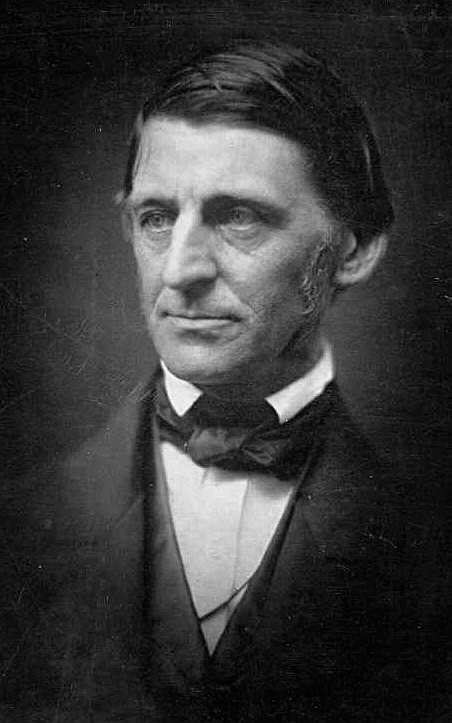
 Emerson in 1857

I would say that my impression, like that of Emerson in general, is mixed. There are a few gems in the collection, but also too many long poems in iambic tetrameter with rhymed couplets, that seem to go on and on without going much of anywhere. I was not expecting to miss blank verse that much - when he finally did write one in that format, it just felt like it flowed so much better. 

Also an issue in the poetry, like his prose, are Emerson’s really dated views on race. On the one hand, he was an abolitionist from the 1840s on (although he didn’t want that to be the only thing people associated him with), and had - for his time - a progressive vision of integration and intermarriage. But he also was a Saxon chauvinist, like many other Americans of British descent, who considered the “Anglo-Saxon race” to be superior to all others. Not merely in the sense of whiteness: Saxons were superior to the French, to the Irish, to the Italians, and every other immigrant group of the time. This led to a number of really wince-worthy lines in otherwise inspiring poems. 

I do want to be fair to Emerson on this, though. His views were common enough, although that is not a defense. Where I think it is easy to condemn him unfairly is to miss what his actual proposals meant. Whatever his beliefs about superiority, he advocated for true equality and, shockingly for his time, true integration. He may have believed the Irish and African Americans were inferior races, but he also believed they should live side by side with everyone, have the same opportunities, freedoms, and rights, and believed that inevitably, they would all intermarry and create a truly superior race: the American. Even today, there is something futuristic about the idea of intermarriage to the degree. For White Nationalists, this is horrifying. For a lot of us in California, we already see it - interracial marriage here is the norm, not an exception. 

So, I guess those are the two downsides: dated views, and dated poetic forms. But there is good too. Emerson may never reach the heights of the best nature poets (Wordsworth and Frost particularly), but one can see his influence on 20th Century American poetry. His writing on nature seems more about being inspired by nature than closely observing it. You won’t find the close lens turned on the details, just the grand vistas. There is also plenty of transcendental philosophy in the poems too. At this point in history and in my own journey, transcendentalism seems like part of normal culture, at least among conservationists. It isn’t nearly the shocking departure from orthodox religion it seemed at the time - it’s nowhere near New Age or other 20th Century movements. In some ways, it feels more like just another step in the long chain of mystics who find God in nature, not just in a church. 

Speaking of that, I liked this poem, one of his earliest, from 1838:

The Problem

I LIKE a church; I like a cowl; 
I love a prophet of the soul; 
And on my heart monastic aisles 
Fall like sweet strains, or pensive smiles; 
Yet not for all his faith can see        
Would I that cowlèd churchman be.   

Why should the vest on him allure, 
Which I could not on me endure?   

Not from a vain or shallow thought 
His awful Jove young Phidias brought; 
Never from lips of cunning fell 
The thrilling Delphic oracle; 
Out from the heart of nature rolled 
The burdens of the Bible old; 
The litanies of nations came,       
Like the volcano’s tongue of flame, 
Up from the burning core below,— 
The canticles of love and woe: 
The hand that rounded Peter’s dome 
And groined the aisles of Christian Rome 
Wrought in a sad sincerity; 
Himself from God he could not free; 
He builded better than he knew;— 
The conscious stone to beauty grew. 
Know’st thou what wove yon woodbird’s nest     
Of leaves, and feathers from her breast? 
Or how the fish outbuilt her shell, 
Painting with morn each annual cell? 
Or how the sacred pine-tree adds 
To her old leaves new myriads?      

Such and so grew these holy piles, 
Whilst love and terror laid the tiles. 
Earth proudly wears the Parthenon,
As the best gem upon her zone, 
And Morning opes with haste her lids    
To gaze upon the Pyramids; 
O’er England’s abbeys bends the sky, 
As on its friends, with kindred eye; 
For out of Thought’s interior sphere 
These wonders rose to upper air;  
And Nature gladly gave them place, 
Adopted them into her race, 
And granted them an equal date 
With Andes and with Ararat.   

These temples grew as grows the grass;    
Art might obey, but not surpass. 
The passive Master lent his hand 
To the vast soul that o’er him planned; 
And the same power that reared the shrine 
Bestrode the tribes that knelt within.      
Ever the fiery Pentecost 
Girds with one flame the countless host, 
Trances the heart through chanting choirs, 
And through the priest the mind inspires. 

The word unto the prophet spoken     
Was writ on tables yet unbroken; 
The word by seers or sibyls told, 
In groves of oak, or fanes of gold, 
Still floats upon the morning wind, 
Still whispers to the willing mind.    
One accent of the Holy Ghost 
The heedless world hath never lost. 
I know what say the fathers wise,— 
The Book itself before me lies, 
Old Chrysostom, best Augustine, 
And he who blent both in his line, 
The younger Golden Lips or mines, 
Taylor, the Shakespeare of divines. 
His words are music in my ear. I see his cowlèd portrait dear;      
And yet, for all his faith could see, 
I would not the good bishop be.

Another one I loved was this one. Nobody knows who “J. W.” was, although there are several possibilities. Of all the carpe diem poems I have read, this one is definitely a favorite. 

To J. W. 


Set not thy foot on graves;
Hear what wine and roses say;
The mountain chase, the summer waves,
The crowded town, thy feet may well delay.

Set not thy foot on graves;
Nor seek to unwind the shroud
Which charitable time
And nature have allowed
To wrap the errors of a sage sublime.

Set not thy foot on graves;
Care not to strip the dead
Of his sad ornament;
His myrrh, and wine, and rings,
His sheet of lead,
And trophies buried;
Go get them where he earned them when alive,
As resolutely dig or dive.

Life is too short to waste
The critic bite or cynic bark,
Quarrel, or reprimand;
'Twill soon be dark;
Up! mind thine own aim, and
God speed the mark.
   
Another one that struck me was this thoughtful short poem. Although not unique to America, we seem to worship riches - and the wealthy. The glamorous and the beautiful. Meanwhile, this wealth and beauty dulls their consciences. Emerson seems, to me, caught between his own sense of inferiority and a weird wonder at these bright creatures. 

The Park

THE PROSPEROUS and beautiful   
To me seem not to wear 
The yoke of conscience masterful,   
Which galls me everywhere.   

I cannot shake off the god;       
On my neck he makes his seat; 
I look at my face in the glass,—   
My eyes his eyeballs meet.   

Enchanters! Enchantresses!   
Your gold makes you seem wise;      
The morning mist within your grounds   
More proudly rolls, more softly lies.   

Yet spake yon purple mountain,   
Yet said yon ancient wood, 
That Night or Day, that Love or Crime,    
Leads all souls to the Good.

This little nature poem is also a nice defense of introversion. 

The Apology       
   
Think me not unkind and rude,
That I walk alone in grove and glen;
I go to the god of the wood
To fetch his word to men.

Tax not my sloth that I
Fold my arms beside the brook;
Each cloud that floated in the sky
Writes a letter in my book.

Chide me not, laborious band,
For the idle flowers I brought;
Every aster in my hand
Goes home loaded with a thought.

There was never mystery,
But 'tis figured in the flowers,
Was never secret history,
But birds tell it in the bowers.

One harvest from thy field
Homeward brought the oxen strong;
A second crop thine acres yield,
Which I gather in a song.
Also a great introvert poem is this one, rather insightful about how brains like his and mine work, with the thoughts drifting and swirling, and needing time to sort out and organize. This one is probably my favorite poem of his. 

My Thoughts

Many are the thoughts that come to me
In my lonely musing;
And they drift so strange and swift,
There's no time for choosing
Which to follow, for to leave
Any, seems a losing.

When they come, they come in flocks,
As on glancing feather,
Startled birds rise one by one
In autumnal weather,
Waking one another up
From the sheltering heather.

Some so merry that I laugh,
Some are grave and serious,
Some so trite, their least approach
Is enough to weary us:—
Others flit like midnight ghosts,
Shrouded and mysterious.

There are thoughts that o'er me steal,
Like the day when dawning;
Great thoughts winged with melody
Common utterance scorning,
Moving in an inward tune,
And an inward morning.

Some have dark and drooping wings,
Children all of sorrow;
Some are as gay, as if today
Could see no cloudy morrow,—
And yet, like light and shade, they each
Must from the other borrow.

One by one they come to me
On their destined mission;
One by one I see them fade
With no hopeless vision;
For they've led me on a step
To their home Elysian.

I also found this poem, used at the dedication of the monument at Concord - the first shots of the American Revolution - to be rather good. Plenty of occasional poems age poorly, or are turgid to begin with. This one is simplicity - and focus. 

Concord Hymn

By the rude bridge that arched the flood,
   Their flag to April’s breeze unfurled,
Here once the embattled farmers stood
   And fired the shot heard round the world.

The foe long since in silence slept;
   Alike the conqueror silent sleeps;
And Time the ruined bridge has swept
   Down the dark stream which seaward creeps.

On this green bank, by this soft stream,
   We set today a votive stone;
That memory may their deed redeem,
   When, like our sires, our sons are gone.

Spirit, that made those heroes dare
   To die, and leave their children free,
Bid Time and Nature gently spare
   The shaft we raise to them and thee.

There are a couple of longer poems that I enjoyed, but really are too long to quote entire. The first is “Blight,” an indictment against profit-driven destruction of nature that seems relevant today. Here is the opening:

Give me truths,
For I am weary of the surfaces,
And die of inanition.

And later:

But these young scholars who invade our hills,
Bold as the engineer who fells the wood,
And travelling often in the cut he makes,
Love not the flower they pluck, and know it not,
And all their botany is Latin names.

The ending is pretty bitter:

And life, shorn of its venerable length,
Even at its greatest space, is a defeat,
And dies in anger that it was a dupe,
And, in its highest noon and wantonness,
Is early frugal like a beggar's child:
With most unhandsome calculation taught,
Even in the hot pursuit of the best aims
And prizes of ambition, checks its hand,
Like Alpine cataracts, frozen as they leaped,
Chilled with a miserly comparison
Of the toy's purchase with the length of life.

Much more hopeful is “Boston Hymn,” which is a celebration of the best of the aspirational America - the one at perpetual war with the worst of America. In the midst of the Civil War, Emerson expressed his hope that “All men are created equal” would become a reality, and that freedom would be a blessing to all. Here are a few stanzas that I thought were best. (You can read the whole poem here, although a few stanzas from my book are missing.) 

God said,—I am tired of kings,
I suffer them no more;
Up to my ear the morning brings
The outrage of the poor.

Think ye I made this ball
A field of havoc and war,
Where tyrants great and tyrants small
Might harry the weak and poor?

I will divide my goods,
Call in the wretch and slave:
None shall rule but the humble,
And none but Toil shall have.

I will have never a noble,
No lineage counted great:
Fishers and choppers and ploughmen
Shall constitute a State.

I break your bonds and masterships,
And I unchain the slave:
Free be his heart and hand henceforth,
As wind and wandering wave.

To-day unbind the captive,
So only are ye unbound;
Lift up a people from the dust,
Trump of their rescue, sound!

Pay ransom to the owner,
And fill the bag to the brim.
Who is the owner? The slave is owner,
And ever was. Pay him.

I mean, dang, there are some revolutionary ideas there. We STILL can’t have a rational conversation in this country about restitution for slavery. It seems fundamental: whites built America using the stolen labor and freedom of African Americans. And have worked ever since to make America serve whites at everyone else’s expense - even today. Any meaningful form of repentance needs to include restitution. This is an inspiring poem any way you slice it. 

So, that is my impression of Emerson. A few really good ones. Some tedious stuff. A man who was, like all of us, a mixture of good and bad, but one who I think did in good faith try to make the world a better place for all. 


Monday, May 18, 2020

Home Economics (excerpts) by Wendell Berry


Source of book: I own this. 

My first real experience of Wendell Berry was five years ago during an epic starlight hike at Pinnacles National Park. The ranger leading the hike quoted “To Know the Dark,” which is just a fantastic poem. 

Recently, I bought a Library of America hardback of Berry’s selected essays. I decided to read the ones from Home Economics, published in 1987. The original collection had fourteen essays, five of which are in this book. Since the full length books aren’t easy to find (particularly at reasonable prices), I expect that the excerpted ones will be what I read. 


Wendell Berry is an intriguing character. He has been advocating for environmental and humanist causes since the early 1960s. He and his wife purchased a small farm in Kentucky and have worked it for fifty-five years, walking the talk, so to speak. 

I think Berry is an example of a less-known species here in the United States: a member of the ethical Christian left. Although “left” isn’t perhaps the best term - he is on the left in the same way I am on the left: the politics in the United States in 2020 are so far to the extreme right that those of us who would have been center-right in the 1960s through 1980s are now considered hopeless pinkos. Berry is open about his faith: he says that he “takes the gospel seriously.” And I agree. In Berry’s view, a genuine reading of the biblical tradition reveals that the Earth belongs to God and that destruction and abusive possession of the land is a violation of the biblical principle that humanity is a temporary “sojourner” on the land, which is divinely created.

He has advocated for sustainable agriculture, ethical use of technology, healthy rural communities, racial justice, frugality, interconnectedness, and holistic living. In this book, he takes aim at what he sees as the greatest threats to the wellbeing of the world and the human family: industrial farming, environmental degradation, greed, ignorance, and profit-obsessed economic policies. While I come from a more urban point of view, and see some things a bit differently, I have nothing but respect for how he came to his conclusions. In his writing and personal life, he is deeply ethical, compassionate, and as consistent in his beliefs as any human can be. 

Berry has written poetry, fiction, and non-fiction. I do want to get his poetry at some point, for sure. For now, I am planning to work through this book a bit at a time. 

One thing I really love about these essays is the way that Berry understands the inherent tension involved in being human. As rational beings, we have both the ability to shape nature and the ability to destroy it. We are part of nature, and yet separate from it. Here is the opening of the first essay, “Getting Along With Nature.” I wish I could quote the whole essay. 

The defenders of nature and wilderness--like their enemies the defenders of the industrial economy--sometimes sound as if the natural and the human were two separate estates, radically different and radically divided. The defenders of nature and wilderness seem to feel that they must oppose any human encroachment whatsoever, just as the industrialists often apparently feel that they must make the human encroachment absolute or, as they say, “complete the conquest of nature.” But there is danger in this opposition, and it can be best dealt with by realizing that these pure and separate categories are pure ideas and do not otherwise exist. 
Pure nature, anyhow, is not good for humans to live in, and humans do not want to live in it--or not for very long. Any exposure to the elements that lasts more than a few hours will remind us of the desirability of the basic human amenities: clothing, shelter, cooked food, and the company of kinfolk and friends--perhaps even of hot baths and music and books.
It is equally true that a condition that is purely human is not good for people to live in, and people do not want to live for long in it. Obviously, the more artificial a human environment becomes, the more the word “natural” becomes a term of value. It can be argued, indeed, that the conservation movement, as we know it today, is largely a product of the industrial revolution. The people who want clean air, clear streams, and wild forests, prairies, and deserts are the people who no longer have them. 

Berry goes on to point out that it is well known in nature for wild creatures to exhaust their resources - and the result is...not pleasant. Ultimately, because we are part of and dependent on nature, the inexorable laws will exact punishment on us too. 

Similarly, if humans use up too much soil--which they have often done and are doing--then they will starve down to the carrying capacity of their habitat. This is nature’s “indifferent” justice. As Spenser saw in the sixteenth century, and as we must learn to see now, there is no appeal from this justice. In the hereafter, the Lord may forgive our wrongs against nature, but on earth, so far as we know, He does not overturn her decisions. 

This has been a source of frustration for me in discussing what used to be a conservative value: conservation. It literally doesn’t matter how much MONEY (an artificial construct anyway) we “make” now if we destroy the nature which supports us. It is terrible economics to sacrifice future generations to feed the greed of the present. We will either choose to live in partnership with nature, or we will bear drastic consequences. (Of course, the Trumps and Koch Brothers of today will almost certainly be dead by that time, and I suspect they give exactly zero fucks about what happens to my children.) Berry has a better vision - a more humane one. 

If balance is the ruling principle and a stable balance the goal, then, for humans, attaining this goal requires a consciously chosen and deliberately made partnership with nature. In other words, we can be true to nature only by being true to human nature--to our animal nature as well as to cultural patterns and restraints that keep us from acting like animals. When humans act like animals, they become the most dangerous of animals to themselves and other humans, and this is because of another critical difference between humans and animals: Whereas animals are usually restrained by the limits of physical appetites, humans have mental appetites that can be more gross and capacious than physical ones. Only humans squander and hoard, murder and pillage because of notions. 

The next essay, “Two Economies,” takes this idea further. Berry notes that there are essentially two economies at work in the world. One is what we think of as “the” economy: the money economy. But this is a really small portion only of what is really going on. And this is the crux of the problem. The money economy depends right now on stealing from the greater economy, which consists of the entirety of the earth. 

By laying up “much goods” in the present--and in the process, using up such goods as topsoil, fossil fuel, and fossil water--we incur a debt to the future that we cannot repay. That is, we diminish the future by deeds that we call “use” but that the future will call “theft.” We may say, then, that we seek the Kingdom of God, in part, by our economic behavior, and we fail to find it if that behavior is wrong. 

I cannot tell you how refreshing it is to see both true Conservatism here and a religious point of view that isn’t just an attempt to justify unregulated capitalism and plunder of nature using “christian” words. Conservatism should be about conserving things. Preserving (and if necessary reforming) the institutions which benefit is all. Which is why I do not think the modern American Right is conservative at all. It is reactionary, hierarchical, and based on the desire to steal and plunder from the future - and the present. The first two essays in this collection are, hands down, some of the best I have ever read. 

The third essay is a bit different, but also fascinating. Entitled “The Loss of the University,” it addresses two related problems that trouble higher education. The first is the “specialization” of learning and knowledge, to the point that different disciplines exist separate from each other, and do not talk. Hey, that sounds a bit like a book I read recently, Range, by David Epstein. 

The predicament of literature within the university is not fundamentally different from the predicament of any other discipline, which is not fundamentally different from the predicament of language. That is, the various disciplines have ceased to speak to each other; they have become too specialized, and this overspecialization, this separation, of the disciplines has been enabled and enforced by the specialization of their languages. As a result, the modern university has grown, not according to any unifying principle, like an expanding universe, but according to the principle of miscellaneous accretion, like a furniture storage business.

Berry attributes this in significant part to the loss of understanding of what the purpose of universities are. Too often, these days, they are viewed (particularly by those on the hyper-capitalist right) as being job-training institutions. For Berry, job training could be handled more affordably and with better results by apprenticeships. The point of the university is this:

The thing being made in a university is humanity. Given the current influence of universities, this is merely inevitable. But what universities, at least the public-supported ones, are mandated to make or to help to make is human beings in the fullest sense of those words--not just trained workers or knowledgeable citizens but responsible heirs and members of human culture...The common denominator has to be larger than either career preparation or a preparation for citizenship, Underlying the idea of the university--the bringing together, the combining into one, of all the disciplines--is the idea that good work and good citizenship are the inevitable by-products of the making of a good--that is, fully developed--human being. 

This requires that students not merely learn their chosen subject area, but a wide range of knowledge - because it is all connected. A great example of this is in the fields related to business. 

In industrial education, the thing finally made is of no concern to the makers. In some instances, this is because the specialized “fields” have grown so complicated within themselves that the curriculum leaves no time for the broad and basic studies that would inform judgment. In other instances, one feels that there is a potentially embarrassing conflict between judgment broadly informed and the specialized career for which the student is being prepared; teachers of advertising techniques, for example, could ill afford for their students to realize that they are learning the arts of lying and seduction. 

And if advertising is about lying and seduction - and it very much is - fields like finance and investment banking teach their students how to destroy their consciences and become sociopaths. To oppress and destroy less powerful human beings in search of ever greater profits. This has borne poisonous fruit over the 40+ decades of my life, from the Savings and Loan meltdown of the 1980s, to the recession of 2008. Oh, and the Great Depression too. 

As Berry points out, without the ethical framework, and the knowledge of how one’s field affects everything else, disciplines become hyper-focused on doing what they can do, rather than considering what they should do. This too tends to make “truth” into a narrow view within a specialty. (It’s also an issue for Evangelicals on many things - Berry’s indictment of academia has broad application.) 

Objectivity, in practice, means that one studies or teaches one’s subject as such, without concern for its relation to other subjects or to the world--that is, without concern for its truth. If one is concerned, if one cares, about the truth or falsity of anything, one cannot be objective: one is glad if it is true and sorry if it is false; one believes it if it is judged to be true and disbelieves it if it is judged to be false. Moreover, the truth or falsity of some things cannot be objectively demonstrated, but must be determined by feeling and appearance, intuition and experience. And this work of judgment cannot take place at all with respect to one thing or one subject alone. The issue of truth rises out of the comparison of one thing with another, out of the study of the relations and influences between one thing and another and between one thing and many others. 

This is, to put it mildly, a rebuke to the idea of an ideology, which is assumed to be true in itself, without relation to reality or the effects on other people. Intuition and experience - including empathy - are indeed crucial to ascertaining truth. 

The one slightly sour note in this essay is the part about “standards.” While I get what Berry means, he, like many of his generation, seems a bit blind to the effect that “standards” are used to exclude minorities. I am hesitant to ascribe bad faith here, because Berry has written forcefully elsewhere in favor of racial justice and the ongoing violence toward African Americans and Native Americans. And, of course, the scope of a particular essay is limited, and that is likely a factor here. 

The next essay is entitled “Preserving Wildness,” and I really loved it. The central idea is that humans need wildness, not just externally, but internally. There is a part of us that is wild, and we need to nurture that no matter where we live. In the essay, Berry lays out a series of seven assumptions which guide his views. I won’t quote them all here, but I want to mention a few ideas, such as the idea that we cannot “solve” the problems that face us with a simple answer. 

We are not going back to the Garden of Eden, nor are we going to manufacture an Industrial Paradise.

And this one:

It is not possible (at least, not for very long) for humans to intend their own good specifically or exclusively. We cannot intend our own good, in the long run, without intending the good of our place--which means, ultimately, the good of the world. 

This is something we are finding out the hard way right now with Covid-19. While many remain in denial, ultimately, the good of all is the good of any of us. Berry sees the role of “culture” as shaping humans to be able to work for the holistic good - the benefit of all of us and the nature we depend on. 

To take a creature who is biologically human and to make him or her fully human is a task that requires many years (some of us fear that it requires more than a lifetime), and this long effort of human making is necessary, I think, because of our power. In the hierarchy of power among the earth’s creatures, we are at the top, and we have been growing stronger for a long time. We are now, to ourselves, incomprehensibly powerful, capable of doing more damage than floods, storms, volcanoes, and earthquakes. And so it is more important than ever that we should have cultures capable of making us into humans--creatures capable of prudence, justice, fortitude, temperance, and the other virtues. For our history reveals that, stripped of the restraints, disciplines, and ameliorations of culture, humans are not “natural,” not “thinking animals” or “naked apes,” but monsters--indiscriminate and insatiable killers and destroyers. We differ from other creatures, partly, in our susceptibility to monstrosity.

This is where the catastrophic failure of white conservative “culture” has been laid bare lately. In the case of Evangelicals, they have been so obsessed with regaining cultural dominance - and with the policing of sexuality (which is all tied up with the hierarchies and injustices of past culture) that they have neglected prudence, justice, fortitude, temperance altogether. That’s how you end up with all the bitching about having to wear a mask, armed dude-bros threatening healthcare workers, and a lack of general community solidarity and common sense. It is a failure of culture. It’s pretty clear now that the Culture Wars™ have been a total disaster to those persuaded to wage them. 

Berry goes on in this essay to argue for one of his pet causes: good workmanship. He correctly notes that shoddy workmanship means “planned obsolescence” - and then more has to be destroyed to make a new one. I am quite in sympathy with this, honestly. I deplore the culture of disposability. Heck, my favorite possessions are my violin and my books, which are often older than me and will last far longer than I will. Berry is a proponent of the “make local, buy local” idea - long before it became mainstream. He sees the root of the problem in the way our economy requires constant manufacture - that is, plunder of the earth - to sustain itself. 

Our present economy, by contrast, does not account for affection at all, which is to say that it does not account for value. It is simply a description of the career of money as it preys upon both nature and human society. Apparently because our age is so manifestly unconcerned for the life of the spirit, many people conclude that it places an undue value on material things. But that cannot be so, for people who valued material things would take care of them and would care for the sources of them. We could argue that an age that properly valued and cared for material things would be an age properly spiritual. 

 I think Berry is correct here. Consumerism is opposed to frugality and care for what one has. The expectation that there will always be something new doesn’t coexist well with careful use of items. I have always been temperamentally aligned with Berry here. I tend to run the wheels off my cars, keep computers until they can’t cope with new software, and use stuff until it wears out. I too find that far more compatible with spirituality than disposable culture. 

One final thing to mention about this essay is Berry’s look at the idea of disliking humans. This is something I find discomfiting about certain wings of the environmental movement. I think Berry is correct that our self-interest as a species, and a healthy self-respect are better equipped to address our challenges and stop the abuse of each other and the natural world. I appreciate his answer to the problem of “how many people is too many.” 

For these reasons, there is great danger in the perception that “there are too many people,” whatever truth may be in it, for this is a premise from which it is too likely that somebody, sooner or later, will proceed to a determination of who are the surplus. If we conclude that there are too many, it is hard to avoid the further conclusion that there are some we do not need. But how many do we need, and which ones? Which ones, now apparently unnecessary, may found out later to be indispensable? 

Berry acknowledges that we do need to address questions of population size, but asserts that other questions are more important - and will better address the problems. 

The “population problem,” initially, should be examined as a problem, not of quantity, but of pattern. Before we conclude that we have too many people, we must ask if we have people who are misused, people who are misplaced, or people who are abusing the places they have. The facts of most immediate importance may be, not how many we are, but where we are and what we are doing. At any rate, the attempt to solve our problems by reducing our numbers may be a distraction from the overriding population statistic of our time: that one human with a nuclear bomb and the will to use it is 100 percent too many. I would argue that it is not human fecundity that is overcrowding the world so much as technological multipliers of the power of individual humans...This is the ideology of the professional class of the industrial nations--a class whose allegiance to communities and places has been dissolved by their economic motives and by their educations. These are people who will go anywhere and jeopardize anything in order to assure the success of their careers. 

If we want to make the most impact toward sustainable environmental practices, the most bang for the buck isn’t eliminating the poorest 50% of the earth’s population - but by reducing the degradation caused by the billionaire class. 

The final essay in the book is “A Good Farmer of the Old School,” which is Berry’s description of Lancie Clippinger, a small farmer whose sustainable and low-impact practices served both his interests and the greater interests of the earth. It’s a good read. As one who lives in the San Joaquin Valley, an agricultural powerhouse, I see first-hand the problems and effects of large corporate monoculture. If you live in the United States, you almost certainly have eaten what we grow here. Grapes, carrots, and almonds are big here. Go to your grocery store and look at the labels. Chances are, you will see names like Paramount Farms, Grimmway Farms, Zaninovich, Sunmaid, and so on. These are some of the big players here. The issues that Berry warns about in his writing are also on display. It is a brutal economic environment for small farmers, and an escalating arms race between chemicals and undesirable parts of nature. (The fight between almond fungus and fungicides is just one of many.) I am hard pressed to think that this is going to end well. And that’s before you look at the way that climate change has already wreaked havoc on the water supply. Or at the way that our reliance on the abuse of undocumented immigrants for migrant farm labor has been coopted by the xenophobic right to put vicious racists in power. The future for here as elsewhere needs to be less monoculture, more sustainable practices, and letting the laborers rather than capitalists enjoy the rewards of our agriculture. 

The best line in the essay is this one:

The industrial farmer consumes more than he produces and is a captive consumer of the suppliers who have prospered by the ruination of such farmers. So far as the national economy is concerned, this kind of farmer exists only to provide cheap food and to enrich the agribusiness corporations, at his own expense. 

Unfortunately, not only is this true, but the small farmer folks, caught between escalating costs for fertilizers, pesticides, seeds, and even water, and cheaper food from developing countries, have turned to Trump - who has compounded the problem by starting trade wars which have destroyed the export market for many crops. I think Berry has a better solution than “tariffs ‘n’ xenophobia.” A shift to looking at agriculture - and our broader economy - in light of sustainability, frugality, and human thriving would address multiple problems at the same time. In fact, this could be considered one of Berry’s greatest strengths: he emphasises the need to look at solutions holistically rather than individually. Rather than using a “solution” which causes another problem to solve and so on down the line, Berry shows - from his own experience farming too - that often there are solutions which solve multiple problems without creating more. Unless you count the loss of corporate profits as a “problem” rather than the cause of them in the first place. 

I don’t agree with every single point Berry makes, obviously, but he supports his ideas. His writing is also outstanding. Each essay is well planned, and flows from start to finish. I particularly love how he combines environmentalism with humanism - he understands how nature and humans must either both thrive or both suffer. We are finally hearing more of this here in the United States, although proponents of these ideas are typically tarred as “Radical Communists™, despite being neither radical nor communist. At heart, these ideas represent the best of conservatism. Not the preservation of social hierarchies, but the conservation of what benefits the human race as a whole.