Monday, September 17, 2018

A Funny Thing Happened on the Way to the Forum by Sondheim, Shevelove, & Gelbart

This was my first experience at The Ovation Repertory Theater. It is another addition to our local arts scene, and uses the building formerly occupied by Spotlight Theater, some years ago. (I think I saw King Lear and The Tempest there before we had kids.) Anyway, it’s somewhat similar to the old one, but with a rather different type of theater, focusing mostly on musicals rather than older classics. One pet peeve to get off my chest: it is NOT a “repertory” theater, as my wife pointed out. It doesn’t have multiple plays in rotation at the same time, like, say, the Utah Shakespeare Festival. But whatever, it is still enjoyable.

My wife has a rather immense knowledge of classic musicals, from the stuff in the 1930s by the Gershwins that nobody remembers, to the more edgy stuff of her childhood. On any given day, you can find her dancing around the house singing something or other.

One of her favorites is “Comedy Tonight,” from A Funny Thing Happened on the Way to the Forum. When we saw that Ovation was doing it, we figured we had to go - and drag the kids. Yes, there is plenty of bawdy stuff in the play. Yes, my kids - the older ones at least - got the naughty jokes. We’re a weird family.

The play is intended to be a modern update of a classic Roman art form: the farces of Plautus. Writing in the Old Latin period - roughly 200 BCE - Plautus was a controversial character. In addition to satirizing society, his characters are shockingly cavalier about the gods, rather casually irreverent. They were also right on the borderline of risque, carefully toeing the line of the Hays Code of ancient Rome. Pautus used a number of stock characters, much like the later Commedia dell’arte or the Melodrama. There were the braggart soldier, the lustful old man, the young virgin, the nagging wife, the pimp, the courtesan, the humorous lower class denizens - who usually got the best puns. But Plautus’ most famous contribution to the stock character pantheon was the “clever slave,” a role which has been reprised in various forms up through the present.

Sondheim, Shevelove, and Gelbart take these stock characters and make a modern Roman farce out of them. The story is pretty Roman. But a lot of the jokes are decidedly 20th Century. Certainly, the strata of Roman society are played for modern laughs.

To give a quick summary of the plot, Pseudolus, the clever slave, wants to gain his freedom. He sees his chance when his masters, Senex (the dirty old man) and Domina (the nagging woman) leave for a vacation, with their young adult son Hero (the naive young man) in the hands of Hysterium, the seriously uptight head slave. Hero is mooning over Philia, a lovely young woman who is one of the wares at the house of Marcus Lycus, the pimp. The problem is, Philia has already been sold to Miles Gloriosus, the braggart soldier. Getting them together will require all of Pseudolus’ cleverness - particularly after Senex returns and tries to seduce Philia, Domina returns and tries to catch Senex sleeping around, Miles Gloriosus comes to claim his property, and, well, it requires mistaken and assumed identities, gender swaps, and a faked death.

The play is quite clever, particularly when played by actors with a knack for physical comedy. I particularly liked the whole conceit of “Lovely,” where Philia sings about the fact that she has been raised to have no brains, but just be beautiful. Also great was the end of the first act, with Pseudolus in deep trouble, and down to one last word. Which is, of course, “Intermission!”

The cast included some of the usual local suspects. Jason McClain starred as Pseudolus. He has been a fixture of local theater for decades - I remember back when I used to play music theater in my single days, he was the younger apprentice in Hello Dolly, among other roles. He also has been a part of our local Nutcracker performances for years. He brought a properly sarcastic and jaded vibe to the role - the slave who has seen it all, and is ready for some freedom, finally. Derreck Reed preened and flexed as Miles Gloriosus. Princess Pellett simpered and bubbled as Philia. Mason Edwards was appropriately lugubrious as Marcus Lycus. But probably the most riveting was Tyler Vernon as Hysterium. I have to hand it to him for outstanding physical acting - he was wound tighter than a juiced baseball. As perhaps the only character in the play who did not realize it was a comedy, he shook, panicked, melted down, and generally acted hysterical in both senses of that word. General props to the rest of the cast, and also to the live band (backstage) - I’m always impressed when productions can mange live music.

It was a fun production, and the kids were in stitches as well. Between our local educational establishments and professional theaters, Bakersfield really does have an admirable arts scene. I wish I had the time to go to every production. 


In Search of Ancient Roots by Kenneth J. Stewart


Source of book: A gift from a friend from law school

Like my friend, this book is erudite, thoughtful, and well researched. The author, likewise, seems like a good guy who would be fascinating to have over for dinner and discussion. While he doesn’t say so, I am guessing he is a Calvinist (based on this book he wrote), which would make him, along with my cousin-in-law Todd, one of the very few Calvinists that I actually respect. Despite the fact that he writes for the Gospel Coalition, which I find one of the more loathsome Evangelical organizations. (Both because of their patriarchy and particularly because they continue to pal around with notorious White Supremacist and general asshat Doug Wilson.)

I would also go so far as to say that, had I read this book ten, or even five years ago, I would have agreed with virtually all of it.

After the experience of the last five years, however, I am afraid that, while I still agree with much of what is in this book, I also think the author has completely missed - or ignored - the giant elephant in the room of the discussion. As an exvangelical myself, while I cannot speak for all who have left, I think I have a bit better handle on our reasons than he does.

Before I get into all of that, let me start with what the book is about. 


I believe the book is largely a response to an exodus of a number of equally erudite (and obscure) theologians who left Evangelicalism and joined either the Roman Catholic Church or the Eastern Orthodox Church. More broadly, I think he intends to address a perceived exodus of younger Christians from the Evangelical movement to these older traditions. The goal of the book, therefore, is to argue that Evangelicalism has roots that are every bit as ancient as those of the churches of Rome or Byzantium. In this, he mostly succeeds - in a very specific and narrow way.

If you think of religion as a primarily theological and intellectual exercise, then I think Stewart is very much right. In particular, his argument that both Protestantism as a whole, and the 18th and 19th Century Evangelical movements as well, were a quest to “restore” Christianity to its ancient roots - to find a more pure, less corrupted form of faith. One more like the apostles and the early, persecuted church, and less like the later church which whored itself out to Empire and worldly power. I don’t think Stewart is wrong about this, although, again, this is about the intellectual and theological roots of 18th/19th Century Evangelicalism - and the more intellectual strains that are disappearingly rare these days.

In identifying the causes why people are leaving, I think Stewart does touch on at least a few truths. First is the problem of “provincialism,” as he puts it. Certain strains of Evangelicalism lack the overall worldwide vision of Catholicism, for example. I think Stewart does underestimate how widespread the problem is. I would, myself, say that the overwhelming majority of American white Evangelicals suffer from this provincialism, which is why there is little if any practical or political difference between their “faith” and Americanism and White Nationalism.

Stewart also correctly identifies sectarian expressions of the Evangelical tradition as problematic. Which is true. He names “emotional outbursts, speculation about end times, [and] legalistic tendencies” as problems, while denying that these were ever “universal Evangelical traits.” Universal, perhaps not. Widespread, endemic, and practically inescapable, are the words I would use to describe them, however. They are not a minor bug - they are the defining features.

The final issue that Stewart correctly identifies is the problem of the Fundamentalist takeover of American Evangelicalism, which began over 100 years ago, and continues to this day. Again, Stewart is correct that this is a problem, but he again minimizes the problem. At a couple of points in the book, he mentions Mark Noll and The Scandal of the Evangelical Mind - one of the best books on religion I have read in the last decade. However, he manages to miss Noll’s point about the “catastrophe of Fundamentalism” - that anti-intellectualism has crowded out most chances for rational thought or exploration. Again, most of what Stewart is saying is actually pretty good as applied to the very best of the Evangelical and Protestant - and Catholic traditions. In this idealized, rarified world of pure theology, he makes some great points - ones I generally agree with on that level.

Also really good is his point that ALL Christian traditions change. Ideally, religion should evolve toward greater goodness, greater love, and greater holiness. Stewart quotes the Swiss writer Philip Schaff, in 1845:

“The Church, not less than every one of its members, has its periods of infancy, youth, manhood, and old age. This involves no contradiction to the absolute character of Christianity; for the progress of the Church, outward or inward, is never in the strict sense creative, but in the way only of reception, organic assimilation and expansion. In other words, all historical development in the Church, theoretical and practical, consists in an apprehension always more and more profound of the life and doctrine of Christ and his apostles, an appropriation more full and transforming always of their distinctive spirit, both as to contents and its form.”

There is a lot to like about this idea. Certainly the point of the Christian faith should be to become better and better at imitating Christ. And I love the idea that there is the allowance for change. Certainly around the time this was written, some Christians (though by no means all) were working to eliminate slavery - and expressly said that it was because slavery was incompatible with the teachings of Christ. (I agree with this!) Growth requires change - and sometimes that change isn’t just as to form - but as to content as well.

Stewart fleshes this out more in a later chapter, where he notes that ALL forms of Christianity have made significant changes in “externals.” After all, one of the criticisms of Evangelicalism is that it tends to chase cultural trends - including in worship. There is truth here. However, the problem isn’t that religion adapts to culture - it’s what ways does it adapt. Now, some, as Stewart notes, have found a spiritual connection in what they perceive as ancient styles of worship. I myself have mixed feelings about that. On the one hand, I play music in ancient styles - and I have a strong emotional and spiritual connection to the liturgy in my own way. (See my post about the Requiem service, for example.) On the other hand, I was raised with “contemporary” worship, both the 19th Century Evangelical hymns and CCM style worship. Back when I was a churchgoer, I was fluent in all of these, on multiple instruments. I have seen the “worship wars” from all sides, in that sense. And honestly, the traditionalists are so full of it on this one. A quick survey of musical style shows that church music - like all music - has changed over time, and the traditionalists and modernists have always been at war. And yesterday’s modernist becomes tomorrow’s traditionalist. Thus it has been since at least the days of Aristotle. It’s hard to find, but I highly recommend A Social History of Music, by Henry Raynor for a history of musical style, and the worship wars of the late Middle Ages. Also excellent on this topic is a much shorter blog post by Eric Pazdziora - one of the best I have ever read on the silliness of the Worship Wars.

I give Stewart major kudos for also noting that doctrine itself evolves, grows, and changes. This applies to all of the traditions - not just Evangelicalism. It shouldn’t be controversial to note that the Reformation eventually led to significant reforms in Catholicism - many of them for the better.

On a related note, I like that Stewart notes that the early church had far more diversity of teaching than either the Catholic or the Evangelical traditions tend to admit. For many of us, whether we left Evangelicalism or not, it was a revelation to read beyond the “safe” early theologians (such as certain parts of St. Augustine - but not others) - we realized that many “core” doctrines that we were taught were hardly universal beliefs. Just to name a few: Augustine’s views on creation would be heretical to most American Evangelicals, his views on poverty and wealth directly contradict current Evangelical positions on social justice, and the view of hell and damnation were far from universal. If I were to list one of the great Evangelical lies of my lifetime, it would have to be “all the true Christians back to Christ believed exactly as we do.” This is total bullshit. It was bullshit when the Catholic Church claimed their dogma and authority came straight from Christ via St. Peter. It is bullshit when Evangelicals claim that their pet dogmas (whether on the age of the universe or abortion) were universal - or even majority - beliefs. Stewart is strong in his argument that there is nothing unique about any of the traditions either in rigid continuity of beliefs or in their adaptation to new information.

I also decidedly agree with Stewart’s point that we tend to imagine some glorious past. Those who turn to Catholicism or Orthodoxy out of some idea that they are an untainted faith, linked to the golden past without tarnish are delusional just as much as those who think the 1950s were a halcyon utopia. In my view, there was never a truly “pure” faith, or practice of our religion. Since its founding, the true followers have been trying to honestly and faithfully follow Christ, but there is no magic to the past or to the present. I believe there is, so to speak, a Platonic “form” that represents ideal Christianity - but it consists in a heart yearning to follow Christ, not in the specifics of ritual, doctrine, or culture.

This theme recurred in the chapter on the myth of a unified historical Catholic Church. I was familiar enough with the competing popes - and the lurid history of the papacy - to have no illusions that the “unbroken succession” was anything more than a convenient falsehood. But Stewart also notes the fairly radical changes - including in doctrine - that resulted from the Catholic Church trying to recover from the loss of its political power and adapt to a radically changing world wherein Enlightenment ideas of government gained the ascendency.

Also in this chapter is a mention of the center of Christian thought in the early centuries after Christ being, not at Rome, but in North Africa. This is kind of a raspberry to the White Nationalists dominating modern Evangelicalism who claim that Africa was somehow dark and non-Christian despite the evidence to the contrary.

A few other miscellaneous mentions were fun: James Ussher comes in for something other than completely f-ing up the Evangelical doctrine regarding the age of the universe (and failing to heed St. Augustine’s warning on that account.) On the more positive side, he was one of the early moderns to discover and popularize the early writings of the church.

I also found the chapter on the Apocrypha to be quite interesting. I was raised with the belief that the Apocrypha was devilish Catholic hocum, and had no place in the Bible. Of course, later, I discovered that for most of Christian history, it was accepted - and that it was a dispute of Jewish tradition that was at the heart of the issue.

While I haven’t actually read much of the Apocrypha - with the exception of Judith, because of a friend’s blog about it - I have found the fact that it is cited in the New Testament to be at least interesting.

But perhaps most interesting on this score is that Protestants have generally objected to the Apocrypha on the grounds that some is pretty clearly “fantasy” and otherwise not historically accurate. With our 21st Century (or even 19th Century) eyes, we can see how, um, ironic this is. Much of the OT has historical accuracy issues - and some of the NT has likely false authorship claims. So we have issues with all of scripture if we are expecting it to be literally dictated by God and free from any error or falsehood. Stewart kind of dances around this issue, not really addressing it. This is too bad, because of all the “Fundamentals” of Fundamentalism, it is the view of an inerrant, literally dictated scripture that has been the one doctrinal issue that has driven many of us from Evangelicalism. It is beyond the scope of this post to discuss exactly how inerrancy, literalism, and theonomy have combined to make for unnecessarily cruel and vicious theology, but I might try to write about that more in the future.

One last mention before I get into the Giant Elephant issue is that of Christian Humanism.

If anything was impressed on me by the Evangelical Industrial Complex and the Homeschool Paranoia Complex during the last 40 years, it was that the great evil of our time was “Secular Humanism™.” This was responsible for everything from Hitler to Stalin to [fill in the blank of whatever evil you wish.] As time went on, however, I realized - from strong evidence from their actions - that what the persons who pushed this narrative really were worried about. It wasn’t just (or even primarily) the “secular” part - it was the “humanism.” Because Humanism is about human rights, human dignity, and the common good. Which was directly opposed to the White Supremacy, Patriarchy, and Theocracy that these persons - and groups - really wanted.

I hope to write about this in the future, but I am most definitely a Christian Humanist. If I were to pick one label to define myself, that would probably be it.

Stewart himself embraces that label, and mentions such luminaries as Erasmus. One could go further back and name Origen, Justin Martyr, Aquinas - and even in his own way, John Calvin. More modern names include C. S. Lewis, G. K. Chesterton, Dostoevsky, and Solzhenitsyn. Sadly, modern American [white] Evangelicalism is pretty much the polar opposite of Christian Humanism in practice.

Which leads me to my argument with this book.

This book was published in 2017.

What might possibly have happened in the year before this book came out that would be relevant to people leaving Evangelicalism? For that matter, what might have happened in the, say, eight years or so before that? Or the 40 years before that?

Let me start with this:

Religion isn’t merely an intellectual or theological exercise. Even more than that, it is emotional, cultural, and political.

Let me start with an intellectual exercise: imagine someone were to write about the theology of the Irish conflict over the last few centuries. Imagine they wrote that history and included a wealth of information about the history of theological differences between Protestantism and Catholicism. They may even have included the nuances of English and Scottish Protestant traditions, and the millennia-old Irish Catholic tradition.

But imagine that this book said nothing about the English conquest and longstanding oppression of the Irish. Imagine it said nothing about the question of Home Rule or “A Modest Proposal.” Imagine it didn’t even mention the IRA or Bloody Sunday.

Couldn’t we agree that the book completely missed the point of the Catholic versus Protestant wars in Ireland?

Come on. Let’s be honest. Does anyone really think that there has been violent conflict in Ireland for centuries because people give that much of a fuck over Transubstantiation? REALLY? That’s ludicrous on its face. Rather, religion is inseparable from and intimately connected with a political conflict. It is a proxy for racial identity, oppression, and hatred. The problem isn’t really a theological one - it’s much more than that.

Likewise, to understand why people like me have left Evangelicalism - and why all the money in the world couldn’t convince us to ever darken the door of an Evangelical church again, you have to look at the political meaning of the change.

I would guess it is really rare for anyone to decide to change religions based on some intellectual decision about a detail of theology. We don’t just wake up one morning and decide that the difference between, say, one view of the Eucharist/Communion, or the preference of reciting the Apostle’s Creed or singing “In Christ Alone” is so huge that we have to uproot our lives from one denomination to another. (BTW, I love both of these.)

Decisions like these are made at a different level. We leave because we feel we don’t belong. We leave because we feel the politics are toxic. We leave because we can’t support the Culture Wars™.  

And that leads me to:

The Giant Elephant in the Room™:

Donald Trump.

And, to be clear, Trump is a symbol of a deeper issue, which is the co-option of American Evangelicalism by White Nationalism, Social Darwinism, and Republicanity. This predates Trump by a good bit. I could go back to the founding of the Religious Right on a pro-segregation platform. I could go back to the founding of Fox News. I could go back to the racist anger at President Obama for “Governing While Black.” I could mention the various para-church cults and hate groups from Bill Gothard (which I survived - and had a strong racist edge to it) to the American Family Association, which is the single biggest reason we left our last church. (And I mean last in both senses - it was our most recent, and will probably be the last one we ever attend.) I could mention the series of “Statements” aimed at purging any commitment to social justice, the common good, or human rights from Evangelicalism. The list goes on.

Stewart, who is a transplanted Canadian, and thus might not quite grasp the significance of the moment he is in, fails to even mention the political component of modern American Evangelicalism.

In my opinion, the Evangelicalism he talks about in this book is a kind of “reverse strawman.” It doesn’t actually exist. To be clear: I love the “Evangelicalism” he talks about for the most part. There is a tradition of intellectual, Christian Humanist, Feminist, Abolitionist Evangelicalism! But it hasn’t really existed during my lifetime - or his either. It disappeared as a result of the Fundamentalist Catastrophe in the 1910s, the resurgence of anti-intellectualism in the 1960s, the racist Religious Right movement of the 1970s through today, and the Cultural Wars™ of my formative years.

People leave Evangelicalism for “older” traditions, not because they are reacting to the externals of the practice.

They are leaving because they want to find a tradition that pre-dates the vicious racism, misogyny, and colonialism that American Evangelicalism represents.

Stewart almost figures this out near the end, when he notes that this move from Evangelicalism to other traditions is a “North American” phenomenon. (And, although he doesn’t say it, it is really an American issue.)

Gee, I wonder why it has that geographical connection? Might it have something to do with United States racial and cultural politics?

Let me mention again that Trump isn’t a cause: He is a symptom of a deeper disease.

That Trump campaigned on the Ku Klux Klan platform and garnered 81% of the white Evangelical vote is a fact. That Trump has governed on the same platform, causing great hardship to people of color is also a fact. That Trump retains a 75% approval rating among white Evangelicals despite...I mean because of that...is the most damning fact of all. That white Evangelicals continue to defend his racist policies is merely confirmation of the fact that American Evangelicalism isn’t really about the nuances of theology.

It is all about politics - and about the politics of racism and hate.

For those of us who left, what we are looking to do is avoid the theology that led to the toxic politics of white Evangelicalism.

Catholicism and Orthodoxy represent an ancient (and geographically diverse) tradition in a way, yes. But that is attractive because it promises a faith that is more than just Slaveholder Religion. A faith that is more than Republicanity. Something that pre-dates the stupid war against modern human rights that American Evangelicalism seems intent on fighting to the bitter end.

Stewart makes the mistake of thinking this is all about theology. Theology is important - which is why some of us are trying to process exactly WHICH part of American white Evangelical theology is so unspeakably evil as to be essentially anti-Christ. But ultimately, it isn’t theology which drives this. The political and cultural movements for which theology serves as a convenient figurehead are the real story. Those of us who are Christian Humanists have been driven from American Evangelicalism.

Because as a political and cultural movement, American [white] Evangelicalism stands fully with Donald Trump: an obscene gesture against human rights, racial equality and reconciliation, gender equality, and the Modern Age in general.

Even those of us who, by our background and our personal preferences lean toward classical Evangelicalism know we are thoroughly unwelcome and have no future in American Evangelicalism.

So, we have the choice. Many I know have gone to Catholicism or Orthodoxy. Others have joined mainline denominations. But many, like me, have left altogether. Some of us retain our faith in Christ although we have no connection to organized religion. But probably, more will simply leave the faith altogether. Stewart kind of, sort of, acknowledges this in the last chapter. He notes that people are also switching from Catholicism or Orthodoxy to Evangelicalism. Fair point. But the overwhelming exodus is from any sort of Christian affiliation to no religious connection whatsoever.

Again, to be clear, I actually liked Stewart’s writing. On an intellectual level, his book is spot on. I think he is likely one of the few non-toxic Evangelicals and Calvinists left. If every Evangelical luminary was like him, I would probably still be a proud Evangelical.  I see no reason I wouldn’t like to have him for dinner and a discussion. But I think he is living in an unrealistic bubble. The Evangelicalism he believes is the norm is, at best, a fringe movement of the few morally consistent Humanist intellectuals who haven’t been purged in the name of political purity.

Stewart seems to think that the Evangelical identity crisis stems from an ignorance of theological ancient roots. I think the real problem is about a different kind of ancient roots: 21st Century American [white] Evangelicalism has pretty much nothing to do with Christianity itself. The true representation of the values (theological and otherwise) of American Evangelicalism isn’t Jesus Christ at all: it’s Donald f-ing Trump. And an increasing number of us have no intention of kissing the fat ass of that idol.

***

I have to include some music here. I have been a fan of Chris Thile ever since his Nickel Creek days. Because certain parts of the Southern California homeschool community are pretty close knit, I know people who knew him as a kid. Anyway, he is in some ways representative of those of us who were expressly intended to “change the world” in what turned out to be a rather theocratic, retrograde-conservative way. And I think that is why he has expressed so well the way many of us late-gen-xers and Millennials feel about the Trump era. Three of the kids and I went down to see Punch Brothers in LA last month, and it was magnificent. Fine musicianship, of course. The very best. But also, a solidarity with The Resistance - those of us who stand against the hate and racism and troglodytic worship of the injustices of the past that Trump and American Evangelicalism represent.

So, I present, off of the fantastic album, Thanks For Listening, a song the speaks to the experience of many of us these days - and exactly what Stewart missed in his otherwise well-written book. 


***

Update September 19, 2018:

Kenneth Stewart sent me a gracious e-mail after reading this post, and we have been having an enjoyable conversation about the topics addressed in this book and in my post. It's always thrilling to make an unexpected connection like this. 

Friday, September 14, 2018

White Fragility: Discussing Racist Policies in the Age of Trump


I wrote this post after a few frustrating - and revealing - conversations with some older white persons of my acquaintance - but this is a microcosm of the experience of discussing race with many white people in the Trump Era. This has been particularly apparent when discussing anything related to either Black Lives Matter, or immigration policy.

Basically, the conversation tends to go like this:

I point out the glaringly obvious, that a particular policy of the Trump Administration or the Republican Party is openly racially motivated - and harming people. Something that is obvious to pretty much any person of color I know - and a large majority of those I know my age and younger.

A white person - usually older, but nearly always a Trump voter - gets all offended, claiming I am overgeneralizing, making accusations, or insulting them.

I point out that it takes an epic level of denialism to miss the obvious racism, and mention that this is common to white people - and to white people of a certain age and religious belief.  

Said white person takes this as a personal attack.

I have some observations about this. For what they are worth:

***

1. Denial runs so freaking deep.

I still cannot believe how impossible it is to convince Trump voters that his policies are racist. He practically BRAGS about it. The people he surrounds himself with (see: Stephen Miller and Steve Bannon, to name just two) use White Supremacist arguments and terminology - plus they push the exact same policies as white supremacist groups. His former chief advisor is touring Europe stirring up hate against brown-skinned immigrants. His ICE director attends anti-immigrant hate group conferences. At some point (and it has passed um...several years ago) this becomes willful ignorance. This is people refusing to see what is right in front of their eyes.


I have also pointed out - with reputable sources - over and over again the many - and increasing numbers of people genuinely harmed by Trump’s racist policies. And nothing changes. Denial isn’t just a river in Egypt.

2. White fragility is definitely a thing.

I will admit, I myself have this tendency, and I hadn’t really come to terms with it until relatively recently. My journey away from this way of thinking has been a process, significantly triggered by a series of events over the last 20 years. (Starting with my escape from the Bill Gothard cult after graduating from law school and moving out on my own. But particularly triggered by my wrestling with what it really means to love my neighbor as myself - including neighbors outside of my race and income level.)

But over the last few years, I have really started to notice white fragility. Any time I point out obvious racism, many white people in my life (particularly conservatives, Evangelicals, and Baby Boomers) get really freaking defensive. They take it really personally. In part, I believe this is because they voted for Trump. To vote for the KKK candidate and yet cling to one’s belief that Trump didn’t run on and isn’t governing on the KKK platform requires a lot of cognitive dissonance.

And, as I have come to understand, many Trump voters who would never consider themselves racist turn out to have really racist views - and political goals. (Particularly when it comes to immigration - that one is a real hot button.) So when I mention that Trump is pursuing racist policies, I implicate them.

In particular, my words and actions do the following, which trigger White Fragility (borrowed from the link above):

-           Suggesting that a white person’s viewpoint comes from a racialized frame of reference (challenge to objectivity)
-           Choosing not to protect the racial feelings of white people in regards to race (challenge to white racial expectations and need/entitlement to racial comfort)
-           As a fellow white not providing agreement with one’s interpretations (challenge to white solidarity)
-           Giving feedback that one’s behavior had a racist impact (challenge to white liberalism)
-           Suggesting that group membership is significant (challenge to individualism)
-           Acknowledging that access is unequal between racial groups (challenge to meritocracy)

These predictably result in hostility, defensiveness, and accusations against me that I am not being nice, that I am being misogynist (if the person I challenge is female - particularly an older female), that I have insulted them, and so on.

More than anything, I break the White Solidarity Code™ by actually using the “R Word” - Racism - to describe what is happening.

In addition, there is a demand that I not group them with others of their race. Individualism allows whites to distance themselves from the actions of their racial group and demand to be granted the benefit of the doubt, as individuals, in all cases. Which is exactly what is going on here. They want the benefit of the doubt - to be seen as good, moral people - even as they defend inhumane policies directed at people of color. They feel threatened when I point out that this election was a white temper tantrum that has gravely endangered the wellbeing of people of color - and make my words out to be more serious than the very real threats -backed by government power - to life, bodily integrity, and other human rights that have escalated against non-whites.

A few years ago, before the last election, I probably would have disputed the existence of White Fragility. Now, its existence is thoroughly proven.

3. Our biggest problem in political discussions is a pathological lack of empathy by those on the Right for people who are not white, straight, middle-to-upper class, male, and born in the United States.

Boy, people bristle when I say this. But it is absolutely f-ing true.

When you see unarmed African Americans (including children) gunned down by the police, and you say “Black Lives Matter is a media creation, and racialized police brutality is a myth,” you have a pathological lack of empathy.

When the response to a law (that nearly passed - thank you John McCain…) that would have stripped health care from the disabled, the elderly, and 45% of children under age 5 and you say “they are all just lazy,” you have a pathological lack of empathy.

When you see children separated from their parents (often permanently) and put in prisons and cages, and your reaction is “serves them right for coming here when our laws say we don’t want them,” you have a pathological lack of empathy.

When your response to refugees and asylum seekers is “why do we have any obligation to take them in?” you have a pathological lack of empathy.

When your response to an administration going through and revoking passports (and citizenship) for people because a midwife might have lied on the birth certificate is basically, “what’s wrong with that?” you have a pathological lack of empathy.

I’ve said it, and I will keep saying it, even though it offends a LOT of people in my life:

If your approach to immigration - or other racial issues - does not start with “how can I love my neighbor” and a recognition that immigrants ARE our neighbors, then you do not have a recognizably Christian ethic.

That virtually everyone in my life who has said one or more of the above things is 1) allegedly Christian, and 2) white, is strong evidence that we have a serious problem with empathy and basic human decency.

It seems for some reason that they are incapable of actually putting themselves in the shoes of others, and realizing the catastrophic damage which their political agendas would cause. That is why I say “pathological.” Their inability or unwillingness to use empathy causes violence and damage to other people. That is a pathology.

4. As a result of the above, many white people I know are FAR more offended that I called them on their racism than they are about children in cages, separated families, US citizens being persecuted and forced to prove they belong here, or unarmed African Americans being murdered by the police.

I am serious. I actually had someone claim my pushback on their racism was the harmful thing, not the genuine and serious harm being done to people because of the color of their skin.

And that is why White Fragility prevents us from having an honest discussion about racial issues - and specifically the malevolent and harmful policies that are damaging millions of people.

5. Trump voters have zero willingness to take responsibility for the harm they have caused.

When I was a kid, I was taught that you don’t harm people. But if you do, you apologise and try to repair the damage.

Along with many others, I spoke out before the election warning people that Trump promised to harm whole groups of people: immigrants, refugees, brown-skinned people, African Americans, LGBTQ people, low income people on Medicaid, disabled people, children.

And guess what? He is doing exactly what he promised to do. So, if you voted for him, you are morally responsible for the harm. Stop trying to weasel out of your responsibility.

I have seen ZERO remorse from Trump voters. I can point out the damage being done to people all day until I am blue in the face, but it does no good. It is hard not to conclude that there is such a pathological lack of empathy (see above) toward people outside the narrow tribe that nothing can penetrate it. No amount of horror and carnage will convince them that they made a mistake. Maybe someday when it is people like them, they will care. But “those people” apparently don’t actually matter.

6. Many white people have zero interest in actually asking WHY they support harmful policies.

They have no interest in asking why we even have a “denaturalization task force.” As in, “why do we want to take citizenship away from people anyway?”

They have no interest in asking why we put children in cages.

They have no interest in asking why the Trump Administration wants to virtually end immigration from the developing world.

They have no interest in asking what the common thread is that ties all of the harmful policies together.

Why not?

Might it be that they wish to support those policies without admitting to themselves that the motivation is racism?

It’s much easier to simply take offense when I point out the blindingly obvious: yes, these policies are motivated by racism. Yes, they harm people - including a lot of children. And yes, supporting them is strong evidence that you too are racist.

Get over it. If you want to be thought of as a decent, compassionate, non-racist person...it’s time to start acting like one.

***

Just an illustration here:

Recently in the news is the fact that the Trump Administration has been revoking the passports of people who are United States Citizens. Why? Well, over a 40 year period, some midwives falsified birth certificates to show that babies were born on US soil, when they were born in Mexico, just across the border. Said midwives were prosecuted. Now, the Trump Administration wants to strip citizenship from the persons (many of whom are middle aged), and deport them to Mexico.

So, let’s think this through:

An infant is born. Presumably said infant has no choice in where, and no memory of the event.

Infant grows up in the United States believing he or she is a native-born United States Citizen.

Former infant goes to school, gets a job, has a family, makes a life here. Eventually, that person gets a US Passport. (BTW, if you have a US Passport, that means you have no drug convictions, no restrictions on travel as a result of a criminal conviction, no back child support, no IRS liens, and no defaulted federal student loans. These are not, shall we say, terrible people - they are ordinary people with ordinary lives.)

Suddenly, they get a notice - or even a knock on the door by ICE - that their passports are being terminated, and they are being considered for denaturalization (losing citizenship) and deportation.

Being deported would mean their lives would be destroyed. They would be evicted from the only country they knew. They would lose their jobs. They probably would lose their families. Everything they had would now be gone.

Remember: these people have committed NO crime. They have done NOTHING morally wrong. They are innocent.

What is your response to this situation?

Think carefully before you answer.

Will your answer look like this:

“According to the article 79 midwives in that corridor were convicted of selling fake birth certificates for babies born In Mexico. That's probably many babies. Those babies are adults now and so in 2008 the law was made more restrictive and the checks more comprehensive. I guess my question is, what else should they do? Should they make it an all over the country search or concentrate on the area where there has been a problem?”

That’s an actual quote from an older white person I know.

Let that sink in for a few moments.

The response to a policy aimed at destroying the lives of innocent people is….wait for it….wait for it….

Should we do this everywhere, or just in the places where most of the bad acts occurred?

Yes, I lost it at that point. Sorry not sorry.

Because that is not the response of a person thinking with basic human decency. That is a person acting out of a pathological lack of empathy. And I said so.

Now, compare this with the response from another person I know. (BTW, also white, but...and I think this matters: with a non-white child.)

“The people who issued the birth certificates falsely should be prosecuted and the people who have them be left alone as the citizens that they are.”

Succinct, to the point, and morally admirable. Punish those who did wrong, but leave the innocent people alone.

People, this isn’t that hard. It’s basically ethics 101. My youngest child can understand this - and could have as a toddler.

Don’t hurt people. Don’t hurt innocent people. Don’t punish people when they haven’t done anything wrong.

Why is this so hard?

Again, decent human beings do not conclude “destroy the lives of innocent people.” You can only come to that conclusion if something has stripped compassion and empathy from your soul.

What might that something be? My personal theories are 1) Fox News has been spewing xenophobia for decades, and this has led to a dehumanization of immigrants - particularly the brown-skinned ones. 2) Partisanship - the GOP is viewed by whites (mostly Evangelicals and Boomers) as always right, even when they go full White Supremacist. 3) White Evangelicalism has taught people that sin is “breaking the rules,” and that God will eternally torment people for doing so. This, combined with the dehumanizing of people outside of the faith, has led to an automatic vindictiveness toward anyone who is perceived as having broken a rule - particularly if that person is outside the white Evangelical tribe. We try to emulate our gods, and when they are cruel and vindictive, we become so too.

The combination of these factors is why a depressing number of white people in my life keep defending the indefensible destruction of the lives of others, and can’t seem to get basic compassionate ethics right.

Honestly, I feel like I don’t even inhabit the same moral universe anymore. Many of the people who taught me my morals and ethics turn out to...not really believe them. I was taught hurting people was wrong. I was taught racism was wrong. I was taught that good people didn’t stand by and let minorities get abused by the government. I was told by people that they would have opposed slavery and supported the Civil Rights Movement. That one turned out to be bullshit once an actual, real life civil and human rights issue affected them. I am ashamed.

***

Here is the other question that I asked - and have never yet received an ethically informed answer.

What possible good would come out of denaturalizing and deporting people?

Clearly, it is horrible for the people having their lives destroyed. But what GOOD does it accomplish? These aren’t dangerous, criminal people. (And if they were committing crimes, presumably they were arrested and prosecuted just like any other citizen. Okay, if they had brown skin, probably they were more likely to be arrested and prosecuted.)

How is this good for the United States? You just kicked out a productive citizen. You created fear and uncertainty for thousands of others - including plenty who were literally born here but who would get harassed anyway. You made it less likely that they will feel like they (and people with their skin color) will feel welcome here and part of our nation. You just made it less likely that they will report genuine criminals to law enforcement. You have torpedoed the good will that they felt.

How is this a good thing?

***

Okay, how about the elephant in the room.

There is a class of people for whom the response is definitely “destroy the lives of innocent people.” There are people who think that discouraging immigration from so-called “shithole countries” is a good thing. These are the people who think that preserving the ethnic makeup of the United States is a legitimate policy goal.

The term for these people is “Racists.”

I’m not going to sugarcoat that one. If you want to keep - and force - people out who don’t share your skin color or national origin, then you are by definition racist. And racism is not in any way consistent with the teachings of Christ. Sorry not sorry. That’s the truth, and I will keep saying it.

The core belief here is one that has plagued the United States since its founding - although it isn’t just a problem in the United States. It is a belief in the inherent superiority of white people of European descent. That’s also known as “White Supremacy.” It is also completely incompatible with the teachings of Christ.

And please don’t give me the fiction of “we have to punish innocent people so others won’t break our laws.” First, that’s ethically ludicrous - find a way to punish the guilty, not the innocent. Second, wouldn’t a better way to fix the problem be to give people a reasonably easy and available way to come here legally? As in, actually fix our laws so that hardworking people who wish to immigrate can actually do so without restriction? (Like most of our [white] ancestors did, remember?)

And at this point in virtually every conversation I have had about immigration policy, the person shifts to some variant of “but we already have too many of those kind of people here.” Thus revealing that it is, in nearly all cases, really about racism after all.

***

One of the things I purposed to do in the wake of the election of The White Supremacist Who Shall Not Be Named is that no longer would I let racism and hate pass without comment from people I know. I was not going to just let people defend policies that actually hurt people without saying something. I was going to speak up. Yes, that makes people (particularly older white people) VERY uncomfortable, and they get defensive and try to make it about my tone. Sorry not sorry. I’m going to keep using the “R word,” and I am going to call you out if you support cruel, racist policies, or say racist shit on my posts.

***

I’ll end this post with a couple verses from Proverbs 3:29-30


Hint: This verse isn’t about people who make you uncomfortable when you defend racist policies or candidates. It’s about ACTUAL harm to your neighbor. Like putting kids in cages, separating families, kicking citizens out of our country, harassing brown-skinned people, and murdering African Americans. That’s real harm - not just white fragility.

***

I linked it above, but I really think it is worth reading.


When I discovered it in the aftermath of the election (I believe an African American friend posted it), it really changed my thinking. I recognized the source of my own defensiveness - which I still fight against. It also explained why using the “R word” freaked many of my white friends and family out. Around the same time, I read Martin Luther King Jr.’s “Letter from a Birmingham Jail” with my kids. Among other things, I was really struck by his view of the purpose of protest: to increase tension and discomfort. The enemy of reform isn’t angry racists - it’s white moderates who want to be comfortable and self righteous while quietly voting against reform. By challenging them, we make them take a side. They can either stop silently supporting the oppressors, or they can be exposed as racists. They can choose how to react, but the fault is not with those of us who make them uncomfortable.

***

And this one too, which is pretty much how any discussion of racism goes these days (follow the link for the whole thread):


Sunday, September 9, 2018

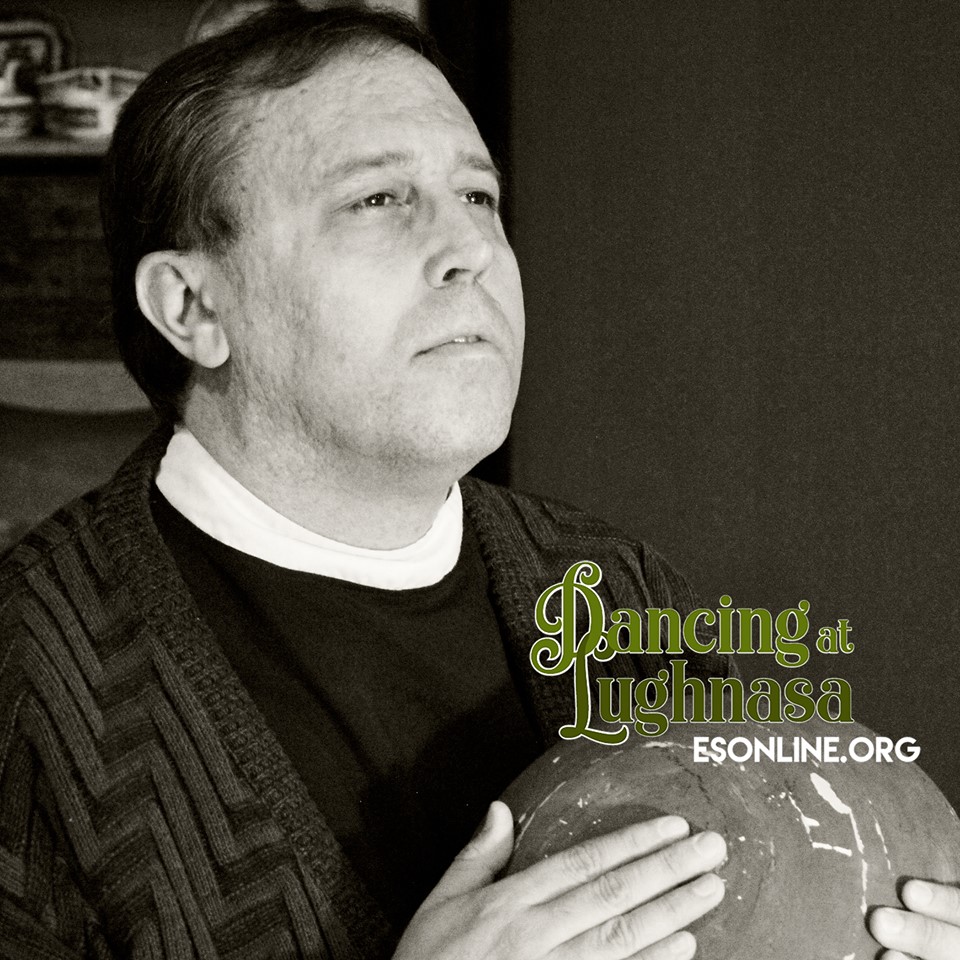
Dancing at Lughnasa by Brian Friel


The last few years, local theater The Empty Space has blended familiar classic and modern plays with some unusual and bold selections. Alas, I haven’t been free to see everything, but have caught some of the best ones. My wife and I had an evening free, and went to see Dancing at Lughnasa, which I hadn’t previously heard of, but thought might be interesting.

Based loosely on his mother’s family, Dancing at Lughnasa was written by Irish playwright Brian Friel in 1990. It was later made into a movie starring Meryl Streep, apparently. I’m not much of a moviegoer, so I haven’t seen it.

The play has certain similarities to a couple of other plays that TES has put on in the last two years, notably Three Sisters, with its ensemble of sisters living together with a brother who is challenging to say the least. There are also similarities to The Glass Menagerie, with the missing father, and a son who leaves to seek his fortune. Perhaps the reason that variants on the same story are told so many times is that it is a common one in human experience.

The five sisters in this play are Kate, the eldest, who is employed as a school teacher, and is devoutly Catholic; Maggie, who is a bit of a clown outwardly, but who keeps house and keeps everyone together; Agnes, quiet and yet wishing to get out and dance at the festival; Rose, developmentally disabled and childlike; and Christine, the youngest, who has a child with a man who abandoned her. The play is told from the perspective of the child, Michael, who appears only as an adult narrating the play from beyond the action. The other two characters are Uncle Jack, a missionary to a leper colony in Uganda, who has been sent home because he has essentially “gone native” and abandoned the Catholic faith; and Gerry Evans, Michael’s father.

The sisters are, shall we say, “past their prime,” and have extremely limited prospects in the Ireland of the 1930s. Kate loses her job because she is “tainted” by her brother’s apostasy. Agnes and Rose knit gloves until a factory puts them out of work. Christine is unemployable as a “fallen woman.” They scrape by, but it is a hard life. Society really has little use for old maids, particularly ones who have tainted families.

When Gerry reappears, he turns out to be not quite the irredeemable rake that Kate claims he is. He is catastrophically unsuccessful at gainful employment, to be sure. And, as Michael discovers many years later, he also has a family back in Wales. But he seems genuinely in love with Christine, and makes attempts at being a good father.

In a similar way, Jack is a sympathetic character. He is suffering from malaria, and some sort of mental break which has affected his memory and his cognition. He can’t keep his sisters straight, struggles to remember English words, and is confused about whether he is in Ireland or Uganda. But the tales he tells of African ceremonies and his former life are scintillating, and he is clearly a decent man who devoted his life to helping others.

Even Kate, who seems to be a killjoy and prig has a human side, and her care for Jack even as she fights with him over religion is admirable. And, let us not forget, she is the main source of income, so it is understandable that she expects to be in charge of major decisions.

The play isn’t exactly dark, but it is rather sad. Things don’t end well, as it appears they didn’t for the playwright’s family. There just weren’t a lot of good options for 40ish unmarried women in that era.

The cast was quite small for this play. The six siblings, Gerry, and Michael, so eight in all. In general, this meant that each part was important, and there were really no “bit” parts. Every actor, therefore, had a lot of lines and a distinctive emotional role in the drama. Although all were acted well, I do want to specifically mention some of the roles in connection with the relationships portrayed.

Maggie was played by Kamala Boeck, who I am not sure I have seen before. She is on the faculty at CSUB, and has done professional voice-over work among other things. Whenever there was singing in the play, she did it, and did it well. Maggie is an interesting role, as the heart of the family, and the clown hiding her own sorrow. As such, her chemistry with the rest of the cast was crucial. 

 Kamala Boeck as Maggie

Jared Cantrell was (if I recall) Teddy in Arsenic and Old Lace last year. This role is a bit less nutty, but he still had to get the tics just right. 


Jared Cantrell as Jack


Sheila McClure has been in a number of things locally, so I have seen her in various roles. As Kate, she had to be both stern and soft, and play off of Agnes and Jack. 

 Sheila McClure as Kate

DeNae Brown and Katelyn Evans (Agnes and Rose respectively) are TES regulars. Evans in particular had to portray a developmental disability without caricature - I thought it was a sensitive bit of work. 

 DeNae Brown as Agnes

 Katelyn Evans as Rose

Brian Purcell is likewise a regular, as well as a board member for TES. He’s made a career of playing the straight men, which is never the easiest job, but there is a reason he gets the roles. He doesn’t dominate the spotlight, but reliably brings a “boy next door” vibe to his roles. 

 Brian Purcell as Michael

This brings me to the couple. Chris and Gerry are a rather nuanced couple. Eight years ago, it is plenty likely that Chris was naive and easily seduced by the charming Gerry. But by this time, she knows he is totally full of shit. He still tries to spin his tales and his boasts and his plans for the future. She knows he is just making stuff up, and tells him so. But she still loves him in a way, and he loves her. Christina Goyeneche hasn’t been on stage locally for a while, but I swear I remember her from something a number of years back, although I cannot recall exactly what. Perhaps at a Bakersfield College production? Anyway, she is riveting to watch. Gerry was played by Eric Tolley, a veteran of local theater - and one of the actors I could watch in anything. The two of them really had the chemistry in this one - Gerry trying his old tricks even as he can see they are falling flat, Chris trying not to fall for him again, keeping him at arms’ length, and vacillating between mocking his lies and wanting to be with him anyway. I guess one could say, the chemistry of awkwardness. 
 

 Christina Goyeneche as Christine

 Eric Tolley as Gerry

The play itself wasn’t as scintillating as some - I think Chekhov did the psychology better, for example, and the action dragged a bit in spots. But the acting was compelling, and the characters drew you into the story. It was definitely worth seeing. Kudos to TES for bringing a less well known play back, with its look at a time and place less explored.

Dancing at Lughnasa was directed by CSUB Theater professor Mendy McMasters. If recent productions at CSUB are any indication, she is doing great with with our local students.

Friday, September 7, 2018

How We Got to Now by Steven Johnson


Source of book: Borrowed from the library

I have greatly enjoyed Steven Johnson’s books. He has a way of thinking through connections between related but seemingly unrelated areas of knowledge, and finding the connections between science and human experience. Previous books of his have have read are:


The Ghost Map is about the discovery of the connection between Cholera and contaminated water. Where Good Ideas Come From is a fantastic look at innovation which debunks the American myth of the sole genius motivated by the lure of fantastic profits. Both books are worth a read. 


***

How We Got to Now is about six key technologies and their history. But don’t think these are modern, monolithic ideas. Rather these are technologies that started out as simple, but exploded over the centuries into completely unforeseen areas. Thus, ancient discoveries can be traced to our modern world - they made us modern.

Key to understanding this is Johnson’s idea of the “Hummingbird Effect.” Most of us are familiar (at least in passing) with the “Butterfly Effect.” In essence, a small cause can have great - and unexpected - effects down the line. In the case of the Butterfly Effect, the causal links in the chain are not generally traceable or predictable. (Fun fact: while the term was coined by Edward Lorenz, it comes from Ray Bradbury’s short story, “A Sound of Thunder.”)

In the case of the Hummingbird Effect, however, the causal links are - while unexpected perhaps - quite visible. Think of it this way: as plants evolved, and pollination became a survival need, various animals co-evolved to fill this role - and get their food in exchange. For the most part, these are insects. But, in what is rather a surprise, a vertebrate - a bird - also managed to co-evolve with a different solution to the same problem of hovering. So, while one may not have been able to predict that a hummingbird would be the result of co-evolution, it is quite easy to see in retrospect how it happened.

Johnson introduces this concept in his excellent introduction, and it sets the tone for the whole book.

The six chapters are entitled “Glass,” “Cold,” “Sound,” “Clean,” “Time,” and “Light,” and are fairly self-explanatory. But from the first human-created glass (to use one example) we get a tour that includes literacy, books, microbiology, astrophysics, and electronics. Johnson even argues that the development of glass mirrors was a contributing factor to the rise of an individualistic view of self. To tie it together in a way is this tour-de-force in a paragraph:

Think of that iconic, early-twenty-first-century act: snapping a selfie on your phone as you stand in some exotic spot on vacation, and then uploading the image to Instagram or Twitter, where it circulates to other people’s phones and computers all around the world. We’re accustomed to celebrating the innovations that have made this act almost second nature to us now: the miniaturization of digital computers into handheld devices, the creation of the Internet and the Web, the interfaces of social-networking software. What we rarely do is recognize the way glass supports this entire network: we take pictures through glass lenses, store and manipulate them on circuit boards made of fiberglass, transmit them around the world via glass cables, and enjoy them on screens made of glass. It’s silicon dioxide all the way down the chain.

Every chapter is like this, although the details and time frames obviously vary. Johnson also ties this book to his other writing. Discussing these developments, it is impossible to avoid talking of the “adjacent possible,” from Where Good Ideas Come From; and the chapter on sanitation and germ theory certainly needs a mention of Cholera and The Ghost Map. This is the kind of connectedness that characterizes Johnson’s writing - and his wide knowledge of specific scientific, sociological, and historical disciplines serves him well. I always walk away from one of his books fascinated by a connection I hadn’t noticed, but now seems obvious.

There are a few things I decided to mention specifically in this post. One is the beginning of the chapter on “Cold.” This is about the history of artificial cold. While fire was first controlled by humans a hundred thousand years ago, artificial cold turned out to be far more difficult to manage. Sure, if you lived where there were cold winters and hot summers, you could preserve ice in an icehouse. But this was impossible in more tropical climes.

Until the someone monomaniacal Frederic Tudor decided to ship ice from New England to the Caribbean. This rather crazy story opens the chapter, and it gets more and more implausible as it goes on. I won’t spoil it by telling it badly, but I was reminded of a mediocre Harrison Ford movie I saw as a kid: Mosquito Coast. I suspect the book was better - but even the movie stuck with me. The idea of delivering ice to remote South American tribes was an obvious metaphor for colonialist missionary work - and it is a powerful picture. Looking back, it rather expresses why I have a lot of discomfort for a lot of what American (and Western) missionaries have done and continue to do. More often than not, it seems to be all about exporting the most toxic parts of our culture, making monolingual whites feel righteous for learning a second language, and mostly wasting time with little to no results. I’m sure some of this comes from being the grandchild of missionaries, and hearing from my parents how things really looked on the ground. (For a really fantastic discussion of this, check out Jamie Wright’s podcast with Peter Enns and Jared Byas. She really clarified what I was feeling.)

Another really interesting story comes in the chapter on Sound - which is about how we developed sound recording and transmission. A key player in this saga was the Bell Corporation. As Johnson notes, the Bell Labs subsidiary of Ma Bell had a hand in the development of pretty much every major technology of the 20th Century. This was no surprise. What WAS a surprise was that much of its ability to innovate came from the peculiarities of antitrust law as applied to Bell. My lawyer ears perked up at this, to be sure.

What happened was that Bell had a monopoly over phone service in the US. Until 1984, it was impossible to make a call - any call - without using Bell’s network. Starting in 1913, Federal antitrust regulators battled with Bell, which responded with claims that it was a “natural monopoly,” because its systems were too complex to be run by a bunch of companies. This argument had some merit, but the drawbacks to the monopoly were every bit as real. After decades of wrangling back and forth, a compromise was reached: Bell would retain its monopoly...BUT...any inventions coming out of Bell Labs would have to be freely licensed to anyone who could use it. In essence, Bell’s monopoly gave it lots of research and development funding - but the results belonged to everyone. That’s why, by the way, you can use the internet without having to use a Bell computer, a Bell cell phone, all using Bell microchips, Bell fiber optic lines, and so on.

Also fascinating in this chapter is the connection between sound recording, jazz, and the Civil Rights movement. I think Johnson is right that radio and recorded music gave African American artists access to a global medium, vastly amplifying their influence and visibility. On a related note, white supremacists HATE that African American athletes protest police brutality in a visible way. Protest is all very fine until it actually becomes visible and makes [white] people uncomfortable. The book has a great quote by Martin Luther King Jr.

It is no wonder that so much of the search for identity among American Negroes was championed by Jazz musicians. Long before the modern essayists and scholars wrote of “racial identity” as a problem for a multi-racial world, musicians were returning to their roots to affirm that which was stirring within their souls. Much of the power of our Freedom Movement in the United States has come from this music. It has strengthened us with its sweet rhythms when courage began to fail. It has calmed us with its rich harmonies when spirits were down. And now, Jazz is exported to the world.

I already mentioned it in a post long ago, but the cultic tradition I spent time in (Bill Gothard’s cult - but this teaching was everywhere) HATED all forms of music that were considered “Black.” From Jazz to Rock to anything with a drum set in it, these were considered evil and demonic - coming from Pagan Africa, of course. I think the racist patriarchists were on to something. Music is inherently political. And the rise of African American forms of music (which Czech composer Dvorak correctly identified as the truly American voice in music...back in the 1800s) was the beginning of the end of Jim Crow. Long live Jazz and Rock and Roll.

One final thing to mention. The book has an interesting epilogue, which I thought didn’t really fit the rest of the book. It actually would have fit well at the end of How Good Ideas Happen, and I wonder if he thought of it after the book went to press. It focuses on Ada Lovelace - the first computer programer. The daughter of Lord Byron, she had a truly original mind. A true genius at math, but with a broad range of knowledge, she was recruited by Charles Babbage for his computing machine project. While the steam powered gadget never really worked in practice, Lovelace’s programs for it turned out to be predictive of the future of computing. She saw that they would be more than just calculators - they would go far beyond that into a change in our conception of, well, everything.

Johnson cites her as an example of the rare exception to the rule. The person who was truly ahead of her time - and its technology. As I said, this would fit perfectly in his earlier book, but it seems to be just a bit out of place here. That said, as a stand-alone essay, it is great. So enjoy.

I really enjoyed this book, as I have all of Johnson’s writing. The experience in this case was enhanced by the fact that it was published in a high quality hardback. It just feels so delightful in the hands, I am tempted to buy one just for that reason.