Sunday, November 6, 2011

The River War, by Winston Churchill

Source of book: I own this.

One of the interesting questions is whether Winston Churchill would have made his reputation as a man of letters, had he not chosen to serve his country as a statesman. He certainly made a significant fortune with his writings, and his later career certainly owes something to the fame and popularity brought by his books.

The River War was written in 1899, soon after the end of the conflict in the Sudan between Egypt and England, on the one side, and the forces of Abdullah Ibn-Mohammed. Churchill served in the cavalry during the conflict, and thus had personal experience of the decisive battle. However, his superiors were less than thrilled about the book, leading to a change in policy to forbid soldiers from writing about their service.

A bit of a summary of the conflict: Sudan was ruled by Egypt beginning in the early 1800s. Egypt was an ally of England, and was to a degree supported by the British military. The corrupt and oppressive Egyptian regime was resented by the Sudanese, leading to a revolt by “The Madhi”, a self proclaimed prophet of Islam, who promised independence and strict observance of Sharia Law. (This sounds vaguely familiar for some reason.) After the successful revolt and a siege of Khartoum, the Egyptians were evicted. The Madhi then died, and his successor proceeded to consolidate his power by slaughtering most of his rivals, and oppressing any other potential threats. Thus, the Egyptians were replaced by another corrupt and oppressive regime, which further had designs on “freeing” all of Egypt from the apostate form of Islam and foreign influence. Britain eventually decided that its interests were threatened by this, and supported the Egyptians in the reconquest. This occurred over the course of a few years which are the main subject of the book.

The version of the book I read is the abridged version, published in 1902. The original version was nearly twice as long. Many of Churchill’s personal experiences and nearly all of his editorializing was cut from the later version. While it would have been interesting to read these, the book remains a compelling narrative of the conflict.

First and foremost, Churchill was a simultaneously a vivid and a meticulous writer. He had a broad narrative sweep that draws the reader from one incident to another, never taking his eyes off of the destination. On the other hand, even at that young age, he had a remarkable eye for the key details of a military campaign. The ability he showed to comprehend the intricacies of the supply chain, the use of modern weapons and timeless tactics, and the psychology of a disciplined fighting force would later serve him well. Particularly excellent was his chapter on the building of the railroad that enabled the rapid transport of men, weapons, and even gunboats to the front.

In addition to the military details and narrative, Churchill was able to make the desert scenery of the Sudan come alive. The opening of the book sets the atmosphere, and throughout, it continues to add descriptions at key points.

I was also reminded again of how recently disease was a game-changing factor of basic human existence. At one point, five times as many men had died from cholera as from the wounds of war. Later, malaria renders an entire garrison (except for a handful of lucky souls) completely unfit for duty.

Churchill is also notable for his sportsman-like respect for his enemies. He has much good to say about Abdullah and his generals and other key figures on the other side. In contrast to many of his time, he views even the most “savage” of peoples to be human and have ordinary human motives. In this, he is perhaps one of the first to take the modern view of the largely rational motivations behind all except for the most depraved. Ordinary desires for freedom, power, money, glory drive all – some to their own destruction and those of thousands of others. In that sense, he is a critic of the much-abused fiction of the “Just War”. Churchill, of course, believed that it was morally acceptable to fight a war if it is of benefit to the country, without the necessity of ascribing actual evil to the other side. In fact, he believed that it would lead to casual atrocities. After all, if the other side consists of utterly vile vermin, why not torture them? The perhaps older-fashioned view of the enemy as human and even noble, even while misguided, would on the other hand lead to a more humane victory. One can only wonder at whether World War Two would have been as necessary had this view been followed in the aftermath of World War One.

Of the political opinions which survived the abridgment process are Churchill’s views on the aspirations and realities of both colonialism and religious fanaticism. Both can and often do start with noble goals, and both end in something substantially less than noble. An extended quote from the first chapter is worth the space.


What enterprise that an enlightened community may attempt is more noble and more profitable than the reclamation from barbarism of fertile regions and large populations? To give peace to warring tribes, to administer justice where all was violence, to strike the chains off the slave, to draw the richness from the soil, to plant the earliest seeds of commerce and learning, to increase in whole peoples their capacities for pleasure and diminish their chances of pain—what more beautiful ideal or more valuable reward can inspire human effort? The act is virtuous, the exercise invigorating, and the result often extremely profitable. Yet as the mind turns from the wonderful cloudland of aspiration to the ugly scaffolding of attempt and achievement, a succession of opposite ideas arises. Industrious races are displayed stinted and starved for the sake of an expensive Imperialism which they can only enjoy if they are well fed. Wild peoples, ignorant of their barbarism, callous of suffering, careless of life but tenacious of liberty, are seen to resist with fury the philanthropic invaders, and to perish in thousands before they are convinced of their mistake. The inevitable gap between conquest and dominion becomes filled with the figures of the greedy trader, the inopportune missionary, the ambitious soldier, and the lying speculator, who disquiet the minds of the conquered and excite the sordid appetites of the conquerors. And as the eye of thought rests on these sinister features, it hardly seems possible for us to believe that any fair prospect is approached by so foul a path.

The perspective of hindsight is perhaps even more bleak. After World War Two, the continent of Africa was largely freed from European domination, but the result has been brutal. In the Sudan, there has been ongoing civil war, predominantly between the Arab dominated Muslims in the north, and the Christian and Animist tribes, largely black, in the south. Sixty-five years of ongoing war, famine, and genocide. It really is depressing, and there are no easy solutions.

Perhaps then, the most lasting impression of this book is its relevance to the conflicts we face today. Is there a way to establish the rule of law in lawless and dangerous regions without become an oppressor ourselves? Is there hope for a country mired in corruption, oppression, and violence? Churchill reminds us that these issues are far from new, and are likely to continue to be an issue in the generations to come. 

A few minor related notes:

This book is remarkably brief for Churchill, at a mere 350 pages. I have previously read his 6 volume work on WWII (5000+ pages!) and The History of the English Speaking Peoples (4 volumes, 2000+ pages). Both of these are extensively available at used book stores. I found most of mine there, or in thrift stores and library sales. Both are worth reading, but are not for the faint at heart. If you do not care about wars and warfare, the WWII set will bore you to tears. However, if you are interested in that sort of thing, hearing it from the perspective of one of the main participants is priceless. Churchill was, even at that late stage, a soldier at heart, and he captures both the military and the diplomatic aspects of the war brilliantly.

The History of the English Speaking Peoples is, in my opinion, a far more interesting history of England that that found in most textbooks. While Churchill is prone to think in terms of kings and battles more than writers and ideas, his writing is so far from dull. Many a textbook writer should read this before compressing a vivid history into a dry biscuit. It’s also fun because he can’t resist giving his opinion of the military strategy of the American Civil War – a totally different view than we Americans get from our history books.




Thursday, November 3, 2011

My Poetry Reading Project, and notes on A Boy’s Will, by Robert Frost

Date originally posted on Facebook: October 6, 2010
Source of Book: I own this

This is the post that started my poetry reading project. It was originally inspired by reading the excellent anthology edited by Robert Pinsky, Essential Pleasures: A New Anthology of Poems to Read Aloud, which reminded me again of my love for poetry. 

I have decided to embark on a tour of my poetry collection, also supplementing with a few books borrowed from the local library.

Those who have been to my house have seen our library, which contains somewhat more than 2000 books, primarily collected at library sales, thrift stores, and used book stores. I have picked up several complete anthologies by favorite poets, and a good number of collections by individual authors as well. While I have browsed from time to time, I never systematically read through any particular work.

To that end, I will be reading through my collection a bit at a time; not reading one author straight through, but finishing a book (as it was originally published) before moving on to the next poet.

I decided to start with Robert Frost. I have been fond of Frost since grade school, and am inclined to consider him my favorite poet. I find more and more depth to his poems the older I get and the more I read them.

Poetry is in the popular mind the language of love and springtime. Frost is the voice of Autumn and Winter and Solitude and Loss.

Despite being known as a “New England Poet”, Frost was actually born in San Francisco. (Similarly, Creedence Clearwater Revival has the reputation as a Southern band – it also originated in San Francisco) His father died when he was 11 – the first of a string of losses which continued throughout his life. Only 2 of his 6 children outlived him.

I own the complete Frost: Poems, Plays, Letters and Essays. I was given this lovely hardback edition by a young lady, whose good taste obviously won me over.

A Boy’s Will was Frost’s first published collection, appearing in 1912. It consists of 30 short poems (the longest is 72 lines). There is a general feeling of cold about the poems: bracing cold, invigorating cold, and sharp cold. Even the poems that allow the warmth of the sun to touch the lines have a nostalgic, melancholy feel; a looking back on pleasure, love, and springtime. And yet, there is sweetness. Perhaps sorrow never felt so sweet as in Frost’s hands.

From a formal point of view, Frost is a traditionalist. Most of his work has a regular meter, and a significant majority follow a rhyme scheme of some sort. A few could even be considered sonnets, if not quite as rigid as those of earlier poets. He also wrote many works in Blank Verse. (He was irritated to hear it confused with Free Verse)

Frost was particularly fond of the 5 line stanza. He rhymed it in a few different ways, typically using a quadrameter or pentameter, though not always iambic.

A great example is the short poem In Neglect

            They leave us so to the way we took,
                        As two in whom they were proved mistaken,
            That we sit sometimes in the wayside nook,
            With mischievous, vagrant, seraphic look,
                        And try if we cannot feel forsaken.

This is one of the many that demands to be read multiple times. The layers peel back.

There are so many more awaiting me in the future. I will comment on each poet and collection as I read them. I welcome suggestions for additions to my list.

Saturday, October 29, 2011

"The Sevastopol Sketches" and other early works by Leo Tolstoy

Source of Book: I own this - used hardback


Tolstoy is best known for his two long novels, War and Peace, and Anna Karenina, neither of which I have read. Actually, this is a somewhat odd omission, because I have read three of Dostoyevsky’s novels, which are equally as long and difficult. I have, however, read and enjoyed a number of Tolstoy’s shorter works.

In this case, I am tackling part of a collection of short stories and novellas that the editor has titled “Tales of Courage and Conflict”. The works within the collection are presented in essentially chronological order, and contain a significant slice of the Author’s short works. I decided to jump in at the beginning and read until I decided to stop. As I did with my review of assorted short works of Henry James, I will look at each work briefly, rather than attempt an overview of the whole.

“The Invaders”

This short story was Tolstoy’s first. It is alternately titled “The Raid”. This is one of several stories that Tolstoy based on his experiences fighting in the Russian army in the Caucasus. Not being particularly familiar with 19th Century Russian history, I had to look up what on earth this war was about. Apparently, most of the first half of the century was taken up by Russia expanding its empire into the Caucasus, in places that have now returned to some degree of independence: Georgia, Azerbaijan, Chechnya, and others. Turkey and Iran were also involved as interested parties, if not exactly belligerents.

This story focuses on a conversation between Tolstoy and a superior officer about the nature of courage, which is defined by the officer thus: “A brave man is one who conducts himself as he ought.” This theme is then developed throughout the rest of the story. I should note that a Tolstoy “short story” is rarely as short as one would expect, and is typically divided into chapters. The chapters are shorter than those in a novel, and there are fewer of them, making the overall length less.

I particularly enjoyed Tolstoy’s description in this story of rising early and setting out on a march. He beautifully paints the transformation from the foggy night to the brilliant day.

“Recollections of a Billiard-Marker”

This is the only one of the early stories that I had previously read as well as the only story in this review that is about civilian life.  Told from the point of view of a “Billiard-Marker”, who sets up the balls, keeps score, and otherwise does the work at a billiard hall; it chronicles the downfall and eventual suicide of a young, sensitive nobleman who becomes addicted to gambling and gets hopelessly in debt.

This is one of Tolstoy’s semi-autobiographical stories, and showcases one of his talents: the ability to write unflatteringly about himself. Tolstoy was a rather dissolute young man, and also quickly wound up in debt due to gambling. Rather than make his quietus, he joined the army, of course, and the world was not prematurely deprived of a fine writer.

This particular story is more tightly plotted than average, making it a focused and purposeful tale. It also shows good insight into the nature of addiction as the nobleman expresses his horror at his own descent into moral and physical blackness, but is unable to rouse himself to take action. Finally, in his suicide note, he states that he is even unable to feel pain at the thought of his own death.

“The Sevastopol Sketches”

This is a trio of stories entitled, “Sevastopol in December 1854”, “Sevastopol in May 1855”, and “Sevastopol in August 1855”.

If you mention the Crimean war to a random stranger, you will usually get a blank look. With a few, you might get a mention of Florence Nightingale. A few war buffs might mention it as the first modern use of artillery, or mention it as one of the most pointless wars of all time. It also was a presaging of the trench warfare in World War I. This is not a compliment.

Each sketch is a snapshot of a particular moment in the siege of Sevastopol. Located on the Crimean peninsula extending into the Black Sea, Sevastopol remains an important port and naval center. After a dispute with England and France over the Dardanelles, and control of other remnants of the Ottoman Empire, the Russians sent troops to the Holy Land, sparking the war. (There is a lot more to it than that, but is better left to the military historians.)

Eventually, the Europeans laid siege to Sevastopol for about a year, finally breaking through and forcing Russia’s surrender.

Tolstoy based his stories on his own experience in Sebastopol during the war. Since he was in the artillery, that facet of the battle receives particular attention, and a good deal of careful detail.

The first story is told in the second person, that is, it is a tour given to “you”, the reader. Tolstoy is brutally effective in showing the horrors of war, from the cold and mud to the “hospitals” with the dying crammed into any available spot on the floor. These are the dreadful and hopeless conditions in which Nightingale and other nursing pioneers sought to reform. Whatever other strides have been made in warfare, the greatest has certainly been in medical care, where an injury does not have to mean death.

The second story is split between accounts of the rather vain and pointless social lives of the officers and their petty hopes of advancement, and an artillery battle. It concludes with a temporary truce called in order to collect the dead and injured. Tolstoy’s haunting language describes this scene beautifully:

Yes, white flags are hung out from the bastion and the trenches, the flowery vale is filled with dead bodies, the splendid sun sinks into the blue sea, and the blue sea undulates and glitters in the golden rays of the sun.
…
The white flags have been hauled down, and again the weapons of death and suffering are shrieking; again innocent blood is shed, and groans and curses are audible.

The final story tells of the final battle and the surrender of Sebastopol. It begins with two brothers making their way to the front. The elder is returning to action after being wounded, and the younger is joining the fight for the first time. Their hopes and fears are explored for much of the story, until all hell breaks loose on the front, and all is swept away by the inexorable enemy.

Tolstoy shows a foretaste of his eventual skill in psychological analysis of human nature in these sketches. Although he has not yet figured out how to focus consistently and avoid distraction with side characters and stories, he is able to keep his narrative arc together, for the most part. These are not easy to read. The death and destruction are ever present, and the author does not shy away from portraying suffering. Drawing from experience, he is able to portray the experience of injury and even death in ways that we now take for granted. Far from the heroic deaths of Medieval legend or the gory yet poetic deaths of Homer’s warriors, these are closer to death as portrayed in modern war movies. I was amazed at how few words were necessary to do this. Tolstoy does not wallow in gore, and actually moves quickly, but his deaths are hard to take.

Together, these three are nearly 100 pages of small type, making them longer as a unit than Tolstoy’s novellas.

“The Wood-Cutting Expedition”

Another “short” story about the war in the Caucasus. I would say this one is the weakest of the ones I read, particularly in its lack of economy. If Tolstoy had ended it after about 2/3 of its length, it would have made more sense. Instead, he charges on after the logical ending, introduces a few new characters which never go anywhere, and then ends it abruptly.

Also puzzling is that he starts the story with a few characters, then launches a diatribe about the basic kinds of people in the army. He then applies his categories to a few of the characters, but then apparently loses interest in this idea, and never really brings it up again. This would have been interesting had he stuck with it and made the story about the types. If he had left out the types and made it a musing on the responses to the death of a soldier, that also would have been interesting. Had he focused instead on the reasons each of the characters was in the army in the first place, that too would have been intriguing. Instead, he flirts with each of these ideas, never committing to one long enough to make for a coherent central idea.

“An Old Acquaintance”

In contrast, this story is highly focused, with the narrator and another character taking center stage, and a minimum of supporting characters largely in the background.

The narrator is a nobleman serving in, predictably at this point, the Caucasus. During a gathering of officers while on an exhibition, an odd and pathetic soldier appears at their gathering. He is a former officer who has been “cashiered”, that is, stripped of his rank for disciplinary reasons. It turns out that he is also of noble descent, and knew the narrator during their pre-military days. At that time, he was a bit of a prig, and his priggishness has done him no favors in the army, to say the least.

The two have an extended conversation, in which the author alludes to some sort of incident which led to the soldier being disinherited. Unfortunately, Tolstoy declines to indulge our curiosity, claiming that the story would be boring. I suspect Tolstoy at this stage in his career, either did not wish to write of such things, or felt more at home writing about military rather than civilian issues. Either way, I was disappointed that this was omitted. It would have been very interesting indeed to know the cause of the disgrace of the soldier, as it was the inciting event that led to his ever increasing degradation.

This story is an excellent use of the unpleasant, unlikeable character. The soldier is clearly irritating to all he encounters because of his belief that he is better than everyone else. It is true that he comes from a better background, is better educated, and has broader interests. However, this causes him to despise everyone else as inferior. Even worse, his sufferings have utterly failed to bring him humility. Humiliation, yes, in spades; but not humility or even empathy.

As a group, these stories show a broad slice of life as Tolstoy knew it in his early years. From the gambling to the mud and blood, Tolstoy shows his observational powers, and the early gleams of his genius of characterization. He also shows his tendency to lose focus and ramble without tying up the loose ends. Although these stories are not a bad way to start, I would recommend short stories or novellas from Tolstoy’s mature period for the first time reader. Such novellas as Family Happiness or The Death of Ivan Ilyich, or short stories such as “What Men Live By” or “How Much Land Does a Man Need” show the more typical philosophy of the older Tolstoy, and showcase his talents at their peak.

Translation notes;

No, I do not speak or read Russian, so these are in translation. The Sevastopol Sketches were translated by Isabel F. Hapgood. The rest were translated by Nathan Haskell Dole. I have nothing negative to say about the translations. I have read a few stories that seemed ill translated before, but there were no real off notes here.

Sunday, October 23, 2011

Early Poems by Matthew Arnold

Source of book: Borrowed from the library, now on my Kindle. 
Copyright information: Public Domain


The three great Victorian poets are generally considered to be Alfred, Lord Tennyson; Robert Browning; and Matthew Arnold.

Most of us are familiar with Tennyson, perhaps for a poem or two we memorized for high school. Others of us enjoyed Idylls of the King, and perhaps Ulysses or Locksley Hall. In any event, his place in history is secure.

A significant number are also familiar with Browning, at least for The Pied Piper of Hamlin or My Last Duchess. I will confess that I have read little beyond those works.

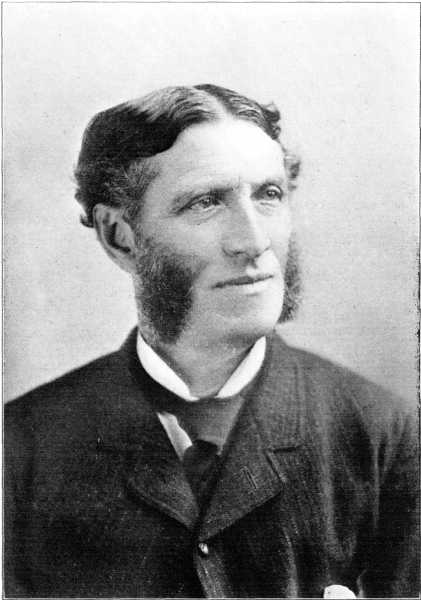
Arnold appears to be the forgotten poet of the bunch, for some reason. This, despite his distinctive sideburns, which led to cartoon caricatures during his lifetime. I decided to start at the beginning and see what I could find. Hence, the reading of his early poems. I realize that this is an unfair way to form an impression, as the poet’s first works might not be his best ones, but it has the advantage of being systematic.

After reading these poems, I think one of the reasons that Arnold is less popular today is that he too accurately captured the spirit of his times. The Victorian Era has lost a bit of luster in our modern sensibility. Although we continue to admire the architecture and secretly wish to be Victorian nobility, we feel that that the philosophy is both foreign and hollow.

Arnold is intriguing in that he captures in verse both the optimism of the era and the pessimism.

On the one hand, the Victorians believed that man would continue to conquer nature and better himself. This has come true, at least as to the first. We have in fact reduced the infant death rate, and conquered disease to a remarkable extent since Arnold’s time. On the other hand, as Arnold sensed in advance, human nature has not exactly been on a self improvement streak over the last century. The horrors of Fascism and Communism exterminated much of the residual optimism of the 1800s, and the British Empire is no more.

One of Arnold’s sonnets is an interesting illustration:

To an Independent Preacher Who Preached that We Should Be ‘In Harmony With Nature’

‘IN harmony with Nature’? Restless fool,
Who with such heat dost preach what were to thee,
When true, the last impossibility;
To be like Nature strong, like Nature cool:—
Know, man hath all which Nature hath, but more,        
And in that more lie all his hopes of good.
Nature is cruel; man is sick of blood:
Nature is stubborn; man would fain adore:
Nature is fickle; man hath need of rest:
Nature forgives no debt, and fears no grave;        
Man would be mild, and with safe conscience blest.
Man must begin, know this, where Nature ends;
Nature and man can never be fast friends.
Fool, if thou canst not pass her, rest her slave!

Contrasting with whatever optimism could be found in the triumph over nature is Arnold’s pessimism over the future and present of human relationships. In his longer poem, Modern Sirens, he compares modern women to the ancient sirens, and not very flatteringly, I might add.

He also gives a warning to “an ambitious friend” in Horatian Echo, wherein he warns against the futility of politics.

At this point, I might mention that Arnold has a fondness for the name “Marguerite”, for reasons I was unable to discover. She is addressed directly in a couple of poems, and the name recurs throughout the early poems.

I do not want to give the impression that Arnold poems are second rate. Although I took a while to warm to them, they did grow on me as I read. Although some seem more dated than others, many of his sentiments describe the modern sense of ennui and disenchantment with mankind that persists today.

One facet of Arnold’s work which I found intellectually interesting is his ability to write in a wide variety of poetic forms. As seen above, he used the Petrarchan sonnet form, but modified in rhyme scheme to ABBA CDDC EFEGGF. He also used a variety of sonnet forms from strict traditional to other interesting variants.

One of his longer poems, the narrative poem The Church of Brou, uses several Middle English forms to tell a tale similar to an old fashioned ballad – that of love severed by death, and the erection of a church as a memorial. The first part of the three part form is in ballad stanza, and tells of the death of the young duke while hunting. The second part uses an eight line stanza (similar to an old form, but not quite) rhymed ABCABCAA. This section tells of the building of the church. The fast pace of the first part is now contrasted with the slow, methodical building of the second. The third section tells of the way the church fell into disuse and obscurity through the subsequent years, and is stated in rhymed couplets in iambic pentameter. All in all, an excellent use of form to support the substance of the poem.

I also enjoyed a pair of poems on youth, entitled Youth and Calm and Youth’s Agitations, an interesting musing on the nature of youth. Here is Youth’s Agitations, written in this case in the Shakespearian sonnet form. Definitely one of my favorites.

When I shall be divorced, some ten years hence,
From this poor present self which I am now;
When youth has done its tedious vain expense
Of passions that for ever ebb and flow;

Shall I not joy youth's heats are left behind,
And breathe more happy in an even clime ?--
Ah no, for then I shall begin to find
A thousand virtues in this hated time!

Then I shall wish its agitations back,
And all its thwarting currents of desire;
Then I shall praise the heat which then I lack,
And call this hurrying fever, generous fire;

And sigh that one thing only has been lent
To youth and age in common--discontent.

Another memorable line comes from A Modern Sappho, a poem on unrequited love.

Their love, let me know, must grow strong and yet stronger,
Their passion burn more, ere it ceases to burn.
They must love--while they must! but the hearts that love longer
Are rare--ah! most loves but flow once, and return.

Perhaps these lines from To a Gipsy Child by the Seashore capture Arnold’s sense of  world-weariness the best:
Is the calm thine of stoic souls, who weigh
Life well, and find it wanting, nor deplore;
But in disdainful silence turn away,
Stand mute, self-centred, stern, and dream no more?
Or do I wait, to hear some gray-hair'd king
Unravel all his many-colour'd lore;
Whose mind hath known all arts of governing,
Mused much, loved life a little, loathed it more?

Sunday, October 16, 2011

Twelve Ordinary Men by John MacArthur

Source of book: Gift from my sister, Bethi Ferrier


This book is about the twelve apostles. If I already lost you, this book might be a little advanced for you as it assumes that you have a basic grasp of the Bible and of Christian theology. It is also written to those who are already believers rather than skeptics.

From that frame of reference, MacArthur takes a look at what we know of each of the twelve from scripture, and throws in a little Eusebius and other church historians as evidence of the later events of the lives and deaths of the twelve.

Some strong points of this book: MacArthur, as would be expected from his background as a pastor and scholar, is meticulous in his Scripture references. Everything is laid out by chapter and verse, and is easy to follow.

I also liked the way the author is able to draw out the personalities of the apostles from the few statements they make and their known histories. He is able, for example, to show that Thomas has gotten a bad rap as a doubter where he probably should have been known more as pessimistic but unusually loyal. MacArthur also avoids the temptation to read too much into the evidence. He is not seeking to break new theological ground, but instead to demonstrate the humanness of the apostles: their personalities, their faults and strengths, and how they were changed by their contact with Christ.

Also well done was a brief discussion of the word underlying “Apostle”, which is a transliteration of a Greek word that was itself the translation of a word in Aramaic, shaliah. This word carried a whole concept in the culture, similar to how we would think of an ambassador, or even perhaps an attorney: one who carried the message of another and carried his principal’s full authority.

There was one sour note in the book, which I am inclined to attribute to sloppy editing. As a general rule, MacArthur is careful to give citations for his assertions, or at least attributions, for all quotes and references. However, at one point, an unnamed “study” is cited, but is never named or attributed. I would have expected that this would have been attributed in the same manner as other authorities, which is why I suspect that this one missed the fact checker’s red pen.

Other than that, this book was a good read, full of information and food for thought. After all, twelve rather ordinary men profoundly changed the world; eleven for good, and one in ways he never anticipated. It is inspiring to know that one need not be extraordinary to be used by God in extraordinary ways.

Sunday, October 9, 2011

Areopagitica by John Milton

Source of book: Free on my Kindle via Gutenberg.com


Banned books week was September 25 through October 1 this year. I have decided to observe this literary holiday each year from here on out by reading a banned book. There appear to be enough to keep me occupied.

First, a distinction needs to be made between banned books and “challenged” books. In order to qualify as a banned book, the book must have been forbidden publication or possession by a government. In contrast, a book that parents or others seek to remove from a school curriculum is merely “challenged”, even if the book is in fact removed.

In my opinion, there is a difference between the two. Not all books are appropriate for children or teens, and those who wish to read a challenged book anyway can presumably locate a library or book store. Those books actually banned were denied to all unless they were willing and able to break the law.

While I have thus limited my list to truly banned books, I include books that have been banned by any government, at any time in history.

To kick things off, I chose to read Areopagitica, one of the few books to be intentionally written as a banned book. Milton wrote this pamphlet in response to the Licensing Act of 1643, which required that all books to be published must first be pre-approved by a Parliamentary committee. Thus, Milton, by publishing his pamphlet without permission, set out to violate the law in protest against it. Milton had previously met with Galileo at the time Italy imprisoned him for his new views of astronomy, and this greatly influenced Milton’s views on speech.

Despite Milton’s efforts, the law remained in effect until the Glorious Revolution in 1694, when broad freedoms were instituted by William and Mary. Although it took 50 years, Milton’s views eventually became mainstream in England, and eventually were enshrined in the United States Constitution as part of the First Amendment.

Areopagitica is considered one of the most eloquent and influential defenses of freedom of press ever written. However, it also is an unexpectedly good argument in favor of freedom of thought.

Milton makes the following arguments. First, censorship in the form of pre-approval did not exist in classical Greek and Roman civilization. Milton traces its history throughout this period and shows that the law in question was far more strict than that in place in ancient history. Milton then shows that the first use of a pre-approval statute was by the Inquisition. At this time in history, England, relatively recently severed from the Catholic Church, considered itself to be the antithesis of the Inquisition, but was taking the exact same course of action.

Milton’s second argument grows naturally out of the first. He argues that no harm results from letting books go published, even if they contain errors. Now, Milton was not a libertarian. He was willing to accept that the government might choose to ban a book after its publication if it were truly libelous or otherwise harmful – and the government could round up all the copies and destroy them if necessary. Milton obviously never envisioned the internet.

However, despite this incomplete vision of free speech, Milton was still far ahead of his time. He believed that even error could be useful to the thinking man. Very little ever written could be considered as unadulterated truth, and the wise man trains himself to distinguish truth from error by practice and by absorbing knowledge from a variety of sources.

Milton effectively contrasts the use by St. Paul of quotes from heathen Greek poets with Julian the Apostate forbidding Christians from reading heathen works. He correctly concludes that those who wish to narrow the range of knowledge do so that they might better control their followers. Governments particularly are likely to ban books for this very reason.  This despite the fact that the very act of banning tends to enhance the cachet of the work. As Milton put it, “The punishing of wits enhances their authority.”

I particularly enjoyed Milton’s amazing discourse on the true nature of the knowledge of good and evil. They are intertwined, not separate. A man cannot truly know good unless he also knows evil. Furthermore, a man who has never been tempted is not good, but merely untested.

“I cannot praise a fugitive and cloistered virtue, unexercised and unbreathed, that never sallies out and sees her adversary but slinks out of the race, where that immortal garland is to be run for, not without dust and heat.”

A person, in Milton’s view, becomes wiser as he or she acquires knowledge, and sifts it to find its wisdom. By grappling with the truth and with falsehood, a person becomes ever more able to distinguish them. In contrast, it is an insult to those who love learning and wisdom out of their love for God and for the truth to distrust their judgment in favor of the wisdom of a political committee.

Finally, Milton argues that much good will be lost by the pre-approval of books.

"And yet, on the other hand, unless wariness be used, as good almost kill a man as kill a good book. Who kills a man kills a reasonable creature, God’s image; but he who destroys a good book, kills reason itself, kills the image of God, as it were in the eye."

Those who sit in judgment are more likely to choose the familiar and safe over the new and provocative, thus missing out on truth. Milton believed that it was arrogant to assume that all truth was known, and that anything new was therefore error.

“Truth is compared in Scripture to a streaming fountain; if her waters flow not in a perpetual progression, they sicken into a muddy pool of conformity and tradition.”

Thus, in Milton’s view, it is necessary that there be a continual exploration and discussion of the truth, or it becomes stale and ineffective.

Milton’s conclusion is the desire of all of us who desire both freedom of speech and freedom of thought.

“Give me liberty to know, to utter, and to argue freely according to conscience, above all liberties!”

Bonus quote for my theologically minded friends:


“A man may be a heretic in the truth; and if he believe things only because his pastor says so, or the Assembly so determines, without knowing other reason, though his belief be true, yet the very truth he holds becomes his heresy.”

Wednesday, October 5, 2011

The Kite Runner, by Khaled Hosseini

Source of book: Library

This is the third book I have read in the last five years with a significant connection to Islam. I started with The Satanic Verses, by Salman Rushdie; read in the aftermath of the Danish cartoon hullaballoo as a personal protest against fatawa. (Plural of fatwa – I looked it up.) The second was Thy Hand, Great Anarch, by Nirad C. Chaudhury, which I previously reviewed in detail. I highly recommend both of these books. The Kite Runner is the third of these.

Hosseini sets his novel in the period from 1975 through the aftermath of 9-11, a period which saw the fall of the monarchy in Afghanistan, the Soviet invasion, the rise of the Taliban and Al Qaeda , and eventually, the continuing battle in that country.

A native of Afghanistan the same approximate age as his protagonist, Hosseini writes of what he knows. Hosseini’s own life has a few similarities to the novel. His family left Afghanistan in the aftermath of the fall of the monarchy. He settled in the Bay Area, and eventually became an author. (Although he was a physician first – not a bad career to fall back on if the novel was a bust.)  Most importantly for this book, he had friendship with a Hazara which partially inspired the story.

What is a Hazara? This key fact drives the plot, and shines an unpleasant light on human nature. Afghanistan, like many nations, contains more than one ethnic group. For some reason, this is disturbing to our human nature, and it seems to inevitably result in problems, from basic racism to slavery to pogroms to civil war, all the way up to Hitler. The dominant group in Afghanistan was and is the Pashtun, with the Hazara a much loathed minority group. Probably of partial Chinese descent, they were viewed, unsurprisingly, like every other unpopular minority. The Taliban and its sympathizers are generally Pashtun, so of course it was necessary to slaughter and oppress the Hazara.

From my personal experience as an attorney, I can attest that every group on the face of the earth is racist to some degree or another. When I worked at GBLA, clients would claim that they knew we wouldn’t help them because they were (black, white, asian, Hispanic, Turkish even!). Some of those of Mexican descent would come in and complain about the dirty Central or South Americans. The Okies would complain about the Texans, and vice versa. Suffice it to say that the roaches in these United States are called German roaches, but the roaches in Germany are blamed on other countries as well.

How does this figure in The Kite Runner? Amir, a twelve year old Pashtun boy at the beginning of the story, is friends with Hassan, a Hazara boy who is the son of Amir’s father’s servant. Their friendship is inseparable until a horrific event occurs at the hands of a psychopathic older boy. Hassan is brutally assaulted, and Amir is unable to find the courage to do anything but run. Amir’s guilt causes him to make matters far worse. Eventually, he betrays his friend in a truly unforgivable manner.

Soon, the wars force a dramatic flight first to Pakistan and then to America, where Amir and his father experience poverty and disorientation. Amir finds true love, experiences success with his writing – and suddenly receives a call from an old friend summoning him back to Afghanistan by way of Pakistan. Amir is given a chance to face his past and redeem himself.

Further than that, I will not go, as the plot should not be spoiled. Hosseini writes a gripping tale with a tight and efficient plot, combining both a dramatic narrative and a compelling internal psychological struggle.

There are a few minor quibbles, of course. I found some of the use of coincidence and parallel imagery to be a bit much. In particular, I felt that the scar that Amir receives late in the book to be unnecessarily dramatic. The point would have been made without this extra touch. On the other hand, many of the parallels drawn by the author suit the purpose of the narrative. Furthermore, this is a common device in fiction, used by many of the all time great authors. It seems almost unfair to complain about it in a modern author simply because it has been done before.

Particularly effective in this book are the portrayal of the horrors of extended war and the havoc it causes in a formerly promising country. The utter crumbling of all social institutions from education to health, to basic food and water as the result of 20 years of civil and external war is painful to witness. The author is obviously no friend of the Taliban and its hypocritical use of violence for personal, and often senseless reasons.

Also effective was the author’s exploration of the nature of cowardice. Amir is a coward by nature, not training. He is physically incapable of heroism – a key point in the book. His body fails even to be minimally cooperative during the flight to Pakistan. Thus, cowardice is both a moral failing, and an indwelling state of being. This subtle portrayal prevents an easy judgment of Amir. He is clearly stretched beyond his capacity, and reacts initially in a mostly excusable way. However, his cowardice combined with his guilt to lead him down an ever more horrible course of action. Is this what happens when we experience fear? I have rarely felt a stronger combination of pity and revulsion toward any character in a book or in real life.   

I also found the open ended “ending” of the book to be intriguing. It would have been simple to have ended with either a saccharine sweet end, or a devastatingly bitter end. The author chooses what I consider a more realistic, and ultimately more thought provoking conclusion. The past cannot be undone, and the damage caused by others (or one’s self) cannot be erased by good motives or even good actions. The final ending is left to time and hope.

As a final point, I would add that the question of redemption is left unanswered in this book. Hosseini is honest in admitting that a present good action does not necessarily overcome a past evil action. The question is presented as to whether God will punish for the evil action or not. Can that evil be overcome? Is a later good stronger than an earlier evil? For the follower of Islam (and many others), the answer awaits the final weighing in the scales. For those of us with a belief in Christianity, the answer is that we can never overcome evil in and of ourselves. Christ himself is the one who has overcome evil. The sole hope for the future and for healing rests not within ourselves and our ability to redeem our pasts, but in the grace freely granted.

This book is well worth reading both for its exciting writing and for its deep questions. I would caution that this book does portray a depth of depravity that is disturbing. I myself was haunted a bit by a few passages that I doubt I will ever forget. The author effectively uses these events to create an unforgettable tale and a suggestion of the cowardice that tempts us all.