Tuesday, February 15, 2022

Four February Performances

One of the things I have learned in my 20 years as a solo practice lawyer is that things are “feast or famine.” You have to just roll with the slow times (say, most of 2020…sigh) and hang in there when things get crazy. Sometimes, things are like that when it comes to music - every December during normal years, for example. And that’s the way it goes with lots of things in life. 


And that is how I ended up seeing four plays at four different local theaters within nine days. 


I am thrilled that our local theaters made it through the covid shutdowns intact, and with plenty of pent-up enthusiasm and great ideas. Since it was so many in a short time, I decided to combine all the reviews in one post, and present them in the order I saw the plays. 


The Wizard of Oz

(Stars Theatre)


There were two main reasons I went (with two of the kids) to see this one. First, one of my teens’ classmates was in it, and we love watching her. Second, Kevin McDonald was the Wizard of Oz, and he is worth seeing in any role. And, as is the case generally with Stars, I know some members of the live band. 


The musical is based on the movie, which is based on the book. I first discovered the book, back in my childhood, before eventually seeing the movie - it was a yearly event on broadcast TV, but my parents preferred the other yearly event, Ben Hur, so I had to make more of an effort to see The Wizard of Oz. The movie is dang long, so the play shortens it just a bit. And naturally, the special effects are a bit less in play, particularly for a theater which doesn’t have a multi-million dollar budget. 


It has been a while since I saw the movie, so I am guessing a bit as to what was cut, but it seems that it was mostly special effects scenes and dance sequences. Probably some dialogue too, but all of the most memorable lines seem to be there. It does retain the whole framing story of “the characters in Oz are all real people in Dorothy’s life and she is just dreaming” rather than the going with the plot of the book, which is clear that Oz is a real place…somewhere. (I read several of the books, but nowhere near all 14 of the original series by Baum or any of the later books by other authors.) 


Just to mention a few highlights of this production. First, local actor Bella Stine (age 15, but already with an impressive list of voice credits and an IMDB listing), was outstanding as Dorothy. Singing, dancing, acting - she is the whole package, and owned every scene she was in. She also refused to be rattled by the sound issues that plagued the first half, not missing a beat. She is already a total professional. 

 Matthew Barge, Joshua Hefner, Bella Stine, Mark Price

Matthew Barge (the Tin Man/Hickory) also carried his vocal parts well, and was perfect with the physical acting for the part. Laurie Howlett (The Wicked Witch) and Mark Price (The Cowardly Lion) are married in real life, which led to some fun in-jokes in the program and on Facebook throughout the run. Mark is a local magician, but found himself with a singing part, which meant pulling a Rex Harrison, but with more growling. This was actually really fun, and kept the audience laughing. Laurie has been in productions around town for years, and was deliciously loathsome. The Munchkins were surprisingly young, and well coached. Their singing was spot on, which is not always the case for small kids. And, of course Kevin was fun to watch do the curmudgeon thing once again. 


Once

(The Ovation Theatre) 


Since it took over the old Spotlight Theater location, Ovation has found its niche with its live music and offbeat musicals. After having a smash hit with Million Dollar Quartet - on the strength of its talented and tight band, they have tried to have at least one event with musicians on stage doing their thing each year. In this case, that play was Once. 


As it turns out, I know a bunch of the musicians, so I was glad that I managed to see a show. They had to cancel part of the run due to Omicron, but sold out the last weekend, which has to make everyone happy. 


Like The Wizard of Oz, Once is also based on a movie. Set in Dublin, it is an almost love story about a musician who has lost his way and his belief in himself. Filled with eccentric characters, both native Dubliners and Czech immigrants, it bounces between humor and pathos. The key thing for it all to work is that the cast has to sell the story, implausible as it is. That, and since all the instruments are played live on stage, the music had better be good. And it was. 


The band was seriously tight and balanced and full of exuberance. Even without the need of a plot, they would be worth watching in concert, but they also seamlessly worked the music into the story, making it feel natural. 

 Dominic Demay, emoting...

Dominic Demay had the lead part this time, after several great turns as humorous supporting characters, and was perfect for the part. He can sell over-the-top emoting like few others, and his singing has really blossomed the last couple of years. Jacqueline Salazar played opposite Demay as “Girl” - the lead is “Guy” - and filled the role of “manic pixie dream girl” so to speak. Not an easy role to play, but she did it admirably. Beyond that, the other characters were fun, and many of the roles were filled by friends - Bakersfield has a great music community, and some wonderfully skilled musicians. 

 Dominic Demay and Jacqueline Salazar

I’ll also mention the amazing set, where they pretty much rebuilt the theater bar onstage, and sold drinks before and after the show, and during intermission. So much love and effort went into this production, and it came off really well. 

 Matthew Thompson, Rob Lang, Ken Burdick (back), Jeff Ingle, Braxton Porter, Jeff Ardray, Jess Ardray (hiding in back), Marissa Farooq (back), unknown, Jacqueline Salazar


The Light in the Piazza

(The Empty Space) 


I was really looking forward to this one, in large part because it is based on an Elizabeth Spencer novella, and I love her writing. I wasn’t as familiar with the music, although my wife, ever the Broadway nerd, knew all about it. The music is by Adam Guettel, who is the grandson of composer (and Broadway legend) Richard Rodgers, and combines the lush orchestration of classic musicals with a rather modern idiom. Which means: damn hard to sing. 


This musical had the most nuanced plot of any of the ones we saw, unsurprising since it came from a Spencer story. As I would have expected, it is centered on ambiguous moral and ethical questions, and ambivalence in relationships. 


An American mother and daughter (Margaret and Clara) are touring Florence while their husband/father remains back doing big business things at home (and possibly sleeping around.) Clara had a traumatic brain injury at age 12, and has some developmental issues at age 26. Due to a meet-cute, she falls in love with a younger Italian man, Fabrizio, and her feelings are reciprocated. His family is initially in favor of the match, but Margaret is super protective of her daughter, is determined to “save” her from a relationship. 


The ambiguity comes into the story here. Is Clara capable of consent or not? She obviously has some issues reading social cues, but she also quickly picks up a passable amount of Italian. She gets overwhelmed by situations and panics - such as in the case when she tries to sneak out of the hotel for a tryst with Fabrizio. But she also charms his family and earns their respect. 


This is actually something that comes into my law practice from time to time. As many elderly people slowly lose parts of their memories or other mental capacities, the question arises as to consent to sexual activity and relationships. I’m not talking about the obviously inappropriate relationship between caretaking staff and patients in a facility, but that between peers. What level of capacity is necessary for consent? It isn’t a bright line, particularly when both parties are at about the same functional level. 


There are multiple layers here too. Fabrizio, since he is six years younger (to the horror of his family when they find out Clara’s age), doesn’t seem to be in a position to truly take advantage of Clara, and he seems perfectly sincere. Also, Clara knows her own mind a lot more than her mother realizes, which leads to the question of how much of Clara’s disability is more a matter of sheltering than cognitive ability. Which in turn leads to the issue of how our society tends to condescend to disabled people, often treating them like children. Oh, and because Clara stands to inherit a fortune, is it gold digging, at least on the part of Fabrizio’s family? 


And everything is made even murkier because of language barriers, cultural and religious differences, and conflicting family expectations. It’s a mess. 


And then there is the subplot, which is the sort of thing that finds itself in so many Elizabeth Spencer stories. Margaret realizes that her feelings toward her husband Roy are a lot more ambiguous than she wants to admit. Her desire to “protect” Clara from heartbreak isn’t just about Clara - maybe not even that much about Clara at all. In a song near the end of the first act, “Dividing Day,” she wonders if the feelings her husband had for her died the day they married. 


Dashing as the day we met,

Only there is something I don't recognize.

Though I cannot name it yet, I know it.

Beautiful is what you are,

Only somehow wearing a frightening disguise.

I can see the winter in your eyes, love, telling me:

"Thank you, We're done here, Not much to say.

We are together but I have had Dividing Day."

So when, when was this day?

Was it on the church step?

Suddenly you're out of love.

Does it go creeping slowly?

When was your Dividing Day?

I can see the winter in your eyes, love, telling me:

"Margaret, we did it, You curtseyed, I bowed.

We are together, but no more love, no more love allowed."

When was dividing day?

Was it on the church step?

Did it happen right away?

Were you lying next to me,

Hiding what you couldn't say?

How could I have guessed?

Was my cheek upon your chest?

An ocean away...

When was, when was, when was Dividing Day?


Combined with the gorgeous and haunting music, this was a heart-rending moment, and a turning point for Margaret. 

 
Bethany Lahammer

Along with Margaret’s internal drama - and she is really the main character, not Clara or Fabrizio - there are other things going on in the Italian side of the story. Signor and Signora Naccarelli are married, but not exactly happy. Signor is quite the player, with a seemingly endless series of affairs of various levels. Signora “suspects,” as she puts it, and he “suspects she suspects.” But they don’t say anything. Fabrizio’s brother Guiseppe is even more open about his philandering, bringing girls within sight of his furiously jealous wife, Franca. So, you have multiple unhappy people, already cynical about love, making decisions for two young people who seem to still be in the throes of optimism and infatuation. 


And that is where Spencer decides to take it. Sometimes you have to risk. You may lose. Or you may win. And the most healthy response isn’t necessarily to treat a disabled child as, well, a child. 


The level of musicianship on display in this performance was top notch. As soon as I heard the first notes, I was worried that at some point, someone was going to miss a beat and get hopelessly off of the ever-shifting meter of the backing track, or be unable to place a long note without help from the instrumentation. This was tough music. But, the singing was solid the whole way through. Volume balance - without mics, by the way - was exactly where it should be. Even when the actors moved around the stage, or faced away from us (the theater has seats on three sides of the stage), the lyrics could be clearly heard. According to Michael Crider, the vocal director for this show, they started rehearsing back in October. And the hard work really showed. The whole cast should be proud of themselves for one of the best vocal performances I have heard. 

 Tessa Ogles and Nick Ono

I want to say a bit about the cast. In the lead role of Margaret, Bethany Lahammer was amazing.  I don’t think I have seen her in anything local since If/Then back in 2017, so it is nice to see her on stage again. Tessa Ogles and Nick Ono have been regulars in local theater for a number of years, and have tended to play opposites as romantic leads. And no wonder, because they have good chemistry. It has been fun to watch both of them grow in skill over the last several years. I suspect this tough of a show would have been a bit much for them five years ago, but they have put in the many hours of practice to attain this level of ability. Some of the usual suspects took the supporting parts, both singing and non-singing. Steve Evans, David Lollar, Eric Leminen, Arian Garcia, and Fred Cremer have all been around local theater for a while, and were reliably good. I was intrigued by Sherna Armstrong, new to The Empty Space, but a professional-level singer. I could see her killing it in a lead role sometime. I hope to see more of her. 

 David Lollar (Signor Naccarelli), Sherna Armstrong (Signora Naccarelli), Bethany Lahammer (Margaret Johnson)

Finally, kudos to TES for requiring vaccination or test, and masking. I know this is a tough town, so I appreciate you staying strong. (Ditto for BCT below…)


The Importance of Being Earnest

(Bakersfield Community Theatre)


This was not my first experience with Earnest, to say the least. I discovered it in high school, read it again a decade ago, and saw a gender-swapped version at CSUB several years back. 


For this one, a few friends were either in it, or directing, so it was an easy choice to go check it out. Also, Lillian didn’t remember the last one she saw, and seemed the perfect age to get the jokes. 


Earnest never gets old. Every time new witty lines stand out, and it is laugh-out-loud funny. I think it is arguably the best comedy ever written. 


I won’t rehash the plot in this post, although I do want to mention a line. It is thoroughly silly, which is the point. It also tends to flip gender expectations, particularly for its era. And it is still a great sendup of societal foibles and prejudices. 


“The home seems to me to be the proper sphere for the man. And certainly once a man begins to neglect his domestic duties he becomes painfully effeminate, does he not?”


Fortunately, I am not in much danger of that. 


Earnest has a small cast, and really only a handful of major characters. Thus, each of them must be able to sustain the drama - and perform their lines without busting up, which must be harder than it looks. 


The two frivolous young males, Jack and Algernon, were played by Perrin Swanson (no relation) and Josh Carruthers, respectively. Josh’s delightful flippancy was perfectly matched by Perrin’s dour annoyance. Lindsay Pearson gave Gwendolen a tightly wound, almost mercenary feel, while Jerusha Crystian played Cecily as naive on the surface but razor sharp underneath. 

Jerusha Crystian (Cecily), Josh Carruthers (Algernon)

Perrin Swanson (Jack), Lindsay Pearson (Gwendolen) 

And then, there is Ronnie Warren, proprietor of our local yarn shop, and a fixture of local theater arts for decades. My wife and I first saw him in stuff at the local community college when she was in school there, and have seen him here there and everywhere since. I’ll give a particular mention of his work in directing and playing the part of Colonel Pickering in My Fair Lady at The Empty Space back in 2018. In this production, he was the unforgettable Lady Bracknell. In fact, I might say that he was the platonic form of Lady Bracknell, the sort of Lady Bracknell that you imagine when you read the play first (as I did.) Ron is a big guy, and towered over the other, normal sized actors. And, as Lady Bracknell is wont to do, got in the personal space of those she wished to intimidate, which was mostly everyone. Furthermore, she made the presence of dead birds on her absurdly large and elaborate hats seem appropriate to the situation. 

 Ron Warren, aka Lady Bracknell

I hardly need to add that we all - kids included - laughed our way through the play. It was hilarious, well performed, and a great way to cap off a run of local theater. 


Thursday, February 10, 2022

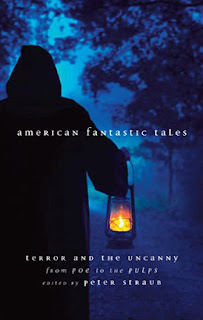
American Fantastic Tales Volume One


Source of book: I own this.


One of my legal colleagues retired last year, and did some downsizing. The upside of this was that I inherited a bunch of cool books. My second kid stole all the Ursula LeGuin for her collection (and ended up writing an English paper about her) but most of them have joined my collection. 


One of those was a two volume box set from Library of America edited by Peter Straub. (Author of Ghost Story, which we read for our book club.) The stories are presented in chronological order by year of publication, so this first volume is subtitled “Terror and the Uncanny from Poe to the Pulps,” and covers 1805 to 1939. This is quite a spread in terms of time and writing style, from the Early National period with Charles Brockden Brown and Washington Irving, to the Romantic Era of Poe and Hawthorne and Melville, all the way through to the dawn of the modern era. 


Peter Straub selected a total of 44 stories for this volume (713 pages), each by a different author. In doing so, he made some fascinating decisions. First, for famous authors like Poe, he chose a less famous story. So, we get Poe’s “Berenice” rather than, say, “The Tell-Tale Heart.” There are exceptions, such as “The Yellow Wall Paper,” but for the most part, the best known stories are absent. Straub also selected a number of lesser known authors, including a fair share of women. This, despite the fact that for most of the time period, writing was not a respectable profession for women. In general, the variety of authors and stories is pretty broad, so the book never feels repetitive. 


Another good feature of the book is the short biographies of each author at the back. Since many of them are unfamiliar, this was helpful to understand the stories.


The first two-thirds or so of the book consists of authors who were not particularly connected to each other by genre, which is how you get Sarah Orne Jewett, Bret Harte, Henry James, Willa Cather, and F. Scott Fitzgerald in the same book. This is because horror hadn’t become the genre that it eventually did become. Many earlier writers wrote in a variety of genres, with horror or mystery or supernatural or suspense being just one of the types of stories they wrote. 


By the 1920s, however, pulp magazines - particularly Weird Tales - brought the genre together, and spawned a generation of writers dedicated to its particular type of story. Most of the authors in the book from the 20s and 30s contributed to Weird Tales, and often got their start writing for the pulps. 


It would be too much to say something about every one of the 44 stories individually. There were some highlights. Some of these I have read before (I have read all of Poe’s stories, for example.) but a good number were new to me. Some of the authors were also new discoveries. For example, Lafcadio Hearn, who introduced the United States to Japanese culture. (And he also married a Japanese woman, which was a huge scandal 1890. Oh, and before that, he was briefly married to a former enslaved woman, but they separated when he was unable to remain employed once their story came out.) The story chosen for this book is “Yuki-Omna,” one of the Japanese ghost stories he collected and translated. 


Nathaniel Hawthorne makes an appearance, naturally, with “Young Goodman Brown,” featuring suspected witches and some dark secrets, and a lot of great lines. 


“Such company, thou wouldst say,” observed the elder person, interpreting his pause. “Well said, Goodman Brown! I have been as well acquainted with your family as with ever a one among the Puritans; and that’s no trifle to say. I helped your grandfather, the constable, when he lashed the Quaker woman so smartly through the streets of Salem. And it was I that brought your father a pitch-pine knot, kindled at my own hearth, to set fire to an Indian village, in King Philip’s war. They were my good friends, both; and many a pleasant walk have we had along this path, and returned merrily after midnight. I would fain be friends with you, for their sake.”


Or this observation:


The fiend in his own shape is less hideous, than when he rages in the breast of man.


A literal devil isn’t really necessary, except as a scapegoat. Humans are capable of appalling evil all by ourselves. In the climactic scene, where (spoiler) the pillars of the town are revealed as a bunch of devil-worshipers, the person leading the ritual explains. 


“There,” resumed the sable form, “are all whom ye have reverenced from youth. Ye deemed them holier than yourselves, and shrank from your own sin, contrasting it with their lives of righteousness, and prayerful aspirations heavenward. Yet, here are they all, in my worshiping assembly! This night it shall be granted to you to know their secret deeds; how hoary-bearded elders of the church have whispered wanton words to the young maids of their households; how many a woman, eager for widow’s weeds, has given her husband a drink at bed-time, and let him sleep his last sleep in her bosom; how beardless youths have made haste to inherit their fathers’ wealth; and how fair damsels - blush not, sweet ones - have dug little graves in the garden, and bidden me, the sole guest, to an infant’s funeral. By the sympathy of your human hearts for sin, ye shall scent out all the places - whether in church, bed-chamber, street, field, or forest - where crime has been committed, and shall exult to behold the whole earth one stain of guilt, one mighty blood spot…Lo! there ye stand, my children, depending upon one another’s hearts, ye had still hoped, that virtue were not all a dream. Now ye are undeceived! Evil is the nature of mankind. Evil must be your only happiness. Welcome, again, my children, to the communion of your race!”


Man, that’s depressing. And kind of hard to disagree with right now. Apparently, this story stuck with me, because I wrote down more from it than any other story. 


Hawthorne’s son Julian also contributes a story to the book, “Absolute Evil,” a supernatural tale involving a recluse couple on a barrier island, a girl orphaned by a shipwreck, and a bit of lycanthropy. Julian’s own life story is a bit lurid, with him spending a year in prison for his role in a stock fraud, followed by his complaint that prison was inhumane punishment. (He may have been right, but it sure seems like the January 6 insurrectionists complaining about prison conditions.)  


Another author with an interesting story was Emma Francis Dawson. “An Itinerant House” was one of my favorites in the book, with a house seemingly cursed and leading to the suicides of those who occupy it - even after the house is first abandoned, then torn down and a room reassembled elsewhere. Dawson herself struggled to support herself, despite her writing talent, and is believed to have starved to death due to poverty. 


I should also mention a particularly chilling story by Herman Melville, “The Tartarus of Maids.” Those familiar with Greek mythology will understand that this is a vision of hell. The form of that hell is a paper factory employing young girls - so one might consider this to be a very realistic tale of horror. 


I earlier mentioned “The Yellow Wall Paper,” which is a total classic. Much has been written about its themes, so I won’t get into that here. I did want to mention that, although I had read it before - quite some time ago - I had forgotten some of the details, which is how I missed just how much Mexican Gothic by Silvia Morano-Garcia owes to Gilman’s short story. There are a lot of intentional nods to the earlier story throughout the novel, even if the plot goes in a rather different direction. (While retaining the feminist themes.) 


Another story that intrigued me was “Thurlow’s Christmas Story” by John Kendrick Bangs. It had some interesting parallels with The Strange Case of Dr Jekyll and Mr. Hyde, so I had to check which came first. (Stevenson did it first, as it turns out.) Particularly imaginative in this case is the ending, after we discover that the story that the mysterious stranger leaves turns to blank pages. The fictitious writer has been relating the crazy tale to that point as an explanation to the editor as to why he sent in blank pages. The editor’s response is amusing.


Your explanation has come to hand. As an explanation it isn’t worth the paper it is written on, but we are all agreed here that it is probably the best bit of fiction you ever wrote. It is accepted for the Christmas issue. Enclosed please find check for one hundred dollars. 


One of the weirdest stories is by Robert W. Chambers, “The Repairer of Reputations.” It is pretty long, and involves a dystopic future United States, when all minorities have been placed on reservations or evicted, but that isn’t really what the story is about. And for that matter, what even is it about? Well, the narrator is admittedly mentally ill with brain damage from an accident. And by the end, it is nearly impossible to tell what - if anything - he has told the reader is actually true. Apparently, the story is part of a collection with a lot of interconnections centered around The King in Yellow, a fictional play whose “quotes” are found throughout the stories. Apparently, the play has been banned, because it induces despair or madness in all who read it. 


I made a note of a line in “The Striding Place” by Gertrude Atherton. The story itself is a fairly short horror or possibly ghost story. It is the description that I found interesting. This story, like a number of them, are set in places other than America. 


An English wood is like a good many other things in life - very promising at a distance, but a hollow mockery when you get within. You see daylight on both sides, and the sun freckles the very bracken. Our woods need the night to make them seem what they ought to be - what they once were, before our ancestors’ descendants demanded so much more money, in these so much more various days.


There is a Henry James story in here - he wrote quite a few spooky tales, not just The Turn of the Screw. “The Jolly Corner” manages to be both a really creepy (and suspenseful) ghost story, and a love story of sorts. And also, very much of a Henry James sort of thing. If you know, you know. James was an incredible observer of human behavior, and his rather sharp comments on the things people do are fascinating. Here is one aside about the protagonist. 


He was a dim secondary social success - and all with people who had truly not an idea of him. It was all mere surface sound, this murmur of their welcome, this popping of their corks - just as his gestures of response were the extravagant shadows, emphatic in proportion as they meant little, of some game of ombre chinoises. 


I was more surprised to find a ghost story by Edith Wharton, who is better known for her realistic novels about high New York society. “Afterward” is indeed a fairly long and carefully plotted ghost story. It starts with Mary Boyne about to go with her husband to live in England on his new fortune, and wanting to find a haunted old house to stay in. Which they do, except that she can’t seem to see any ghosts. However, as her friend Alida says, the ghost at Lyng is peculiar in that you will never know you saw it, until afterwards. (Hence the title of the story.) As the story progresses, it becomes clear that Mary’s husband has been hiding some of his financial affairs, including a lawsuit from a man claiming to have been defrauded. There is a particular line that I thought was fun. Alida has recommended Lyng - which is owned by her husband’s cousins - as being available for very low cost. 


The reason she gave for its being obtainable on these terms - its remoteness from a station, its lack of electric light, hot water pipes, and other vulgar necessities - were exactly those pleading in its favour with two romantic Americans perversely in search of the economic drawbacks which were associated, in their tradition, with unusual architectural felicities.


Willa Cather, another author more associated with realistic writing, also contributes a ghost story to this book, and it is a rather peculiar and memorable one. The narrator’s friend finds himself haunted by some sort of ghost or specter that has glommed on to him after they meet on a rainy night. Cather uses the story to explore the question of why people who seem to have no cause will commit suicide. A paraphrase attributed to Samuel Johnson is a fascinating bit. I wasn’t able to verify the original source online, so I have no idea if Cather’s characters are getting it right, or misattributing, or whatever. 


It reminds me of what Dr. Johnson said, that the most discouraging thing about life is the number of fads and hobbies and fake religions it takes to put people through a few years of it.


Once we get into the pulps, the stories become even more lurid. The writing is a bit more uneven, but overall, Straub chooses the best of the bunch, rather than the dreck. 


A characteristic tale is by Francis Stevens, “Unseen - Unfeared.” In it, a mad scientist (in the more literal than figurative sense) accidentally creates a lens that shows that the world is occupied by unseen and horrifying creatures, all of them created by the evil that indwells mankind. 


Also memorable is “The Jelly-Fish,” by David H. Keller, a short yet disconcerting tale. This mad scientist claims that humans can do anything - even impossible things - with enough willpower. And, to prove it, he shrinks himself to a small size and attempts to communicate with a jellyfish. Which eats him. 


I will also mention a story I had read before, but still love, “The King of the Cats” by Stephen Vincent Benet - an underrated author in my opinion. 


A number of the authors had stories that were almost as lurid as what they wrote. Conrad Aiken discovered the bodies of his parents as a young boy - his father murdered his mother than shot himself. Robert E. Howard killed himself as his mother lay dying. (Not from murder, at least.) Seabury Quinn specialized in mortuary law. 


It was necessary to include an H. P. Lovecraft story, of course. The history of horror would not be complete without him. Still, the man was viciously racist, and that comes through in his writings, unfortunately. There was also a sour note in his story, “The Thing on the Doorstep,” an otherwise good tale, regarding women. (Ironically, it appears on page 666 of the book.) The evil spirit of this nasty old guy has essentially possessed the body of his daughter, and is now trying to get at the narrator’s friend. 


The worst thing was that she was holding on to him longer and longer at a time. She wanted to be a man - to be fully human - that was why she got hold of him. She had sensed the mixture of fine-wrought brain and weak will in him. Some day she would crowd him out and disappear with his body - disappear to become a great magician like her father and leave him marooned in that female shell that wasn’t even quite human. 


Yeesh, that’s bad. And this was written less than 100 years ago. Plenty of the other stories in the book, even those written by men 100 years prior, were more respectful of women, and portrayed them as fully human. It certainly doesn’t make me eager to read anything else by Lovecraft. 


The final bit comes from the last story, “The Cloak,” a vampire tale by Robert Bloch. You might know him as the author of Psycho, which was made into a little movie by a guy named Hitchcock. The opening bits of the story are hilarious - purple prose at its most mauve. As it turns out, this is intentional: the protagonist is under the influence of halloween, and can’t stop thinking in overwrought terms. 


The sun was dying, and its blood spattered the sky as it crept into a sepulcher behind the hills. The keening wind sent the dry, fallen leaves scurrying toward the west, as though hastening them to the funeral of the sun. 


I started reading this book back in October, and just read a bit here and there when I felt like it. With over 700 pages, it took a while, and I probably don’t remember the earlier stories as freshly as if I had written about them then. It is a good collection, though, and I look forward to reading volume two eventually. 


Wednesday, February 9, 2022

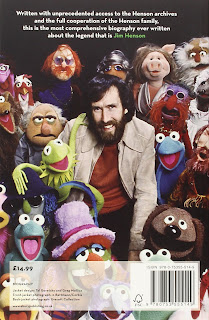
Jim Henson: The Biography by Brian Jay Jones

Source of book: Borrowed from the library


A couple of years ago, I grabbed a book randomly off of the new books display, as it looked interesting. That book was Becoming Dr. Seuss by Brian Jay Jones. I took it along on one of our last trips before Covid wrecked travel, and found it to be quite fascinating and compellingly written. As a result of that experience, I put this book on my list. Oh, and we also saw a fascinating exhibit on Jim Henson at the Skirball Center when we went down to see the one on Leonard Bernstein. 


 I didn’t include it in my previous post, but Brian Jay Jones is an interesting character in his own right. His first career was, believe it or not, a policy analyst and speechwriter for senators James Jeffords and Pete Domenici - both Republicans at one time. (Ah yes, back in the day when Republicans still supported civil rights and democracy and so on. Jeffords would leave the party in 2009, in significant part because of the Republican refusal to fund education for the disabled. Now, of course, he would be called a communist for opposing tax cuts for the ultra-rich, supporting abortion rights, and sponsoring enviromental protections. 


Jones then made a dramatic career switch in 2008, leaving politics altogether in order to pursue a career as a biographer. He started with a book about Washington Irving, which was a fascinating choice, in my opinion. It sold well enough for him to continue writing, and he would eventually hit it big with this book, Jim Henson: The Biography. In addition to his book about Dr. Seuss, he also wrote a biography of George Lucas. 


His books have been widely praised by critics, and it is easy to understand why. They are impressively researched, with both personal interviews and a lot of contemporary primary sources. He has been able to strike a good balance in his portrayals. The books are not takedowns, but they also do not elide the flaws and skeletons of his subjects. This was probably easier because Seuss and Henson were both decent human beings who actually made the world a better place in a lot of ways. About the worst anyone seems to have been able to say about them were either typical human flaws or to point out that each had a failed marriage in which they didn’t behave particularly well at the end. Also interesting is that people close to his subjects have also praised his writing, noting how well he captures the nuances of the lives he portrays. 


Like Dr. Seuss, Jim Henson was one of the major influences on at least two generations of Americans. I noted in my prior review that Gen X (that’s me!) was raised on Dr. Seuss, and that he gave us a certain amount of our ways of thinking about the environment, the Cold War, prejudice, and so on. 


Jim Henson filled that role for many of us as well. I know very few people of my age who didn’t spend at least some time watching Sesame Street. One might say that for my generation of urban kids, it was a ubiquitous presence in our lives, and one of the positive influences on our thinking. (Not coincidentally, it was ahead of its time in portraying a desegregated world.) It wasn’t just the show, of course. We had a few records or tapes, including the iconic (and still awesome!) C is for Cookie. 


And then there was The Muppet Show. While Sesame Street was about a lot more than Henson’s muppets, The Muppet Show was all about Henson and his colleagues and the unforgettable goofy puppets. 


Some of us also remember Fraggle Rock, and Labyrinth, and various other projects. I also remember feeling pretty sad when Henson suddenly died in 1990. 


As a parent now, the kids and I watch The Muppet Christmas Carol every year - I think it captures the spirit of the Dickens original quite well. 


So, clearly, the creations of Jim Henson were an important part of my childhood, and remain favorites today. 


There isn’t much point in summarizing Henson’s life - that is the point of the book, after all. But there are some fun lines worth quoting. 


For example, I thought that the fact that as a kid, Henson loved Grackles - a medium-large blackbird with a loud and irritating sound - much like my kids do. The name itself is such a Muppet name, right? 


I also found it fascinating that the most famous puppeteer of all time got into puppetry by accident, and for years saw it as only a way to get to his ultimate goal of making television and film art. But, the opportunity presented itself to do a puppet routine on a local TV show at age 17, and he jumped on it. And turned out to be really, really good at it. 


It was while doing this that he met his eventual wife, Jane. Their story is sad for a number of reasons. It seems that, while they had obvious professional chemistry, the romantic spark was never that great. (That’s from both sides, by the way.) But even more than the eventual failure of the marriage, I found it sad that once the kids started coming, Jane essentially gave up her own career - she was arguably every bit as talented as Jim - and never really got it back. I know, this is totally what everyone (well, everyone in white suburbia) did in the early 1960s, but it still was a shame. 


Fun fact about Jane: her parents were named Winifred and Adalbert. Which sound like Muppets too. 


Also worth mentioning is the unintentionally hilarious moment in the book when Jones is describing the process of negotiating a legal separation between Jim and Jane. “The stack of legal papers would eventually tower to nearly a foot high.”


LMFAO. 


I suspect that Jones was underplaying things there. Surely as someone connected to the Senate, he would know that even a basic divorce can run that many papers pretty dang fast - and they were negotiating, among other things, a buyout of a 100 million dollar company - Jane co-founded and built the thing from the beginning. 


I mentioned the shared love of Grackles. Henson also was a fan of The 13 Clocks by James Thurber - one of my favorites that I recently enjoyed reading to the younger kids. 


Another thing that really struck me was the policy that Henson had about his creations. As he told his agent, “never sell anything I own.” The muppets - including the Sesame Street characters, remained owned by Henson until the end of his life. In retrospect, it was a good idea, in that he retained control over how the characters were used - and eventually reaped the financial benefits of that control. When he died, though, he was in the process of negotiating to sell the company (and some of the characters) to Disney, in significant part because he was tired of the work of running an increasingly large and complex business. I might mention here that Disney did eventually come to own the Muppets - but not until 15 years later, after they were sold to another company, bought back, and then re-sold. 


The book is about Henson, but it also takes great pains to do what Henson himself always did, which was to insist that the Muppets weren’t just about him, but about the dozens of creators, builders, and puppeteers who worked with him. Frank Oz, Richard Hunt, Jerry Nelson, Dave Goelz, Steve Whitmire, and Jane Henson - all these were great artists in their own right, and indeed created many of the Muppet characters. In negotiating the sale to Disney, Henson originally intended to give significant payouts to his employees. Unfortunately, when his death scuttled the negotiations, that didn’t happen. 


Jim had a great sense of humor, with a particular love for explosions, but he could also have an acid tongue. One of the incidents that made me laugh was the response to his bizarre art film, The Cube. The critical reviews were mixed at best, and there was definitely some puzzlement about what on earth it was meant to mean. But it was a letter sent by a viewer, one Mr. Dionne from California, who said “the most disciplined attention I could give [The Cube] was a belch from the grave of Marcus Aurelius occasioned, I might add, by the dead weight of its own dust caving in on itself.” 


Leaving aside the question of whether the writer was high, Jim’s response was hilarious - he actually wrote back. 


Dear Mr. Dionne:

What the fuck are you talking about?

Yours truly, Jim Henson


This fascination with art and art films was a thread that ran through Henson’s life, and had a significant influence on his work, both the successes and the dramatic failures. (And there were a LOT of those too.) One particularly odd example of a success is with the song “Mah Na Mah Na.” Any guess where that came from? Would you believe an Italian sexploitation film entitled Sweden: Heaven and Hell? Henson’s longtime collaborator (and pantheon puppeteer himself) Frank Oz thought that the two of them might have seen the film together, as it came to a small theater across from the office, but only someone like Henson would figure out how to completely repurpose a song that successfully. Here is the original. Clearly not the smash it would become. 


I was struck throughout the book by just how thoroughly Henson believed in everything he attempted. Even the messy failures. But just think about what it would take to try to sell The Muppet Show to a television executive today. Or back then, for that matter. Here is literally what Henson put on his first official pitch for the show:


“The time is right for a variety show hosted by dogs, frogs, and monsters.”


No way, right? But The Muppet Show didn’t just make it, it freaking dominated for its five season run. Not bad for a bunch of puppets that had to find a British guy to finance the show. In hindsight, it was a mistake for the US networks to pass on getting in on the ground floor with the Muppets. 


The Muppet Movie has been a favorite since I was a kid, not least because of how fun it is to say “Studebaker.” Which, as everyone knows, is a bear’s natural habitat. One bit of trivia I learned from this book is that Henson insisted on using all 250 puppets in the closing scene of the movie - and every one moving and singing, not just propped up as extras as was the usual way of doing big scenes. To pull that off, he conscripted family, and hired a bunch of extras - including this young guy named Tim Burton. You may have heard of him. 


I didn’t discover Henson’s non-Muppets work until later in life, although a friend is a big fan of The Dark Crystal and Labyrinth. At the Skirball exhibit, they had various things related to the movies there, and it intrigued all of us enough to find a DVD with those two and Mirrormask. (That last one was produced by the Henson Company in 2005, based on a story by Neil Gaiman.) At the same time, my eldest was getting seriously into David Bowie, so it was definitely a fit. 


Speaking of Bowie, he wasn’t Henson’s first choice for the villain in Labyrinth. Yes, I know, that is hard to believe. He actually wanted Sting to play the part, but his son John argued for Bowie instead, saying that Sting was “happening now; whereas David Bowie is an artist, he’s got longevity.” 


This certainly raises the intriguing thought of the alternative. Bowie was a more proven actor at the time, and was indeed more popular with the youth. And absolutely no doubt, a true artist, whose music and other stuff has aged quite well. Sting, though, is no slouch. And The Police were influential artists in their own right. I could have seen Sting pull it off in the movie. But John was probably right that Bowie was the best choice. Labyrinth was a lot of fun, too. And it was truly amazing what Henson was able to do with puppets in that film. 


The Dark Crystal was the more popular film, although I prefer Labyrinth myself. I wanted to mention the soundtrack, though. Henson chose to use Trevor Jones, who in turn wrote a score using synthesizers along with a double flageolet. (You can see and hear that unusual instrument here.) 


As a final word about the book, it is difficult to read the last couple of chapters, which tell of Henson’s untimely death and the aftermath. It isn’t common to die of bacterial infections these days, fortunately, but it still happens, and some germs are just nasty. A friend’s son died a few years back of something similar to what killed Henson, and I wrote a bit about the similar death of Rachel Held Evans on my blog. Much has been said about the “what ifs” of Henson’s death. Was his mother’s Christian Science belief a factor? (Probably not.) Could he have been saved with antibiotics if he had sought help sooner? (Maybe.) But ultimately, the chilling part about this is that many of us could have been him. I have had some nasty cases of pharyngitis that could have been serious. I am glad my wife the nurse made sure I got treatment quickly, but if I had gotten a worse specific bacteria, I might not have known I was gravely ill until too late. It sucks, and the world is a sadder place without Henson. 


But his legacy was one of advocating for peace, for equality, for human decency. And good humor that was zany and edgy and wasn’t afraid to blow things up. Jones wrote a compelling story about the man that was Jim Henson, bringing him and his creations to life. 


Tuesday, February 8, 2022

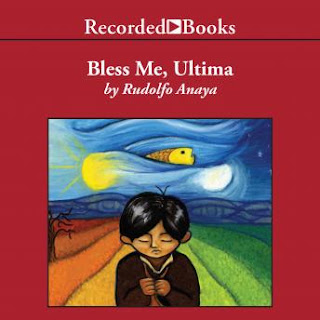
Bless Me, Ultima by Rudolfo Anaya

Source of book: Audiobook from the library


Since some changes in our family life due to Covid and the kids getting older, I have been taking over more of the transporting duties, which has meant time in the car by myself in addition to my modest commute. While I usually listen to music, or perhaps NPR (if I haven’t already caught up online), I have started listening to audiobooks as well. 


I chose Bless Me, Ultima, after seeing a reference to it in A Dream Called Home. A bit of research revealed that the book is the all time best selling novel by a Mexican-American author. Published in 1972, it has been a frequent target of book challenges, making the top ten list twice in the last 20 years, which is pretty impressive for a 50 year old book. The lowlight was in 1981, when the San Juan County school board burned copies. Yes, the freaking school board did the burnings. So, the book seemed appropriate for our own time, with a surge in efforts to purge schools and libraries of books written by and about minorities, and book burnings sponsored by churches making worldwide headlines. 


The animosity toward the book has come from a few directions. The most obvious is that there is swearing in it. [Fundies clutch their pearls…] The swearing is mostly in Spanish, though, which kind of raises the question of exactly what the problem is. For gringo kids with no experience of other languages (Joke: what do you call someone who only speaks one language? An American), they would either gloss over the words, understanding from context that they were probably swears, because that’s what humans do. Or, if they were adventuresome, maybe go get a Spanish dictionary and look it up. (At least back in 1972. Now, they would just google it on their phones.) 


The other sorts of kids would be either Spanish speakers, who would already know how to swear in Spanish, or kids like me who grew up in a diverse neighborhood - and knew the Spanish swear words already too. In fact, I was kind of amused to realize that I could understand a few categories of Spanish in this book, despite never having taken a foreign language. (One of my big regrets about my wasted youth.) I knew the swear words, obviously, and the food words, and also the religious words. 


The other reason the book has gotten challenged is because of religion. The book is mildly hostile toward the Catholic faith, and contains magical elements. The world it exists in is one where magic and brujas and curses are real. And traditional Indigenous medicine cures people neither modern doctors nor the church can heal. By the way, when I say “mildly hostile,” I don’t mean hostile really. Rather, the book simply questions the adequacy of the faith. The protagonist, young Tony is under pressure to become a priest someday, and he really does try, but he ultimately finds the answers the Catholic Church has to the profound questions of life, death, justice, and evil to be inadequate and unsatisfying. Which, I suspect, is more of a problem than a book that was actually hostile to religion. 


The third reason, though, is puzzling to me. The book has been accused of being “racist.” Which, WHAAAT???? I mean, the book is kind of about the author’s childhood, and very much about his hometown and family (although my understanding is that Ultima, the curandera, is fictional, as are most of the dramatic events. And Anaya is, well, Mexican American, and from a mestizo family (roots both in the Spaniard colonialists and Indigenous peoples), so the characters in the book are almost entirely not white people. Guessing from names, there are maybe two white characters? But even they may be Latinx. Which makes sense because this place is what Anaya grew up. An overwhelmingly Mexican-American small town in New Mexico. 


Other than the fact that the characters are not white, there is very little about race in the book. A brief mention about prejudice in the military (three of the brothers serve in World War Two), a few references to the limited jobs available to non-whites who didn’t finish high school. But blink and you miss these. The story is just….not about white people at all. Which, I guess, got a certain sort of white people all panties-in-a-wad. I just don’t get it. But there you have it. Same thing is happening now, with challenges to any book that is written by minorities or LGBTQ people. 


So, about the book. The story is told by Tony (Antonio), a young boy. His parents are an unmatched match, so to speak. His mother’s family farms, and is connected to the land (and the lunar cycles, as their name, Luna, indicates.) His father, a Marez, has the urge to travel and roam, and ride the llano. His dreams have been thwarted by his need to support his family. Tony’s parents conflict over what his future should be. 


And then, Ultima arrives. She is related to Tony, but I am not clear on the exact connection - and the internet has been no help. Anyway, she is an elderly woman, and a curandera - a traditional healer. One might call her a shaman, more or less, and she represents the traditional pagan Indigenous roots of the family. 


And, as has been the case throughout western history, the line between “healer” and “witch” is often one of perception, not reality. So, unsurprisingly, while people tend to respect Ultima, and call her when all else fails, they also call her a bruja behind her back. Whether she is or not, I suppose, depends on your theology. Tony and Ultima bond, and she takes him on as an apprentice for a few cases. 


Alongside this thread are two others. First is Tony’s experiences as he starts school. He and his friends get into various kinds of trouble, both at school, and in Confirmation classes at the church. Tony learns the legend of the Golden Carp - and even sees it one day. This pagan religion, which another boy believes, forms a counterpart to the Catholicism and the more syncratic beliefs of Ultima. For Tony, nothing ultimately is fully satisfactory, which is why he asks his father toward the end if it is possible to form a new religion. 


The other thread is a series of violent events that Tony unwittingly becomes part of. First, Lupito, a veteran with severe PTSD, kills the Sheriff, and is then lynched by a posse. Then, the family becomes the target of Tenorio, a vicious and violent saloon owner. Tenorio’s daughters are genuine brujas, and after Tony’s uncle overhears their Black Mass, they put a curse on him. Ultima breaks the curse, and it rebounds, killing one of the daughters. (See, magic, magical realism, or whatever you want to call it…) Tenorio swears revenge, and up until the end, his blood feud with Ultima and anyone who defends her leaves further bodies in its wake. 


There is a good bit of blood in the book. Violence is central to the narrative, and to Tony’s coming-of-age. He sees and experiences things that he really shouldn’t have to bear at his age, from the various murders, to the accidental drowning of a friend. Some passages are a bit rough. But so are the existential questions, for which, as Tony eventually learns, there are no good answers, whatever the great religions of the world claim. 


It is easy to understand why this book became popular, and why it is critically acclaimed. The narrative is compelling, the story riveting. It immerses the reader in a fascinating culture, and brings to life familiar family dynamics. And, it has one of the most loathsome villains possible, the kind who would literally try to kill a kid when drunk. It is both melodramatic and thoughtful, not the easiest thing to pull off. 


As for the reasons people hate it? Well, their kids probably already know how to say chingada and ala vega and Jesus, Maria, y Jose! At least in one language. 


I should mention the narrator on this audio edition, Robert Ramirez, who does an excellent job. He apparently has narrated a lot of books, particularly kid books, and it is easy to see why. There is a wonderful clarity to his reading, both in English and Spanish, and he conveys emotion brilliantly. It definitely added to the experience. 


There was a movie made from the book a few years back that seems to have been decent - I haven’t seen it. And, surprisingly, Hector Armienta wrote an opera based on the book. 


Saturday, February 5, 2022

The Blacker the Berry by Joyce Carol Thomas

Source of book: Borrowed from the library


My youngest and I have enjoyed poetry together lately, specifically Custard and Company by Ogden Nash, and Old Possum’s Book of Practical Cats by T. S. Eliot. So, I thought I might pick up one from the library for Black History Month. 


The Blacker the Berry is a collaboration between poet Joyce Carol Thomas and illustrator Floyd Cooper. It is a pretty short book, with a series of poems all about skin color. Specifically, the different shades of black skin, from “purple” black to nearly “white,” Including the “red” of those with mixed African and Native American heritage, the “yellow” of biracial skin, and a number of shades along the continuum, which are treated within the metaphor of delicious and sweet things to eat. Hence the title, from the old saying, “The blacker the berry, the sweeter the juice.” 


The book starts with the author (or narrator, as you prefer) asking her grandfather about what shade is Human. From there, it is a celebration of the spectrum of Black skin coloration that is deliciously positive and affirming and inclusive. 


Which means, probably, that a right-wing group somewhere in Florida is probably trying to get it banned. Sigh. 


We enjoyed it quite a bit, because the poems are fun, and roll off the tongue well, and are just so joyful. I guess maybe we don’t feel defensive about being white. And my kids have been puzzled and horrified to see how many people have become openly racist these days. It feels good to see positive messages to counteract all the hate and fear that certain politicians and groups have stoked lately to cling to power. The illustrations, with the various shades illustrated by vibrant children of the shades described, in motion and verve, are a perfect accompaniment. 


I won’t quote too many, because of copyright, and because I think the book is worth reading as a whole work of art, not as pieces. But I will quote a few. 


“The Blacker the Berry”


“The blacker the berry

The sweeter the juice”


I am midnight and berries

I call the silver stars at dusk

By moonrise they appear

And we turn berries into nectar


Because I am dark the moon and stars 

    shine brighter

Because berries are dark the juice is sweeter


Day couldn’t dawn without the night

Colors, without black, couldn’t sparkle

    quite so bright


“The blacker the berry

The sweeter the juice”


I am midnight and berries


What’s not to like about that? It is the perfect celebration of an embodiment that, for the past 500 years has been treated as lesser, less beautiful, less intelligent, less worthy. It is, in an age-appropriate way, a giant middle finger extended to the small-minded white supremacist culture and system we live in. 


The next one has a lovely word play, which we of course discussed.


“Night Shade”


I feel as purple

As the night shade

Of an eggplant

That great berry among berries

Smooth skinned


And as stained and sweet 

As my fingers

After rinsing boysenberries


I am a firm believer in introducing children to poetry. With my kids, at least a few take after me (and one takes after my wife, who, despite being able to write excellent poem analyses, doesn’t have an emotional connection to poetry.) This book is one that will work for kids in elementary school on up, I think.