Showing posts with label nature. Show all posts

Wednesday, June 3, 2020

Conifers of California by Ronald M. Lanner

Source of book: Borrowed from my father-in-law

 While staying up at my in-law’s cabin, I got quite a bit of reading done. For the most part, I read books I brought, but I couldn’t resist reading this one, from their kind of odd collection of books that they left there when they moved north. This book is delightful, from the gorgeous photography to the detailed descriptions and history of the many native evergreens here in California. 

 California is an amazing place. A lot of people think of it as a few coastal cities. Los Angeles (and mostly Hollywood), San Francisco, and maybe San Diego. But California is a big place. Outside our population centers, we have a LOT of open space. Believe it or not, 52 percent of California’s area is publicly owned: National parks; state, national, and local forests; national monuments; and open desert managed by the Bureau of Land Management. You can find solitude easily enough if you are willing to strap on a pair of boots and go hike. 

 Because of a vast range of climates, California is also home to an amazing diversity of flora and fauna. Our conifers are a case in point. We have 52 native species - 14 of which are found only in California. That’s more than any other state….by a good margin. We have more unique conifers than many countries. 

 I have been interested in trees as long as I can remember. I think I first fell in love with a species when we camped up on Mt. Pinos when I was around 10ish. Throughout California, we have a close relative of the Ponderosa Pine: the Jeffrey Pine. The two are very similar, and often hybridize, but they have one highly significant difference. The pitch of a Ponderosa can be boiled down to make turpentine. Try to do that to a Jeffrey, and you will blow yourself up. The Jeffrey Pine has a volatile aromatic compound which is highly explosive at the right temperature, as early pioneers in California learned the hard way. This compound also makes the bark of a Jeffrey smell like honey or vanilla or pineapple (depending on your perception.) It’s really lovely, and makes the whole forest smell nice on a warm day. 

 Since then, I have gotten pretty decent at telling apart many of our native trees, although I won’t claim to remember all the different kinds of cypress and where they grow. (We have multiple endemic species which grow only in certain places, so if you know where you are on the map, you know which one it is.) 

 For the most part, I knew the basic identifications in the book, although there is a lot of information on the plants and their history and uses and evolution. It is informative both for the novice and the aficionado. 

 There is one thing that I learned, however. I had been thinking that a certain distinctive tree in Southern California was just a Douglas Fir. It turns out that it is a relative of the Douglas Fir, Pseudotsuga macrocarpa, commonly known as the Big Cone Spruce (what? It’s nothing like a spruce!) or Big Cone Douglas-fir. And, of course, Douglas Firs are not really firs at all, but a separate family of conifers. This particular tree is endemic to the mountains of Southern California, including the coastal range that contains Mt. Pinos. When I lived up there, there was a small stand of them on a shady side of the hill around 5000 feet elevation. 

 Whatever you call them, they look like nothing else, with their branches sticking straight out, often on opposite sides of the tree. Some have described them as looking like the masts of a square-rigged ship. Not only that, but they can regenerate leaves after a fire. It’s pretty cool. 


Unlike the Douglas Fir, which is arguably the most important timberwood in the United States - chances are, your house is built of it - the Big Cone Douglas-fir has lousy wood for anything other than firewood and fencing. Despite being commercially unfit, the trees are near-threatened because of loss of habitat - that’s the cost of living near Los Angeles. 

 There are so many other great trees in the book, from Singleleaf Pinyon, to the California Nutmeg. In any case, I really enjoyed this book, and am thinking of adding it to my own reference library. 


Friday, May 22, 2020

Poems by Ralph Waldo Emerson


Source of book: I own this.

I am not entirely sure what percentage of Emerson’s poems are in this volume - it is one of those Black’s Readers Service Company hardbacks with selected works, in any case. 

Emerson is better known for his prose these days, particularly essays like “Self Reliance,” which most American kids read in 11th grade. I figured I would read the poetry, and get an idea about what it was like. 

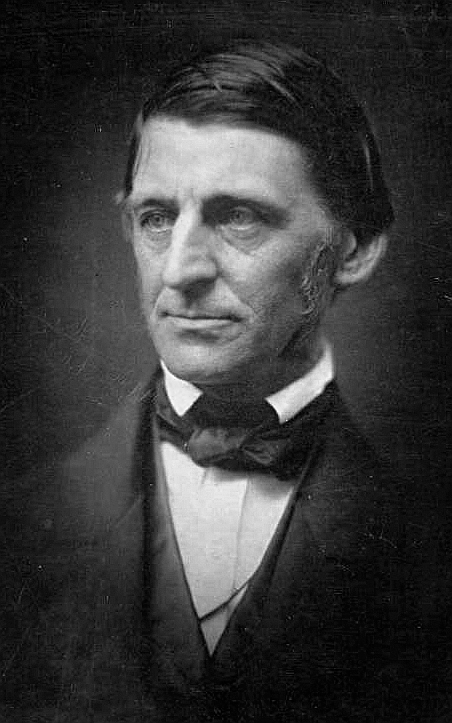
 Emerson in 1857

I would say that my impression, like that of Emerson in general, is mixed. There are a few gems in the collection, but also too many long poems in iambic tetrameter with rhymed couplets, that seem to go on and on without going much of anywhere. I was not expecting to miss blank verse that much - when he finally did write one in that format, it just felt like it flowed so much better. 

Also an issue in the poetry, like his prose, are Emerson’s really dated views on race. On the one hand, he was an abolitionist from the 1840s on (although he didn’t want that to be the only thing people associated him with), and had - for his time - a progressive vision of integration and intermarriage. But he also was a Saxon chauvinist, like many other Americans of British descent, who considered the “Anglo-Saxon race” to be superior to all others. Not merely in the sense of whiteness: Saxons were superior to the French, to the Irish, to the Italians, and every other immigrant group of the time. This led to a number of really wince-worthy lines in otherwise inspiring poems. 

I do want to be fair to Emerson on this, though. His views were common enough, although that is not a defense. Where I think it is easy to condemn him unfairly is to miss what his actual proposals meant. Whatever his beliefs about superiority, he advocated for true equality and, shockingly for his time, true integration. He may have believed the Irish and African Americans were inferior races, but he also believed they should live side by side with everyone, have the same opportunities, freedoms, and rights, and believed that inevitably, they would all intermarry and create a truly superior race: the American. Even today, there is something futuristic about the idea of intermarriage to the degree. For White Nationalists, this is horrifying. For a lot of us in California, we already see it - interracial marriage here is the norm, not an exception. 

So, I guess those are the two downsides: dated views, and dated poetic forms. But there is good too. Emerson may never reach the heights of the best nature poets (Wordsworth and Frost particularly), but one can see his influence on 20th Century American poetry. His writing on nature seems more about being inspired by nature than closely observing it. You won’t find the close lens turned on the details, just the grand vistas. There is also plenty of transcendental philosophy in the poems too. At this point in history and in my own journey, transcendentalism seems like part of normal culture, at least among conservationists. It isn’t nearly the shocking departure from orthodox religion it seemed at the time - it’s nowhere near New Age or other 20th Century movements. In some ways, it feels more like just another step in the long chain of mystics who find God in nature, not just in a church. 

Speaking of that, I liked this poem, one of his earliest, from 1838:

The Problem

I LIKE a church; I like a cowl; 
I love a prophet of the soul; 
And on my heart monastic aisles 
Fall like sweet strains, or pensive smiles; 
Yet not for all his faith can see        
Would I that cowlèd churchman be.   

Why should the vest on him allure, 
Which I could not on me endure?   

Not from a vain or shallow thought 
His awful Jove young Phidias brought; 
Never from lips of cunning fell 
The thrilling Delphic oracle; 
Out from the heart of nature rolled 
The burdens of the Bible old; 
The litanies of nations came,       
Like the volcano’s tongue of flame, 
Up from the burning core below,— 
The canticles of love and woe: 
The hand that rounded Peter’s dome 
And groined the aisles of Christian Rome 
Wrought in a sad sincerity; 
Himself from God he could not free; 
He builded better than he knew;— 
The conscious stone to beauty grew. 
Know’st thou what wove yon woodbird’s nest     
Of leaves, and feathers from her breast? 
Or how the fish outbuilt her shell, 
Painting with morn each annual cell? 
Or how the sacred pine-tree adds 
To her old leaves new myriads?      

Such and so grew these holy piles, 
Whilst love and terror laid the tiles. 
Earth proudly wears the Parthenon,
As the best gem upon her zone, 
And Morning opes with haste her lids    
To gaze upon the Pyramids; 
O’er England’s abbeys bends the sky, 
As on its friends, with kindred eye; 
For out of Thought’s interior sphere 
These wonders rose to upper air;  
And Nature gladly gave them place, 
Adopted them into her race, 
And granted them an equal date 
With Andes and with Ararat.   

These temples grew as grows the grass;    
Art might obey, but not surpass. 
The passive Master lent his hand 
To the vast soul that o’er him planned; 
And the same power that reared the shrine 
Bestrode the tribes that knelt within.      
Ever the fiery Pentecost 
Girds with one flame the countless host, 
Trances the heart through chanting choirs, 
And through the priest the mind inspires. 

The word unto the prophet spoken     
Was writ on tables yet unbroken; 
The word by seers or sibyls told, 
In groves of oak, or fanes of gold, 
Still floats upon the morning wind, 
Still whispers to the willing mind.    
One accent of the Holy Ghost 
The heedless world hath never lost. 
I know what say the fathers wise,— 
The Book itself before me lies, 
Old Chrysostom, best Augustine, 
And he who blent both in his line, 
The younger Golden Lips or mines, 
Taylor, the Shakespeare of divines. 
His words are music in my ear. I see his cowlèd portrait dear;      
And yet, for all his faith could see, 
I would not the good bishop be.

Another one I loved was this one. Nobody knows who “J. W.” was, although there are several possibilities. Of all the carpe diem poems I have read, this one is definitely a favorite. 

To J. W. 


Set not thy foot on graves;
Hear what wine and roses say;
The mountain chase, the summer waves,
The crowded town, thy feet may well delay.

Set not thy foot on graves;
Nor seek to unwind the shroud
Which charitable time
And nature have allowed
To wrap the errors of a sage sublime.

Set not thy foot on graves;
Care not to strip the dead
Of his sad ornament;
His myrrh, and wine, and rings,
His sheet of lead,
And trophies buried;
Go get them where he earned them when alive,
As resolutely dig or dive.

Life is too short to waste
The critic bite or cynic bark,
Quarrel, or reprimand;
'Twill soon be dark;
Up! mind thine own aim, and
God speed the mark.
   
Another one that struck me was this thoughtful short poem. Although not unique to America, we seem to worship riches - and the wealthy. The glamorous and the beautiful. Meanwhile, this wealth and beauty dulls their consciences. Emerson seems, to me, caught between his own sense of inferiority and a weird wonder at these bright creatures. 

The Park

THE PROSPEROUS and beautiful   
To me seem not to wear 
The yoke of conscience masterful,   
Which galls me everywhere.   

I cannot shake off the god;       
On my neck he makes his seat; 
I look at my face in the glass,—   
My eyes his eyeballs meet.   

Enchanters! Enchantresses!   
Your gold makes you seem wise;      
The morning mist within your grounds   
More proudly rolls, more softly lies.   

Yet spake yon purple mountain,   
Yet said yon ancient wood, 
That Night or Day, that Love or Crime,    
Leads all souls to the Good.

This little nature poem is also a nice defense of introversion. 

The Apology       
   
Think me not unkind and rude,
That I walk alone in grove and glen;
I go to the god of the wood
To fetch his word to men.

Tax not my sloth that I
Fold my arms beside the brook;
Each cloud that floated in the sky
Writes a letter in my book.

Chide me not, laborious band,
For the idle flowers I brought;
Every aster in my hand
Goes home loaded with a thought.

There was never mystery,
But 'tis figured in the flowers,
Was never secret history,
But birds tell it in the bowers.

One harvest from thy field
Homeward brought the oxen strong;
A second crop thine acres yield,
Which I gather in a song.
Also a great introvert poem is this one, rather insightful about how brains like his and mine work, with the thoughts drifting and swirling, and needing time to sort out and organize. This one is probably my favorite poem of his. 

My Thoughts

Many are the thoughts that come to me
In my lonely musing;
And they drift so strange and swift,
There's no time for choosing
Which to follow, for to leave
Any, seems a losing.

When they come, they come in flocks,
As on glancing feather,
Startled birds rise one by one
In autumnal weather,
Waking one another up
From the sheltering heather.

Some so merry that I laugh,
Some are grave and serious,
Some so trite, their least approach
Is enough to weary us:—
Others flit like midnight ghosts,
Shrouded and mysterious.

There are thoughts that o'er me steal,
Like the day when dawning;
Great thoughts winged with melody
Common utterance scorning,
Moving in an inward tune,
And an inward morning.

Some have dark and drooping wings,
Children all of sorrow;
Some are as gay, as if today
Could see no cloudy morrow,—
And yet, like light and shade, they each
Must from the other borrow.

One by one they come to me
On their destined mission;
One by one I see them fade
With no hopeless vision;
For they've led me on a step
To their home Elysian.

I also found this poem, used at the dedication of the monument at Concord - the first shots of the American Revolution - to be rather good. Plenty of occasional poems age poorly, or are turgid to begin with. This one is simplicity - and focus. 

Concord Hymn

By the rude bridge that arched the flood,
   Their flag to April’s breeze unfurled,
Here once the embattled farmers stood
   And fired the shot heard round the world.

The foe long since in silence slept;
   Alike the conqueror silent sleeps;
And Time the ruined bridge has swept
   Down the dark stream which seaward creeps.

On this green bank, by this soft stream,
   We set today a votive stone;
That memory may their deed redeem,
   When, like our sires, our sons are gone.

Spirit, that made those heroes dare
   To die, and leave their children free,
Bid Time and Nature gently spare
   The shaft we raise to them and thee.

There are a couple of longer poems that I enjoyed, but really are too long to quote entire. The first is “Blight,” an indictment against profit-driven destruction of nature that seems relevant today. Here is the opening:

Give me truths,
For I am weary of the surfaces,
And die of inanition.

And later:

But these young scholars who invade our hills,
Bold as the engineer who fells the wood,
And travelling often in the cut he makes,
Love not the flower they pluck, and know it not,
And all their botany is Latin names.

The ending is pretty bitter:

And life, shorn of its venerable length,
Even at its greatest space, is a defeat,
And dies in anger that it was a dupe,
And, in its highest noon and wantonness,
Is early frugal like a beggar's child:
With most unhandsome calculation taught,
Even in the hot pursuit of the best aims
And prizes of ambition, checks its hand,
Like Alpine cataracts, frozen as they leaped,
Chilled with a miserly comparison
Of the toy's purchase with the length of life.

Much more hopeful is “Boston Hymn,” which is a celebration of the best of the aspirational America - the one at perpetual war with the worst of America. In the midst of the Civil War, Emerson expressed his hope that “All men are created equal” would become a reality, and that freedom would be a blessing to all. Here are a few stanzas that I thought were best. (You can read the whole poem here, although a few stanzas from my book are missing.

God said,—I am tired of kings,
I suffer them no more;
Up to my ear the morning brings
The outrage of the poor.

Think ye I made this ball
A field of havoc and war,
Where tyrants great and tyrants small
Might harry the weak and poor?

I will divide my goods,
Call in the wretch and slave:
None shall rule but the humble,
And none but Toil shall have.

I will have never a noble,
No lineage counted great:
Fishers and choppers and ploughmen
Shall constitute a State.

I break your bonds and masterships,
And I unchain the slave:
Free be his heart and hand henceforth,
As wind and wandering wave.

To-day unbind the captive,
So only are ye unbound;
Lift up a people from the dust,
Trump of their rescue, sound!

Pay ransom to the owner,
And fill the bag to the brim.
Who is the owner? The slave is owner,
And ever was. Pay him.

I mean, dang, there are some revolutionary ideas there. We STILL can’t have a rational conversation in this country about restitution for slavery. It seems fundamental: whites built America using the stolen labor and freedom of African Americans. And have worked ever since to make America serve whites at everyone else’s expense - even today. Any meaningful form of repentance needs to include restitution. This is an inspiring poem any way you slice it. 

So, that is my impression of Emerson. A few really good ones. Some tedious stuff. A man who was, like all of us, a mixture of good and bad, but one who I think did in good faith try to make the world a better place for all. 


Monday, April 27, 2020

The Patch by John McPhee


Source of book: I own this.

It is always a treat when someone with good taste in books gives you a gift of one you hadn’t heard of. In this case, my wife’s brother-in-law (who is an all-around great guy), found this one for me this last Christmas. Even better, he got it at the historic Warwick’s in La Jolla, so now I have a cool bookmark from there. (I am getting a collection of them from various indie bookstores…) Let me take time to make a plug for local stores. Many are, during the Covid shutdown, offering free delivery within their city areas. We want them to be there when we get back to normal, so support them now. 

  
John McPhee is considered one of the key pioneers of the “creative non-fiction” genre. These days, we tend to take for granted the existence of enthralling long-form stories that combine accurate reporting and factual information yet use the techniques of literary writing to create the very opposite of a dry recitation of facts. It is the use of language, of narrative arc, of storybuilding, put to use to communicate and entertain. 

John McPhee is not only one of the originals, he is still one of the best. I am sure I must have read some of his work before, although I didn’t note the byline enough to remember it later. McPhee is also renowned as a teacher. His students look like a “who’s who” list of American writers - and he is still teaching at Princeton at age 89. What is most amazing about his work is just how broad his topics are. It seems there is little he hasn’t written about at some point, and he is able to make any topic interesting, no matter how arcane or “boring” it might seem at first glance. 

The Patch is his latest collection of essays, published in 2018. It might be more fair to call it a half-collection, however, as only the first half (6 essays) are new work. The second half is what he calls an “Album Quilt.” By that he means it is a motley collection of excerpts from other things he has written over his long career. The pieces cover literally five or six decades of writing, and cover such a crazy range of topics, it is hard to know where to start. I mean, there is a thing about Rock Hudson back when he was a big star (and alive, for that matter), and a bit on bird watching, a couple paragraphs about the Moscow State Circus, a look at the exclusive golf club congressmen (and it was ONLY men) used, a few articles on sports players and coaches, and so much more. And with very few exceptions, it was all fascinating. (And considering the range of topics, chances are everyone will find one that may not be as interesting to them…) 

The title essay, “The Patch,” is about he and his late father fishing for pickerel in shallow water where they hung out. I’m a terrible fisherman - I have too little patience for it - but I loved this essay. It is clear that McPhee’s skills haven’t declined, because he tells a great story, and brings the scene to life incredibly well. 

This isn’t the only new essay that mentions his dad - a few of the new essays serve in part as eulogies. His father was (among other things) the physician for the sports teams at Princeton, and, well, I’ll let McPhee tell it:

Early in the season, Princeton football practices often occurred in high heat. Not to mention humidity. Charging, blocking, punting, grunting, everybody dehydrated by the quart. My otherwise benevolent father forbad them to drink ordinary water. They were losing electrolytes, and they needed to hydrate and electrolyze. Buckets beside the practice fields held the only fluid my father would allow the players to drink. They complained. They further complained. But they were so thirsty they dipped ladles into the buckets and drank. The fluid tasted awful, as I can testify, because--age eight, age nine--I drank it too. It was an aqueous solution of sodium chloride, sodium phosphate, and potassium chloride. Why am I telling this story? Because, twenty years later, researchers at the University of Florida College of Medicine, responding to a request from Coach Ray Graves, developed a drink full of electrolytes to hydrolyze the Florida Gators. The difference between Gatorade and the solution in my father’s buckets was sugar and fruit flavoring--healthless components that were evidently of no interest to my father or I would be writing this from one of my seasonal villas. 

That short paragraph is a tour-de-force of good writing, from the careful plotting and pacing to the internal rhymes and rhythms to the perfect use of vocabulary. McPhee’s writing is adapted to his topics, but it is always excellent.  

Two of the new essays concern golf. Now, I am not a golfer, and don’t really care about golf as such. But I like good writing about golf very much - particularly P. G. Wodehouse. And, apparently, John McPhee. The first is about his hobby of collecting lost balls (so he can donate them to a program for kids who can’t afford $3.00 balls.) The second is about the original golf courses in Scotland, before they became the environmentally catastrophic artificial playgrounds for the rich they tend to be now. His description of the wind and the sheep and the ocean and so on is pretty good by itself. I rather enjoyed his explanation of where “links” come from. Many announcers get it completely wrong. It comes from the Old English “hlinc,” meaning “rising ground” - a hilly wind-sculpted coastal terrain that exists only in a few places in the world. 

The other original essays all connect in some way to sports, although not always in the expected way. The “Album Quilt” is the part where the topics get crazy. 

One particularly great one involves McPhee locking his keys in the car in a dodgy parking garage in Manhattan. He finds a coat hanger and attempts to unlock it himself. And then the cops show up. So he asks them to help him break into a car. Which they do. 

Then the two policemen got back into their own vehicle and prepared to drive away. 
“Wait,” I said.
They had asked for no papers, no identification of any kind. They had found me trying to insert a wire into a Ford. Were they just going to assume that the car was mine?
Sam, hearing all this, looked at his partner, then back at me. He said, “Listen, mister, if you’re stealing that car, and you had the chutzpah to get us to help you, take it. It’s yours. You can have it.”

Now sure, white privilege and all, to be sure. But I myself have been hassled by the cops about possibly stealing my old Camaro. (Both ended fine, but I had to show ID and registration…) 

I also liked the opening of a brief bit (obviously from a longer essay) praising puns. I am an inveterate punster, so I am highly in favor of the art form. And, of course, the beginning is a pun:

The pun also rises, even while maligned as the lowest form of humor. In good hands, words can be made to jump, molt, wiggle, shrink, flash, collide, fight, strut, and turn themselves inside out or upside down. 

One final excerpt I want to mention is a longer one on bird watching. McPhee isn’t a birder, exactly - at least before writing this essay - so he was surprised to be asked to write an article on birding. I have gotten into it the last few years (not coincidentally when I got a camera with a long enough zoom), although I am not as serious as many. You can see my birding collection here. Anyway, there is an intriguing quote from McPhee’s birding friend. I don’t feel quite the same quasi-sexual way about it, but it does capture the thrill of getting a good shot of a new bird. 

“One might as well be blunt about it and concede that the entire enterprise is redolent of sexuality,” he said. “The voyeurism is embarrassingly obvious. I mean your stealth, your luck, and a couple of ground lenses can bring you into a secret intimacy with some of the most beautiful, graceful, and sensual beings in nature. The perspective is unreal--it’s as if you were up there on a branch among the leaves with them, and you cease to be your earthbound self entirely for a bright, timeless flight as you strain to catch one more glimpse of the golden-crowned kinglet darting through the conifers. Did I really see that crimson streak running through the yellow cap, or did I imagine it? The excitement can be compared only to that I experienced as a fourteen-year-old gulping my way through Lady Chatterley’s Lover, looking for the dirty parts. And yet the fantasy is of an exquisitely purer intensity--the eroticism of angels, not of thrashing animals on the ground.” 

I think I will have to add McPhee to my list of authors who I would read no matter what the topic - those who elevate the English language and capture the essence and real-ness of whatever they write about. His gentle humor and lovely writing as well as his dedication to understanding his topics are delightful.